
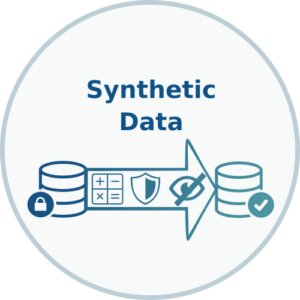
Synthetic data is rapidly becoming a critical component of machine learning development as organizations seek new ways to train artificial intelligence models efficiently, securely, and at scale. With growing concerns around data privacy, limited access to high-quality datasets, and increasing regulatory requirements, businesses and researchers are turning to synthetic data as a powerful alternative to traditional data collection methods.
Synthetic data refers to artificially generated information that mimics the statistical characteristics and patterns of real-world data without directly containing personal or sensitive information. Using advanced AI techniques such as generative models, machine learning algorithms, and simulation technologies, organizations can create large datasets that closely resemble actual data while protecting privacy and reducing compliance risks.
The growing importance of synthetic data is closely linked to the rapid expansion of artificial intelligence applications. Modern machine learning models require enormous volumes of data for training and validation. However, acquiring high-quality real-world data can be expensive, time-consuming, and subject to legal restrictions. Synthetic data offers a practical solution by enabling developers to generate diverse datasets quickly and cost-effectively.
One of the primary advantages of synthetic data is enhanced privacy protection. Industries such as healthcare, finance, insurance, and government often handle sensitive information that cannot be easily shared for AI development. Synthetic datasets allow organizations to train machine learning models without exposing confidential customer or patient information, helping maintain compliance with privacy regulations.
Healthcare has emerged as one of the leading sectors adopting synthetic data technologies. Researchers can generate realistic medical datasets for disease prediction, diagnostic systems, and healthcare analytics without risking patient privacy. This approach is accelerating medical AI research while ensuring sensitive health information remains protected.
The financial services industry is also benefiting from synthetic data. Banks and financial institutions use artificially generated transaction datasets to train fraud detection systems, risk assessment models, and customer analytics platforms. These datasets help improve model accuracy while reducing concerns related to data security and regulatory compliance.
Autonomous vehicle development is another area where synthetic data plays a significant role. Self-driving car companies use simulated environments and synthetic datasets to train computer vision systems on a wide range of driving scenarios, including rare or dangerous situations that may be difficult to capture in real-world conditions.
Machine learning developers are increasingly using synthetic data to address data imbalance challenges. In many real-world datasets, certain events or categories occur infrequently, making it difficult for AI models to learn effectively. Synthetic data generation helps create balanced datasets that improve model performance and reduce bias.
The rise of generative AI technologies has further accelerated synthetic data adoption. Advanced generative models can create highly realistic text, images, audio, video, and structured datasets that closely replicate real-world patterns. These capabilities are expanding the range of applications where synthetic data can be used effectively.
Technology companies and startups are investing heavily in synthetic data platforms and tools. New solutions are emerging that allow organizations to generate customized datasets tailored to specific machine learning projects, reducing development timelines and lowering costs associated with data collection and preparation.
Despite its benefits, experts emphasize that synthetic data is not a complete replacement for real-world information. Ensuring data quality, realism, and representativeness remains essential. Organizations often combine synthetic and real datasets to achieve optimal machine learning performance while maintaining accuracy and reliability.
Industry analysts predict that synthetic data will become a standard component of AI development workflows over the coming years. As artificial intelligence applications continue expanding across industries, the ability to generate scalable, privacy-preserving datasets will become increasingly valuable.
The growing adoption of synthetic data reflects a broader shift toward more responsible and efficient AI development practices. By reducing privacy risks, improving data availability, and supporting innovation, synthetic data is helping organizations overcome one of the biggest challenges in machine learning: access to high-quality training data.
As machine learning models become more sophisticated and data requirements continue to grow, synthetic data is expected to play a central role in shaping the future of artificial intelligence, enabling faster innovation and broader adoption across industries worldwide.





Comments