
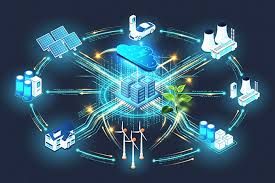
Machine learning is playing an increasingly important role in modern energy grid management, helping utility companies improve operational efficiency, strengthen grid reliability, and support the growing adoption of renewable energy sources. As electricity demand continues to rise and power networks become more complex, energy providers are leveraging advanced AI technologies to optimize grid performance and ensure stable energy distribution.
Traditional energy grids rely on historical data and manual processes to manage electricity generation and distribution. However, the growing integration of renewable energy sources such as solar and wind power introduces new challenges due to their variable nature. Machine learning enables utilities to analyze vast amounts of real-time and historical data, helping operators make faster and more accurate decisions.
One of the most significant applications of machine learning in energy management is demand forecasting. AI models can analyze weather conditions, consumption patterns, seasonal trends, and economic activity to predict electricity demand with greater accuracy. Improved forecasting helps utility providers balance energy supply and demand while reducing operational costs and minimizing waste.
Renewable energy integration is another area benefiting from machine learning innovation. AI systems can predict solar power generation based on weather forecasts and estimate wind energy production using atmospheric data. These insights allow grid operators to better manage fluctuations in renewable energy output and maintain grid stability.
Machine learning is also enhancing predictive maintenance capabilities across energy infrastructure. Intelligent systems continuously monitor transformers, transmission lines, substations, and other critical assets to identify potential equipment failures before they occur. Early detection helps prevent outages, reduce maintenance costs, and improve overall grid reliability.
Smart grids powered by AI are enabling real-time monitoring and automated decision-making. Advanced sensors and connected devices generate continuous streams of operational data, allowing machine learning models to detect anomalies, optimize energy flow, and respond rapidly to changing conditions. This level of automation improves efficiency while reducing the risk of disruptions.
Energy companies are increasingly using machine learning to improve fault detection and outage management. AI algorithms can quickly identify the location and cause of network issues, enabling faster restoration efforts and minimizing downtime for consumers and businesses. Enhanced response capabilities contribute to greater customer satisfaction and service reliability.
The rise of electric vehicles is creating additional opportunities for machine learning-driven energy management. Utilities can use AI to predict charging demand, optimize charging schedules, and balance electricity consumption across the grid. These capabilities will become increasingly important as EV adoption continues to grow worldwide.
Machine learning is also supporting sustainability initiatives by improving energy efficiency and reducing carbon emissions. Intelligent optimization systems help utilities maximize the use of renewable energy resources, minimize energy losses, and improve overall resource utilization. These advancements contribute to global efforts aimed at achieving cleaner and more sustainable energy systems.
Cybersecurity has become another important focus area for AI-powered grid management. Machine learning systems can monitor network activity, detect unusual behavior, and identify potential cyber threats in real time. As critical infrastructure becomes increasingly digital, advanced security capabilities are essential for protecting energy networks.
Despite the benefits, implementing machine learning in energy systems requires substantial investments in data infrastructure, skilled personnel, and regulatory compliance. Utilities must also ensure transparency, reliability, and security when deploying AI-driven decision-making systems.
Industry experts believe machine learning will continue to transform the energy sector as smart grids, renewable energy technologies, and digital infrastructure become more widespread. Future innovations are expected to further improve grid resilience, operational efficiency, and sustainability outcomes.
As energy systems evolve to meet the demands of a rapidly changing world, machine learning is emerging as a critical technology that enables smarter, more efficient, and more reliable grid management. By combining predictive analytics with real-time intelligence, utilities can build energy networks that are better equipped for the future.





Comments