
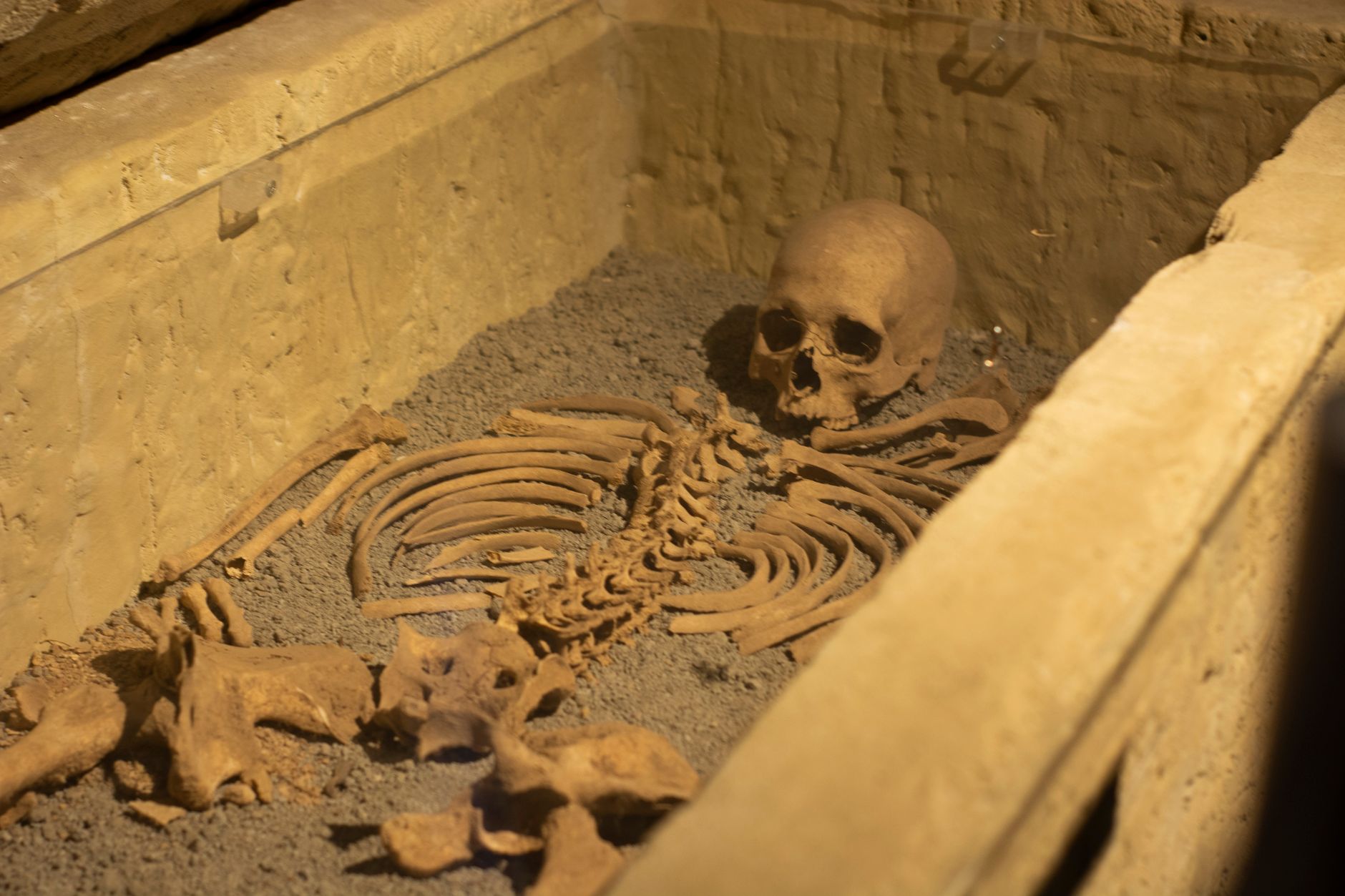
National Museums Scotland has revealed a facial reconstruction of a man who lived in Roman Scotland roughly two millennia ago. The striking image brings a deeply personal perspective to a skeleton unearthed from an unusual grave near a Roman fort at Inveresk in eastern Scotland.
Analysis of the skeletal remains indicates the man lived a physically demanding life between 140 and 165 CE. Researchers found evidence of multiple healed injuries, including a broken nose and significant bone growth around his right elbow likely caused by septic arthritis. These physical limitations would have restricted the use of his arm, leading scientists to conclude he was likely not a soldier at the time of his death. Isotopic analyses and ancient DNA further suggest he was born in southern Britain before traveling to the Scottish frontier.
The man was discovered in a burial site alongside six other individuals, four of whom had been decapitated after death. While post-mortem decapitation remains a rare find in Scottish archaeology, researchers debate whether the practice served as a form of punishment, a burial ritual, or a response to supernatural beliefs. Forensic artist Chris Rynn used osteoarchaeological assessments and DNA data to sculpt the man's likeness.
The reconstruction, along with the original skeletal remains, will be displayed to the public starting November 14 in a new exhibition at National Museums Scotland.





Comments