
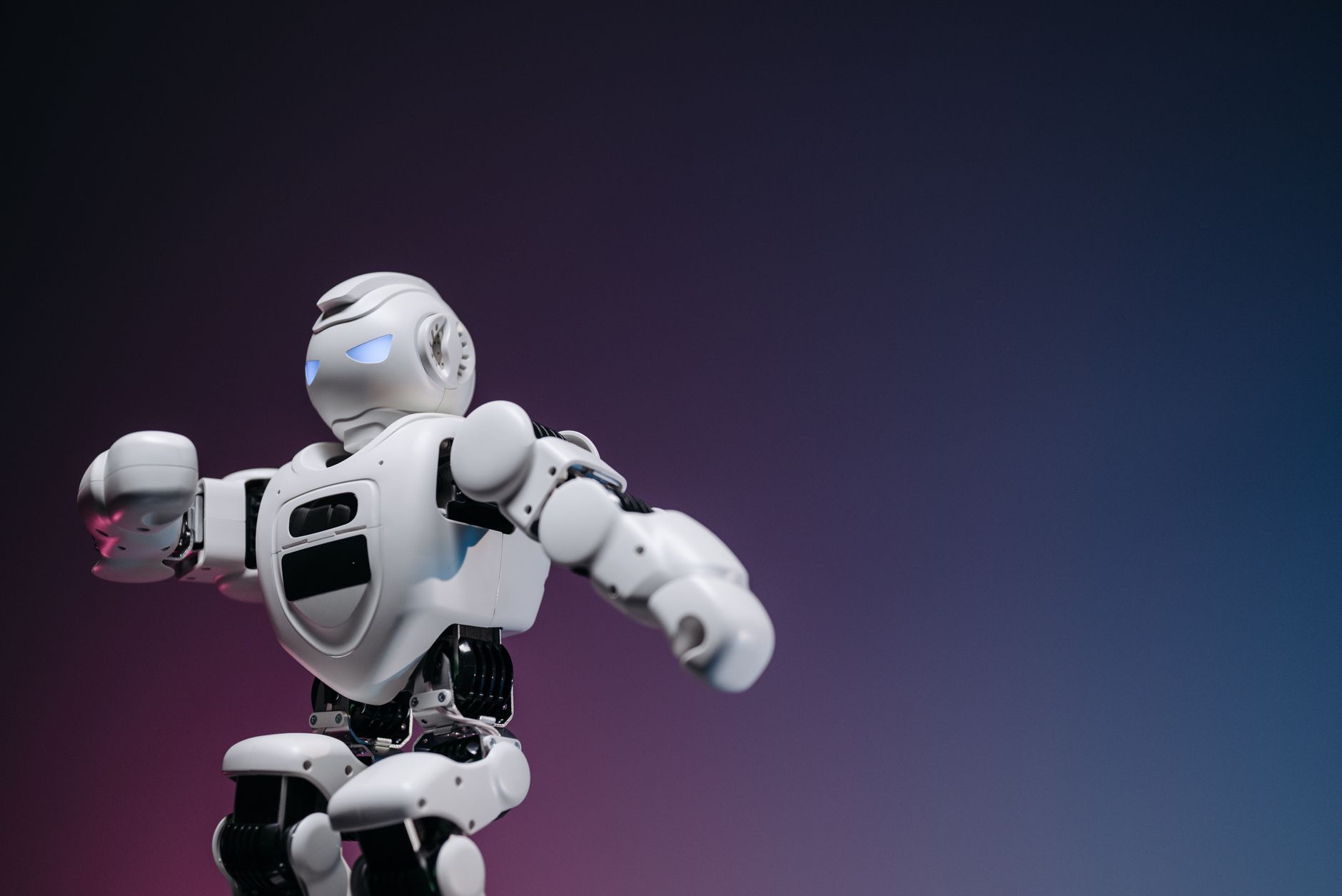
Artificial intelligence is stepping out of the server rack and into the physical world. For years, machine learning models lived comfortably behind screens, processing text, pixels, and audio without ever interacting with gravity or friction. That computational boundary is dissolving rapidly. Engineers are now fusing advanced vision-language models directly with robotics, giving autonomous systems the ability to reason about their physical surroundings in real time. Instead of relying purely on pre-programmed scripts, modern robots use foundation models to interpret messy, unstructured human environments and execute complex tasks on the fly.
This transition marks a fundamental shift in how hardware and software communicate. Traditional industrial robots excelled at repetitive, highly constrained movements inside controlled factory floors. Embodied AI demands something entirely different: generalization. When a robotic arm encounters a misplaced object or an unexpected obstacle, it cannot simply crash or halt operations. It must evaluate the new spatial context, adjust its grip, and re-plan its trajectory instantaneously. Achieving this level of autonomy requires massive compute power at the edge, forcing chipmakers to design specialized processors capable of running heavy inference loops directly on mobile platforms.
Logistics, manufacturing, and warehouse automation stand as the immediate beneficiaries of this technological convergence. Companies are deploying agile quadrupeds and dexterous manipulators to handle hazardous inspections and inventory management without human intervention. Yet scaling these deployments remains difficult. Real-world physics introduces infinite variables that digital simulators struggle to replicate fully. Supply chain bottlenecks for specialized sensors and high-torque actuators also slow down hardware prototyping cycles. Despite these hurdles, the race to build truly adaptable physical intelligence is accelerating, and the commercial viability of general-purpose robotics is closer than ever.




Comments