
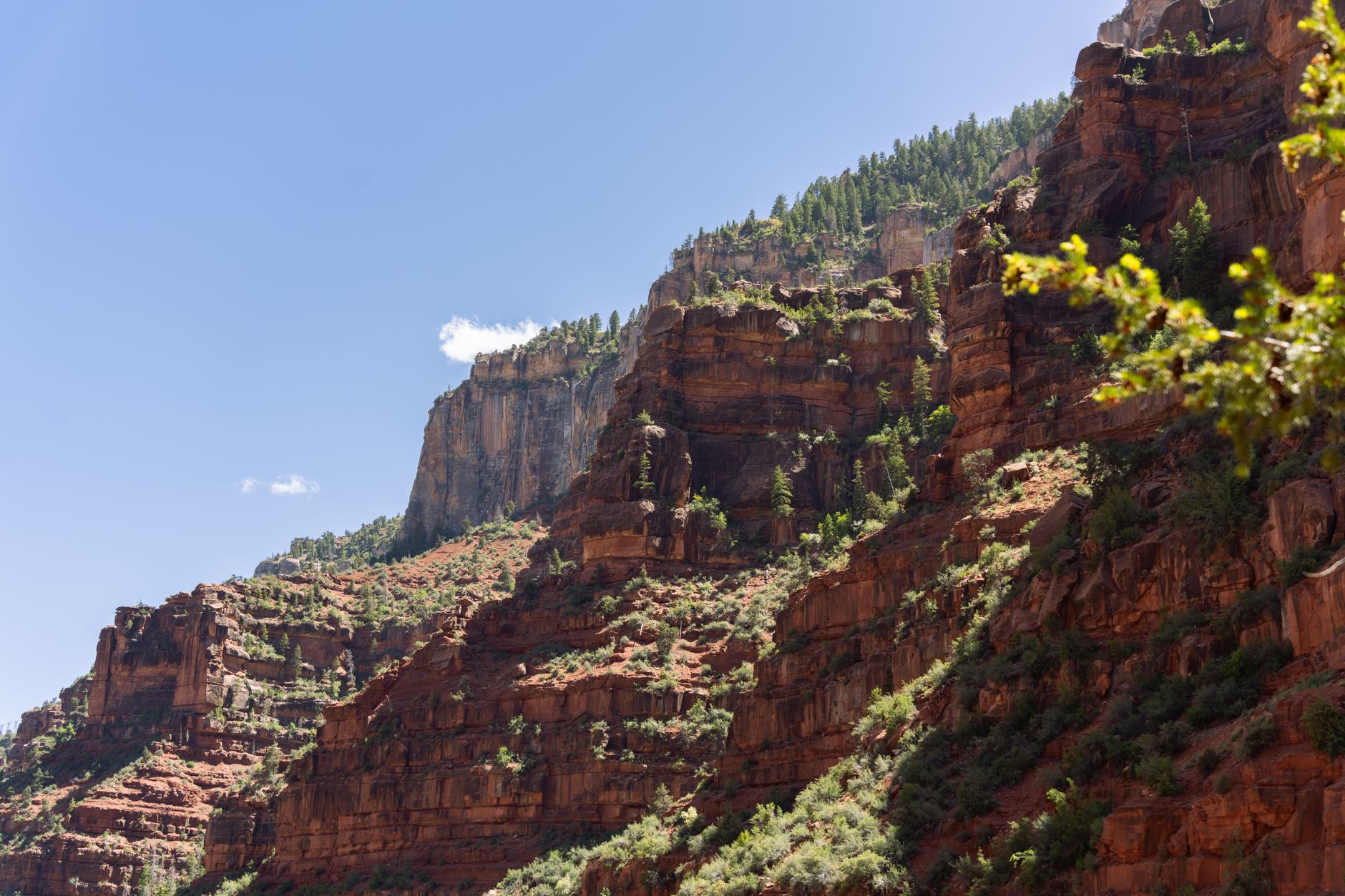
Earth's geological history resembles a vast library, yet entire sections covering hundreds of millions to over a billion years remain conspicuously absent. Geologist John Wesley Powell first identified this puzzling gap, known as the Great Unconformity, at the Grand Canyon. In this iconic location, sedimentary rocks from the Cambrian era sit directly atop much older igneous and metamorphic rocks dating back more than a billion years. Researchers recently published a study in Nature demonstrating how mantle convection over immense spans of time likely drove this strange geological phenomenon.
Santosh Dhungana, a PhD candidate at the University of Wollongong in Australia and lead author of the study, compared the missing geological record to a book with a massive section ripped out of the middle. The Great Unconformity represents roughly 1.2 billion years of missing rock at the Grand Canyon, mirroring similar large-scale gaps discovered across Europe, Australia, Africa, and Asia. While these unconformities do not represent missing time caused by unknown events, they leave a narrative jump that geologists have long sought to explain.
To investigate the cause, Dhungana and corresponding author Nicolas Flament modeled patterns of mantle convection and compared their simulations with continental sediment volumes over time. The hot rock currents moving beneath Earth's surface generate forces capable of lifting or pulling down enormous sections of land. Their models indicate that between one billion and 540 million years ago, these currents caused continents to rise before entering a prolonged sinking period during the Phanerozoic eon. During this slow subsidence into the ocean, the ancient continental cores vanished beneath the waves, leaving behind worn rock surfaces that were eventually buried by seas and sediments.
The timeline of this geological shift aligns closely with the start of the Cambrian era, a critical juncture when life on Earth experienced unprecedented growth. Because landscape dynamics directly influence seawater chemistry, these findings offer vital clues toward understanding the Cambrian explosion and mapping out Earth's ancient evolutionary chronicle.



Comments