
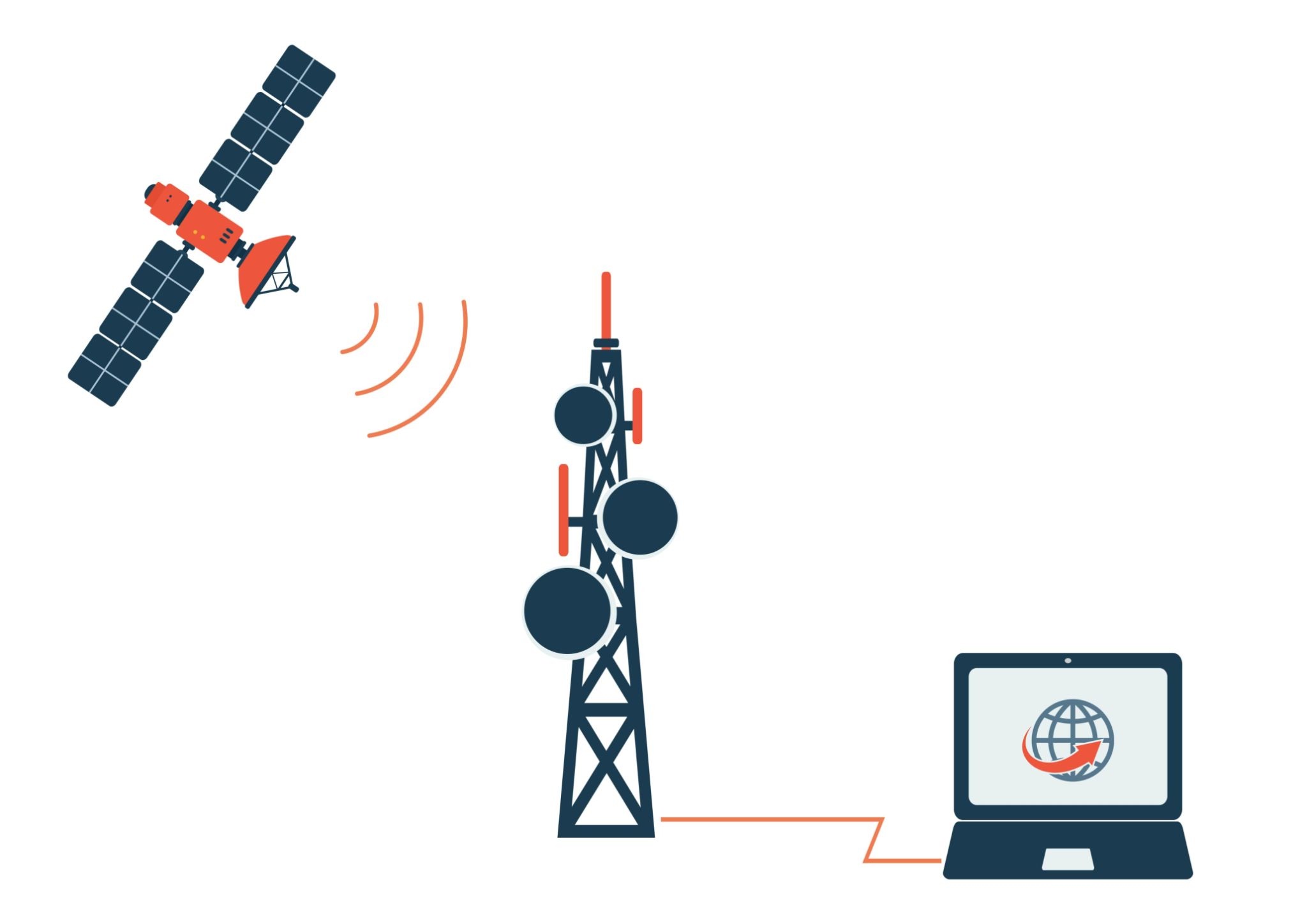
Telecommunications is the invisible scaffolding of the modern world. Every Zoom call, every swiped credit card, every autonomous vehicle, and every Netflix stream relies entirely on the continuous, unbroken transfer of electromagnetic signals across the globe. For decades, telecom evolution was simply about making human-to-human phone calls clearer and text messages faster.
Today, the telecom sector is no longer just connecting people; it is connecting everything. As we move into an era dominated by the Internet of Things (IoT), artificial intelligence, and autonomous robotics, the demands on our networks have scaled exponentially. The industry is currently executing a massive architectural shift to handle this tsunami of data with near-zero latency.
The Reality of 5G and Network Slicing
While 5G has been a buzzword for years, its true industrial capabilities are only now being fully realized. 5G is not just a faster version of 4G; it is a fundamentally different architecture designed for massive device density.
- Millimeter Wave (mmWave) Capacity: 5G utilizes much higher frequencies than previous generations. While these waves cannot travel as far or penetrate buildings easily, they carry massive amounts of data. This allows thousands of devices in a crowded stadium or a dense factory floor to stream high-definition video simultaneously without the network collapsing.
- Software-Defined Networking (SDN): Legacy networks relied on rigid, physical hardware. Modern telecom networks are virtualized via software. This allows operators to dynamically reconfigure the network on the fly without changing physical cables.
- Network Slicing: Because of SDN, a 5G network can be "sliced" into multiple, distinct virtual networks. A telecom provider can dedicate one highly secure, ultra-low-latency slice exclusively to autonomous vehicles, another high-bandwidth slice to consumer streaming, and a low-power slice to agricultural IoT sensors. Each slice operates independently, ensuring that a spike in Netflix traffic does not interfere with the braking system of a self-driving truck.
Edge Computing: Ending the Latency Bottleneck
The speed of light is a physical limit. If a robotic surgical arm in London relies on an AI server in California, the round-trip time for the data (latency) will always be too slow for real-time safety. Telecom companies are solving this by moving the brain closer to the body.
- Decentralized Processing: Edge computing involves installing micro-data centers directly at the base of cell towers or inside localized switching hubs.
- Real-Time Execution: Instead of sending data back to a centralized cloud thousands of miles away, the computation happens at the "edge" of the network, mere miles or blocks from the user. This reduces latency from 50 milliseconds down to single digits, a critical requirement for remote surgery, autonomous driving, and high-frequency trading.
Low-Earth Orbit (LEO) Satellite Constellations
Traditional satellite internet relied on massive, geostationary satellites parked 22,000 miles above the equator. The signal had to travel so far that the latency was unbearable for modern applications. The new space race in telecom is happening much closer to home.
- The LEO Swarm: Companies like Starlink (SpaceX) and Project Kuiper (Amazon) are launching constellations consisting of thousands of small, cheap satellites into Low-Earth Orbit, just 300 miles above the surface.
- Bridging the Digital Divide: Because these satellites are so close, they provide fiber-optic-like speeds and low latency to anywhere on the globe. This is revolutionary for rural communities, maritime shipping, and aviation, bringing high-speed broadband to the billions of people who are too isolated to be reached by traditional underground fiber cables.
- Laser Mesh Networks: The newest generation of these satellites use optical lasers to communicate with each other in the vacuum of space. They can route data around the globe faster than glass fiber-optic cables on the ground, creating an independent, space-based internet backbone.
The Horizon: 6G and Terahertz Frequencies
Even as 5G is still rolling out, the telecom industry is heavily researching 6G, with commercial deployment expected around 2030.
- Terahertz Spectrum: 6G will operate in the sub-terahertz and terahertz frequency bands. This will unlock data rates up to 100 times faster than 5G, moving from gigabits per second to terabits per second.
- Holographic Telepresence: This massive bandwidth will make true, volumetric, real-time holographic communication possible.
- The Network as a Sensor: At terahertz frequencies, the radio waves can act like radar. A 6G cell tower will not just transmit data; it will be able to physically map its environment, detecting the exact location, shape, and even material composition of objects around it, effectively turning the entire wireless network into a giant, ambient sensor.
The Outlook
The telecom industry is building the central nervous system for the 21st century. As edge computing, 5G slicing, and satellite constellations converge, connectivity will cease to be a service we consciously log into. Instead, high-speed, zero-latency connectivity will become an ambient, invisible utility—as ubiquitous and reliable as the air we breathe.





Comments