
Legacy Medical
Devices Running Unpatched OS Pose Patient Safety Risk
Category:
Vulnerabilities & Exploits
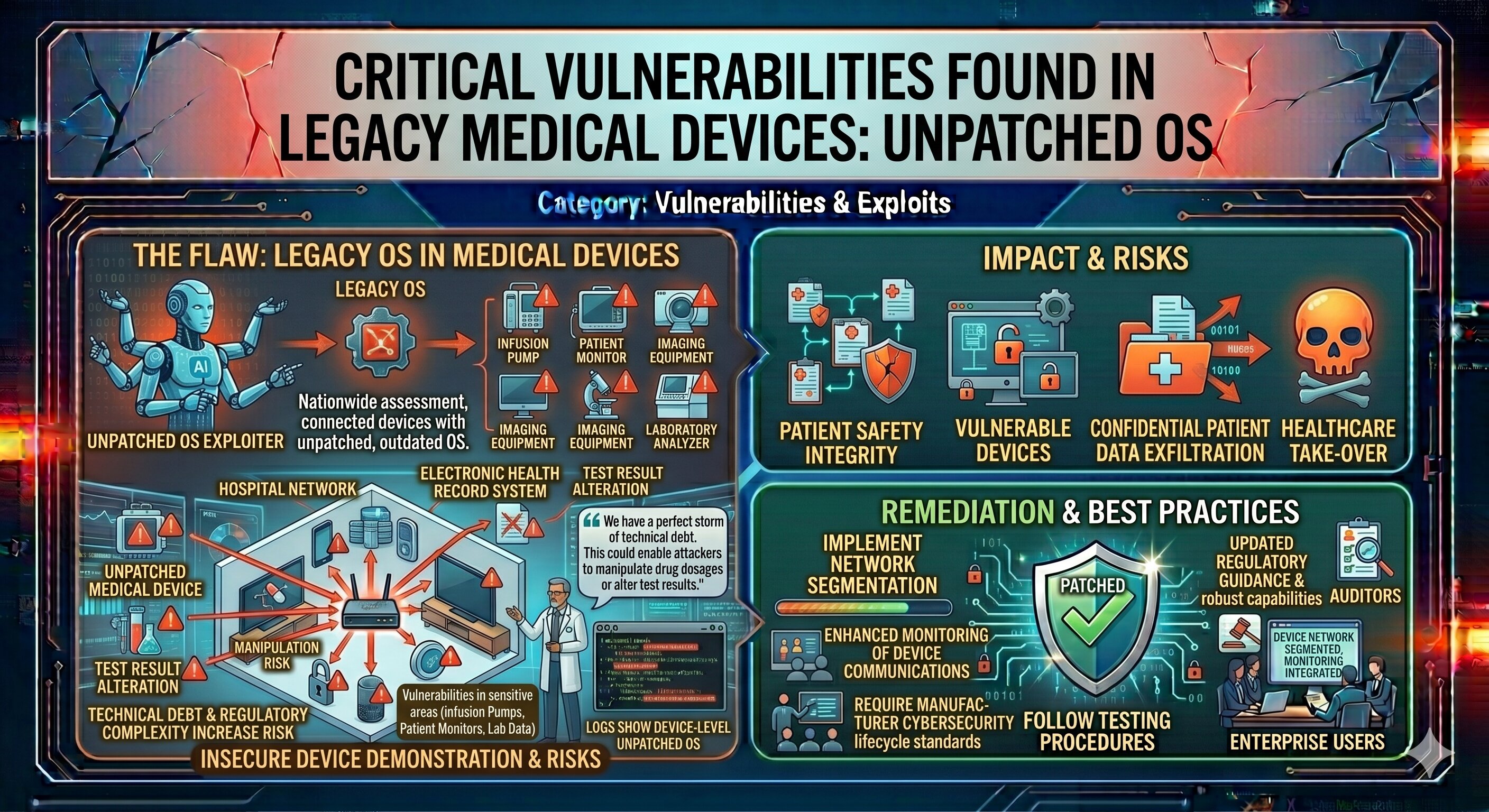
A nationwide
assessment conducted by a healthcare cybersecurity consortium has found that a
large proportion of connected medical devices in hospitals across the country
are running severely outdated and unpatched operating systems, creating serious
cybersecurity risks that could have direct implications for patient safety. The
assessment found devices running operating systems no longer supported by their
developers, including versions of Windows that have not received security
updates in over a decade.
The affected
devices include infusion pumps, patient monitors, imaging equipment, and
laboratory analyzers — all connected to hospital networks and communicating
with electronic health record systems. Many of these devices cannot be easily
updated due to regulatory constraints: changing software on an FDA-cleared
device may require the manufacturer to go through a recertification process.
"We have
a perfect storm of technical debt and regulatory complexity creating a
situation where critical medical devices are operating with known, exploitable
vulnerabilities," said Dr. Thomas Bridges, a biomedical engineering
security specialist. "In a worst-case scenario, this could enable an
attacker to manipulate drug dosages or alter test results."
Several
healthcare systems have begun implementing compensating controls, such as
network segmentation to isolate vulnerable devices, enhanced monitoring for
unusual device communications, and contractual requirements for medical device
manufacturers to maintain cybersecurity standards throughout a device's
lifecycle.
Regulators
are working on updated guidance for medical device cybersecurity that would
require manufacturers to build in more robust security capabilities and provide
clearer patching mechanisms from the outset.





Comments