
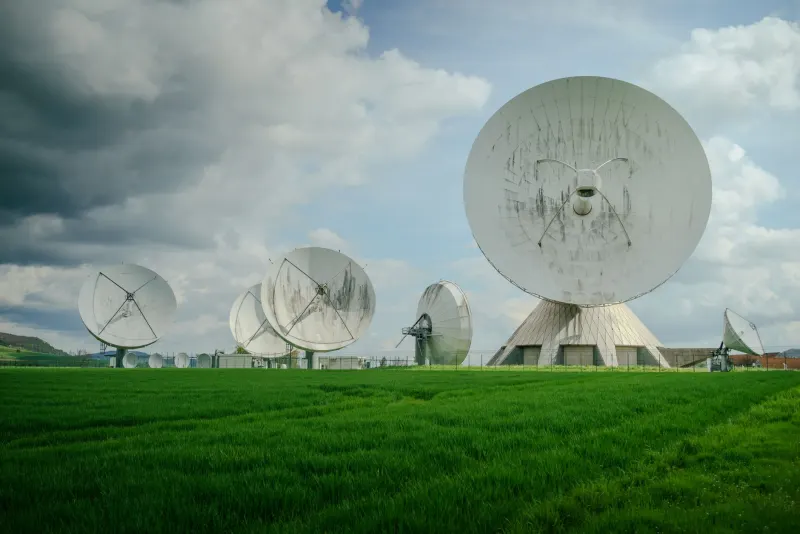
Google's global head of data center energy has injected a heavy dose of skepticism into the booming conversation around orbital computing, warning that data centers in space could cost up to 100 times more than those built on Earth. Amanda Peterson Corio delivered the assessment at The Information's recent WTF Summit in Napa Valley, advising the broader tech industry to thoroughly exhaust all terrestrial options before looking to the stars. The warning arrives while Google itself is actively experimenting with orbital hardware through its Project Suncatcher initiative, creating a curious tension between the company's experimental engineering and its executive cost projections.
Key takeaways
- Google executive Amanda Peterson Corio estimates space data centers could cost up to 100 times more than ground-based alternatives.
- Google's Project Suncatcher prototype launched on SpaceX's Transporter-18 rideshare mission on October 1.
- The current satellite prototype generates about 1kW of solar power and runs just one chip at a time for roughly 20 minutes per session.
- Corio argues that the primary bottleneck on Earth is permitting and grid interconnection rather than a lack of power.
The reality of current orbital hardware
While executives debate economics, the physical reality of space-based computing remains constrained by strict power limitations. Google's first Project Suncatcher prototype, developed in partnership with satellite operator Planet, launched on October 1 via a SpaceX Transporter-18 rideshare mission. The satellite recently achieved a notable milestone dubbed Hello World, successfully executing a short haiku written by an onboard Gemma 4 model running on a Tensor Processing Unit before downlinking the response over Svalbard, Norway.
Despite these achievements, scale remains a massive hurdle for orbital AI. The prototype carries four TPUs but only generates approximately one kilowatt of solar power. This limits operations to running a single chip at a time for about 20 minutes per session. By contrast, modern terrestrial AI campuses under construction on the ground are designed to draw roughly a million times that amount of power.
Economic implications and industry divisions
Corio's valuation ceiling has triggered intense debate among financial analysts and aerospace leaders. Short seller Jim Chanos calculated her figures to equal roughly $5 trillion per gigawatt of compute, noting that the vast gap between Google's assessment and SpaceX management's estimates should give market observers pause. Financial platform TIKR further calculated that if orbital data centers are built at up to 100 times the cost of ground facilities and rented out at the same market rates, the return on investment could stretch to a century.
The debate directly impacts companies like SpaceX, which holds a massive market valuation and has petitioned the Federal Communications Commission for permission to deploy up to a million data-center satellites. SpaceX leadership has previously suggested that orbital compute deployed each month could overtake terrestrial compute by late 2028. However, SpaceX's own regulatory filings caution investors about significant technical complexity, noting that orbital data centers might ultimately never achieve commercial viability.
Terrestrial bottlenecks and future outlook
Corio's core argument centers on the idea that Earth has sufficient power capacity, identifying local permitting, grid interconnection studies, and community pushback as the actual friction points for infrastructure expansion. Data Center Watch figures indicate that community opposition has heavily impacted terrestrial development, with roughly 75 projects valued at $130 billion delayed or blocked in the first quarter of 2026 alone.
Alphabet maintains a significant financial entanglement in the space, holding a 6.11 percent stake in SpaceX as of late 2025 and engaging in talks regarding future Suncatcher hardware launches. For now, the economic viability of moving massive compute infrastructure off-planet rests entirely on unproven timelines and speculative cost multiples.





Comments