
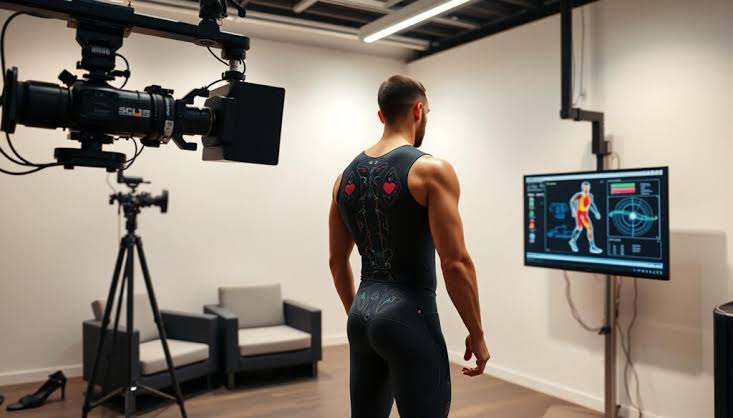
For most of sporting history, coaching was an art built on the "eye test." A coach watched a player swing a bat, run a route, or shoot a basketball, and made subjective adjustments based on intuition and experience. Today, professional and collegiate sports have been completely overwhelmed by the data revolution.
Sports Technology (SportsTech) has turned human performance into a highly quantifiable, algorithmic science. By utilizing military-grade sensors, computer vision, and predictive artificial intelligence, teams are optimizing biomechanics, completely reshaping load management, and extending the primes of elite athletes far beyond historical norms.
Wearable Sensors and Biomechanical Tracking
The modern athlete generates gigabytes of data every single time they step onto a field, court, or track.
- Inertial Measurement Units (IMUs) and GPS: Elite soccer and rugby players wear GPS-enabled vests that track their exact spatial positioning, total distance covered, and sprint velocity. Embedded IMUs measure explosive movements—how fast a player accelerates, the g-force of a tackle, or the exact rotational speed of a quarterback's hips during a throw.
- Load Management: This data feeds directly into "load management" algorithms. Coaches no longer guess if a player is fatigued. If the data shows a basketball player's explosive jump height has decreased by 4% over the last three games, the sports science staff knows their central nervous system is fatigued, and they will proactively rest the player before a catastrophic injury occurs.
- Recovery Tracking: Performance optimization doesn't stop when the game ends. Athletes use specialized sleep and recovery wearables (like Whoop or Oura rings) that track Heart Rate Variability (HRV) and respiratory rates overnight. This dictates their training intensity for the next day; if the HRV shows poor recovery, the athlete performs a light mobility session instead of heavy weightlifting.
Computer Vision and Markerless Motion Capture
Traditionally, capturing biomechanical data required placing dozens of physical, reflective markers on an athlete's body in a controlled laboratory setting. Today, artificial intelligence can extract this data directly from game broadcasts.
- Pose Estimation: Advanced computer vision systems use deep learning to map the skeletal structure of athletes directly from standard camera feeds. In baseball, systems like Hawk-Eye can analyze a pitcher's mechanics in real-time during a live game, measuring the exact release angle of the arm, the spin rate of the ball, and the stride length of the legs, all without a single sensor on the player.
- Tactical AI: In basketball and soccer, optical tracking systems monitor the exact coordinates of all players and the ball 25 times per second. AI algorithms analyze this massive dataset to evaluate defensive spacing, pick-and-roll efficiency, and "ghosting"—simulating exactly where a defender should have been on a given play compared to where they actually were.
Predictive Injury Analytics
The most devastating variable in any sport is injury. SportsTech is shifting the medical paradigm from treating injuries after they happen to predicting them before they occur.
- Asymmetry Detection: Algorithms constantly look for microscopic biomechanical asymmetries. If force-plate data shows that a runner is suddenly pushing off with 5% less force on their left leg compared to their right, it indicates they are subconsciously compensating for a micro-tear or joint stress. The medical staff can intervene with targeted physical therapy before the tendon completely ruptures.
- AI Injury Forecasting: By combining an athlete's sleep data, historical injury records, current biomechanical load, and even the firmness of the playing surface, machine learning models output a daily "injury probability score." If the risk crosses a certain threshold, the player is benched.
Smart Equipment and Advanced Materials
Technology has also fundamentally altered the physical tools of the game.
- Sensor-Embedded Equipment: Basketballs now contain microchips that track the arc, backspin, and release speed of a shot, sending the data instantly to a coach's iPad. Smart baseball bats have sensors in the knob that measure swing speed and barrel angle, allowing hitters to fine-tune their swing plane to a fraction of a degree to optimize launch angles.
- Carbon Fiber and "Super Shoes": In running, the introduction of shoes featuring rigid carbon-fiber plates embedded in highly resilient foam has shattered world records. These shoes act like a spring, returning a massive percentage of the runner's kinetic energy with every footfall, fundamentally altering the biomechanical efficiency of human endurance.
The Outlook
The modern sporting arena is a massive, real-time data laboratory. As computer vision becomes more advanced and biometric sensors shrink to the size of a thread, the gap between human intuition and algorithmic precision will continue to widen. The champions of the future will not just be the teams with the best natural talent, but the teams with the best data scientists.





Comments