
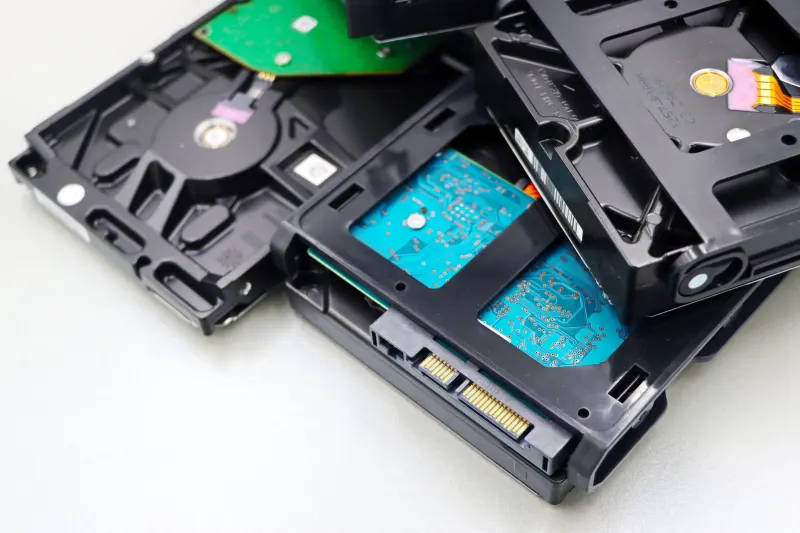
Hard disk drives remain a cornerstone of budget-friendly mass storage, yet new data underscores significant mechanical unpredictability that users must navigate. A recent sample of over 5,000 drives highlights that many units fail in their first year of operation, and crucially, a substantial portion of those failures occur without any prior warning. While solid-state drives dominate conversations around speed and modern AI infrastructure, hard disk drives continue to maintain a massive price advantage per gigabyte. However, this cost efficiency comes with the inherent risk of sudden mechanical failure due to factory defects, power surges, or internal operating system damage.
Key takeaways
- Roughly 1.5 percent of all hard disk drives fail, with nearly half of those breakdowns happening during the first year.
- Approximately 30 percent of failed drives break down completely without giving any warning signs to the user.
- Data from Secure Data Recovery indicates that failed drives last an average of 807 days before giving out.
- Drives become significantly more prone to failure once they reach seven years of age, necessitating strict replacement schedules.
Understanding the Root Causes of Drive Failure
Mechanical unpredictability has always plagued spinning disk technology. Failures can stem from manufacturing flaws like head misalignment or seized motors, physical accidents including power surges and drops, or corruption within the drive's internal operating system. Fleet management data from cloud storage giant Backblaze, which oversees more than 350,000 storage drives, provides consistent insight into these hardware patterns. Across recent tracking periods, Seagate models have demonstrated strong mechanical reliability, while brands like Hitachi and Western Digital also feature prominently in comparative failure rate analyses.
Despite these risks, hard disk drives remain heavily utilized because they are significantly cheaper per gigabyte than solid-state drives. As surging demand from artificial intelligence data centers drives up the cost of solid-state storage, hard disk drives offer an economical alternative for high-capacity setups. Organizations and individuals frequently build redundant array of independent disks systems using hard disk drives for a fraction of the cost required to purchase a single high-capacity solid-state drive.
Evaluating Long-Term Reliability and Future Tech
Historical data clearly establishes a direct connection between drive age and failure probability, noting that hardware becomes increasingly unstable once it crosses the seven-year threshold. This reality forces professionals who rely on high-capacity storage to establish proactive replacement schedules or integrate complementary cloud storage solutions. Historically, consumer device pioneers like Apple shifted toward solid-state alternatives largely due to the superior durability of flash memory over moving parts.
Looking at the hardware landscape, the vast majority of commercial drives still rely on conventional magnetic recording technology to deliver predictable performance. While fleet operators actively monitor emerging innovations like shingled magnetic recording and laser-heated heat-assisted magnetic recording, these technologies have not yet achieved widespread enterprise deployment. Ultimately, experts emphasize that users must architect their data strategies around the expectation of hardware failure by combining local, cloud, and off-site backup systems.





Comments