
Water is the most critical resource on the planet, yet our infrastructure for managing it is alarmingly antiquated. For over a century, municipal water grids operated blindly—relying on massive, aging underground pipes and reactive maintenance. Today, as climate change induces severe droughts and urban populations outgrow their local aquifers, water scarcity has become an existential global threat. We can no longer afford to lose billions of gallons to invisible leaks or rely solely on rainfall to fill our reservoirs.
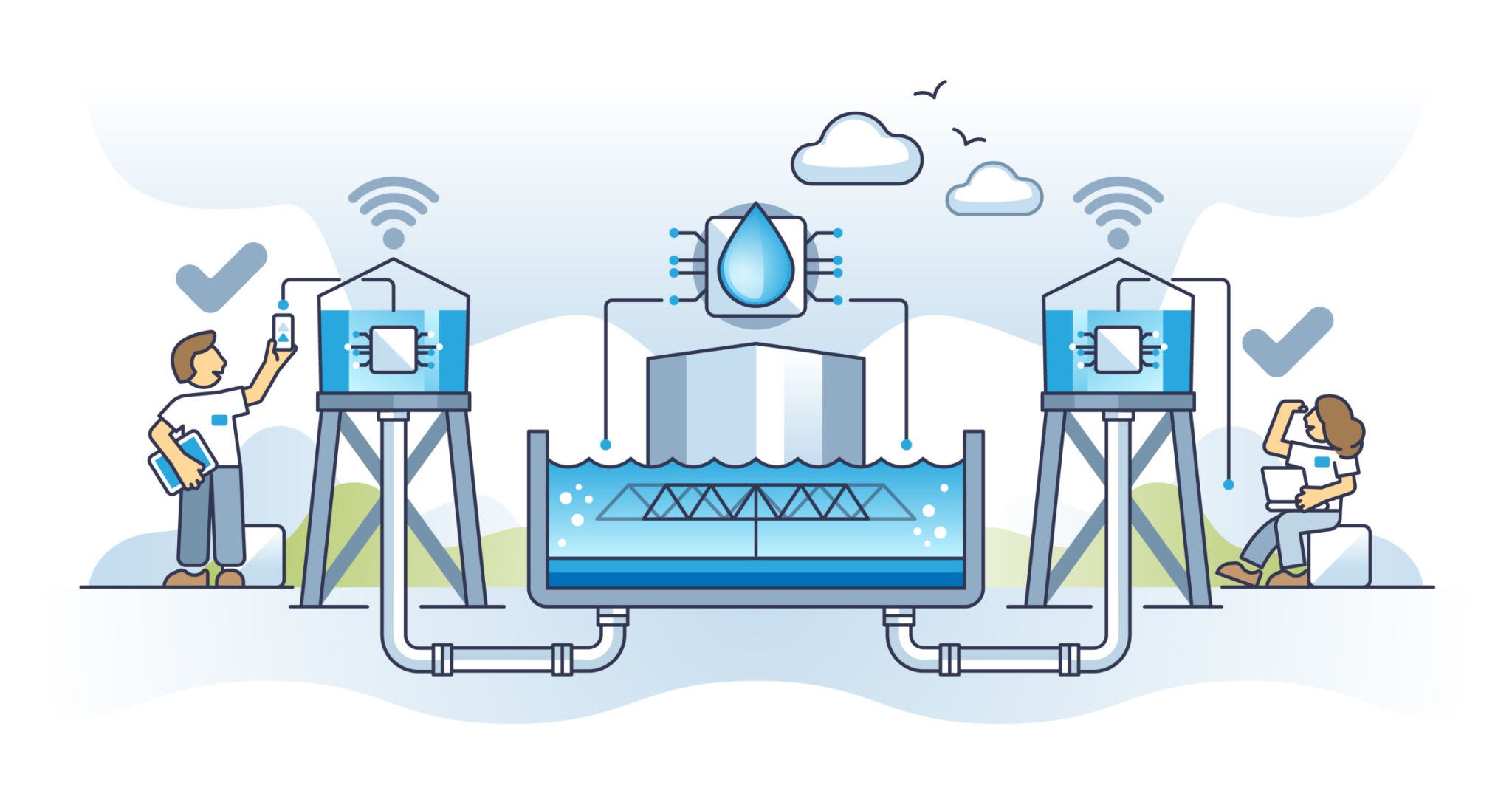
In response, the water management sector is undergoing a profound digital and physical overhaul. WaterTech is transforming passive concrete reservoirs and iron pipes into an intelligent, responsive "liquid grid." By deploying acoustic IoT sensors, advanced nanomaterial filtration, and predictive AI, municipalities and agricultural hubs are learning to track, purify, and recycle every single drop.
IoT and Acoustic Leak Detection
The invisible crisis in global water management is "non-revenue water"—clean, treated water that is lost to leaks in the distribution network before it ever reaches a tap. In some aging cities, this loss accounts for up to 30% of the total water supply.
- Acoustic Sensor Networks: Municipalities are deploying thousands of IoT acoustic sensors directly onto water mains. These sensors "listen" to the continuous sound of water flowing through the pipes. When a microscopic fracture occurs, it emits a specific high-frequency hiss.
- Algorithmic Triangulation: Machine learning algorithms analyze this acoustic data in real-time. By measuring the slight time delay between the sound hitting two different sensors, the software can triangulate the exact location of a leak down to a few feet, often months before the water breaches the surface and causes a catastrophic sinkhole.
- Smart Metering: At the consumer level, smart water meters provide real-time consumption data. If a household’s water usage spikes at 3:00 AM while everyone is asleep, the system instantly alerts the homeowner to a running toilet or a burst pipe, preventing thousands of gallons of waste and massive property damage.
Advanced Desalination and Nanotechnology
As freshwater aquifers deplete, the world is turning to the ocean. However, traditional thermal desalination is incredibly energy-intensive and expensive. The new wave of desalination relies on advanced materials science.
- Graphene Oxide Membranes: Reverse osmosis forces saltwater through a membrane, but traditional polymer membranes require immense pressure (and therefore energy) to push the water molecules through. Scientists are now developing membranes using graphene oxide, which is just one atom thick. These nanomaterials allow water molecules to pass through almost frictionlessly while perfectly blocking salt ions, drastically cutting the energy required for desalination.
- Biomimetic Filtration: Researchers are looking to nature for inspiration, studying proteins called aquaporins that allow plant roots to absorb water efficiently. By embedding synthetic aquaporins into industrial filtration membranes, engineers are creating highly efficient, low-energy purification systems that mimic biological cellular processes.
AI-Driven Hydrological Modeling
Managing water requires understanding incredibly complex, dynamic natural systems. AI is giving water managers the ability to predict the future flow of water with unprecedented accuracy.
- Predictive Watershed Analytics: AI models ingest massive, diverse datasets: satellite snowpack imagery, soil moisture readings, historical rainfall data, and localized weather forecasts. They use this data to predict exactly how much runoff will enter a reservoir weeks in advance.
- Dynamic Dam Operations: Armed with predictive data, dam operators can make proactive decisions. If the AI forecasts a massive atmospheric river event, operators can safely release water early to make room for the incoming flood, preventing uncontrolled spillovers and catastrophic downstream flooding.
Decentralized Water Recycling
The concept of treating water, using it once, and flushing it into the ocean is fundamentally unsustainable. The future of water management involves localized, closed-loop recycling.
- Direct Potable Reuse (DPR): Advanced purification technologies—utilizing ozone treatment, UV radiation, and biological carbon filtration—can now take municipal wastewater and clean it to a standard that is actually purer than most bottled spring water. Cities facing severe droughts are beginning to pump this highly purified recycled water directly back into the municipal drinking supply.
- On-Site Greywater Systems: Commercial buildings and eco-districts are installing decentralized recycling hubs. The "greywater" from sinks and showers is captured, treated on-site, and immediately routed back to flush toilets or irrigate landscaping, effectively cutting a building's freshwater demand in half without relying on centralized municipal treatment plants.
The Outlook
The era of taking abundant freshwater for granted is over. Through the integration of the Internet of Things, advanced materials, and artificial intelligence, the water sector is learning to operate with absolute precision. Technology is ensuring that this finite, vital resource is tracked, optimized, and recycled, securing the liquid foundation of human civilization for the future.





Comments