
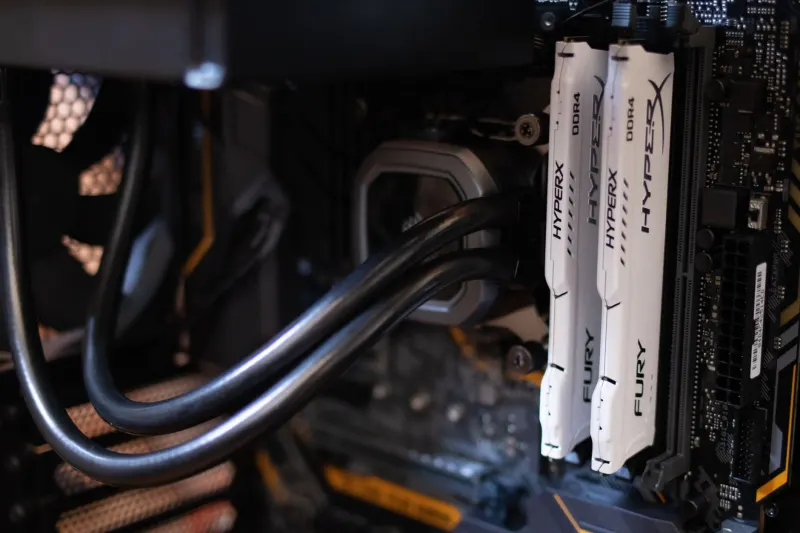
Downloading tools like Ollama or LM Studio allows users to run a local chatbot within minutes completely offline and without subscription fees. However, what an everyday personal computer can run, and how quickly those models respond, depends directly on the underlying machine power. Standard computers equipped with 16GB of RAM can comfortably manage relatively small models holding around seven to eight billion parameters, such as Meta's Llama 3.1 8B or Alibaba's Qwen3 8B, especially when paired with a graphics card featuring 8GB of VRAM. These setups offer decent speed for basic tasks, yet they remain far removed from the frontier models powering cloud-based giants like ChatGPT or Claude.
Key takeaways
- Running local models with Ollama or LM Studio requires no subscription fee or internet connection.
- A 16GB PC handles 7B parameter models, while larger models need 32GB RAM and 16GB VRAM.
- Generation speed relies heavily on memory bandwidth rather than raw processor power.
- Frontier open-weight models require hundreds of gigabytes or terabytes of memory, remaining strictly in the realm of data centers.
Memory and bandwidth limitations
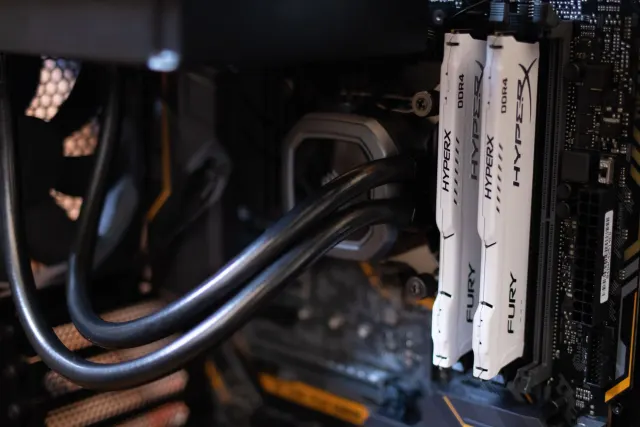
Model memory requirements scale almost linearly with parameter size, measured in billions. Most users rely on compressed or quantized versions of local models that store each parameter in approximately four bits, effectively shrinking the model to a quarter of its original size. For instance, Ollama libraries list Llama 3.1 8B at 4.9GB, Microsoft's Phi-4 at 9.1GB, Google's Gemma 3 27B at 17GB, and Meta's Llama 3.3 70B at 43GB. General rules of thumb from Ollama suggest needing 8GB of RAM for a 7B model, 16GB for a 13B model, and 32GB for a 33B model. OpenAI's gpt-oss-20b features 21 billion parameters but utilizes a mixture-of-experts design that employs only 3.6 billion parameters per token, allowing it to run on 16GB of memory despite occupying 14GB in Ollama.
Generation speed is fundamentally governed by memory bandwidth rather than raw processing power because models must read through all parameters for every generated token. Nvidia engineers describe this phase as memory-bound. Graphics card VRAM operates significantly faster than standard system RAM, meaning models running directly on a GPU perform much faster than those spilling over into system memory. Speeds above five to ten tokens per second keep pace with average reading speeds. LMSYS tests recorded Nvidia's RTX 5090 generating text from gpt-oss-20b at 205 tokens per second. In contrast, llama.cpp benchmarks showed Apple's base M4 chip reaching approximately 24 tokens per second on a 7B model. Ollama recorded Nvidia's $3,999 DGX Spark developer PC running Llama 3.1 8B at 38 tokens per second, but dropping to 4.42 tokens per second on the 70B version. Personal testing on a 2024 Asus Zenbook Duo with 32GB of RAM and an Intel AI Boost NPU pushed Mistral 7B to use 52 percent of the CPU and roughly 17GB of memory through Ollama, whereas Intel's OpenVINO toolkit kept the NPU at 98 percent and CPU at three percent while maintaining system responsiveness.
Cloud alternatives and cost considerations
Cloud-based models continue to hold a significant intelligence advantage over local hardware. In Artificial Analysis rankings from April 2026, Alibaba's Qwen3.5 27B scored 42 on the intelligence index, matching OpenAI's GPT-5 medium setting, while Google's Gemma 4 31B scored 39. Leading frontier cloud models reached 57 on the index. However, Qwen3.5 27B requires between 17GB and 20GB of memory, exceeding the capacity of a standard 16GB PC. Frontier open-weight models demand vastly larger hardware footprints. Moonshot's Kimi K2.6, a 1-trillion-parameter model launched in April 2026, requires approximately 600GB of combined RAM and VRAM at 4-bit quantization according to Unsloth. Its successor, Kimi K3, reached 2.8 trillion parameters with weights totaling roughly 1.4TB, a scale that TECHi estimates would barely fit on an eight-GPU data center server.
For users needing private summaries or offline coding assistance, a 16GB PC proves sufficient. Transitioning to models capable of replacing cloud chatbots requires at least 32GB of RAM or a 16GB graphics card. According to Tom's Hardware's RAM price index, a 32GB kit of DDR5 costs $434, equating to nearly two years of a $20-a-month ChatGPT Plus or Claude Pro subscription, whereas matching frontier intelligence remains exclusively the domain of data centers.


Comments