
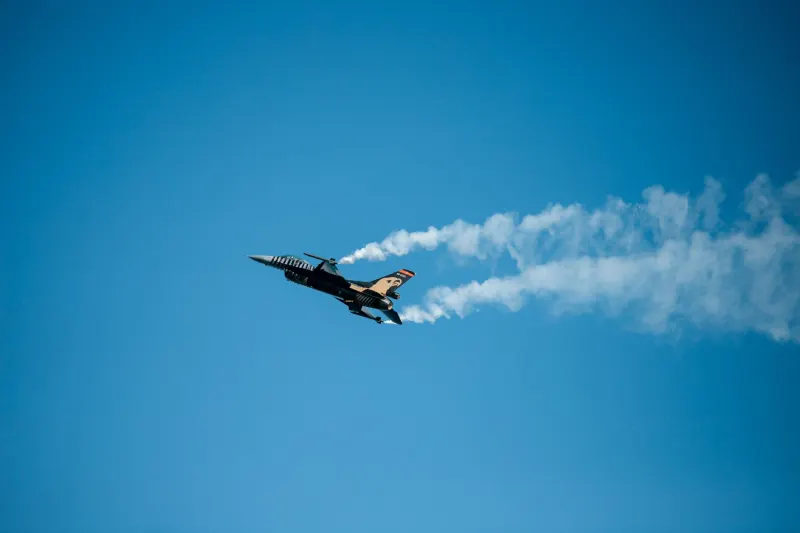
A Georgia Tech aerospace engineering student has independently developed a jet-powered model aircraft that reportedly reached a top speed of 491 mph, potentially establishing a new benchmark for remotely controlled planes. Tomas Salvo designed and assembled the aircraft, named the Reaper, while living in university accommodation, investing approximately $13,000 of his own money into the project since starting development in February 2025. During its fastest recorded run, the aircraft carried a 2.6-pound payload, and its performance has already attracted the attention of defense officials and amateur aerospace enthusiasts alike.
Key takeaways
- The $13,000 jet-powered Reaper aircraft reportedly reached 491 mph.
- Three working prototypes have sustained the claimed top speed for four minutes.
- The project has drawn public interest from Prescott Paulin of the Pentagon CTO’s office.
- Salvo hopes to eventually exceed 500 mph and pursue the Boom Supersonic prize.
Engineering and Performance Specifications
Salvo has produced three operational versions of the Reaper, with each prototype capable of maintaining the claimed 491 mph top speed for four minutes using a full fuel supply. The aircraft relies on a 250-newton turbojet engine, paired with a custom air intake and a titanium exhaust nozzle manufactured via 3D printing. The outer structure utilizes molded carbon-fibre sections, while internal components are constructed from laser-cut parts.
The aircraft is designed to take off from a launch rail or a truck-mounted launcher before climbing to 6,600 feet, or 2,000 metres, within 20 seconds. According to the developer, the system can travel 31 miles, or 50 kilometres, when operating at its maximum speed. Salvo describes the project as a reliable and repeatable system, noting that repeated trials have yielded closely matching performance metrics across multiple iterations.
Pentagon Interest and the Boom Supersonic Challenge
The reported high-speed flights quickly drew the attention of Prescott Paulin, Director of Industry Engagement at the Department of War's Research and Engineering office. Paulin, who leads industry engagement for the Pentagon CTO's Mission Capabilities team, publicly invited the student to visit the department to discuss the technology.
In addition to defense sector interest, the Reaper enters a competitive landscape for amateur builders vying for the Boom Prize. Sponsored by Boom Supersonic, the challenge offers a $750,000 cash award alongside $50,000 in company shares for a qualifying supersonic flight. To claim the prize, entrants must fly a radio-controlled, fixed-wing aircraft faster than Mach 1 for at least five seconds, land it safely, and execute the performance twice on the same day using a single aircraft. The competition rules prohibit rocket propulsion, onboard oxidisers, corporate or venture capital funding, and professional aerospace engineering direction, keeping the field open to amateur creators until the challenge closes in 2030. Although Salvo hopes to eventually pursue the $800,000 total award, his current 491 mph performance falls short of the supersonic requirement.








Comments