
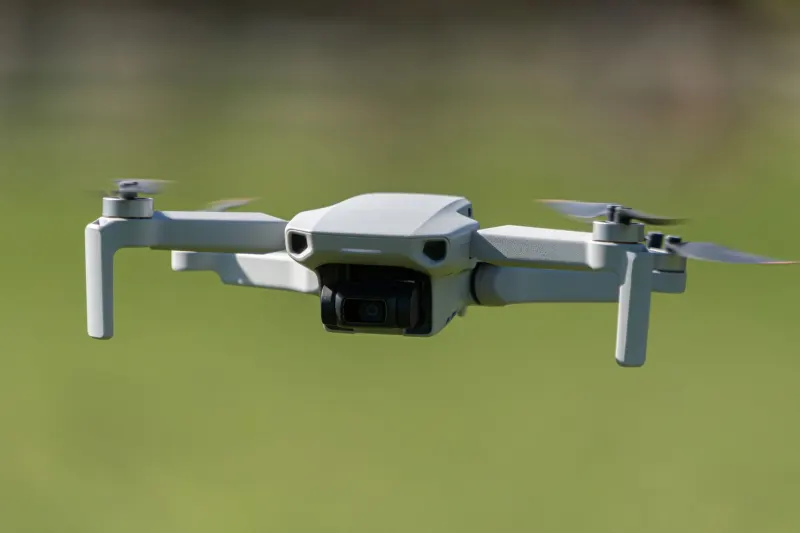
Merging a handheld gimbal camera with a convertible mini drone, the HoverAir Versa enters the market at $539 to test whether a single device can successfully serve two distinct creation modes. HoverAir, known for its decade-long history with selfie drones like the original Passport, has crafted its first-ever handheld camera. By snapping on a magnetic accessory kit, the boxy device transforms from a pocket vlogging tool into a flying camera. However, this dual-purpose hardware comes with specific trade-offs when measured against dedicated rivals in both the pocket camera and mini drone categories.
Key takeaways
- The HoverAir Versa is priced at $539 for the camera, with bundles starting at $649 for the full flight kit.
- It features a 1/1.3-inch sensor supporting 4K video at 60 fps, 10-bit HDR, and 12-megapixel photos.
- The device includes 55GB of internal storage, expandable via SD card, though cards under 64GB are unsupported.
- In drone mode, it utilizes swappable batteries, downward sensors, and preset flight paths but lacks obstacle avoidance.
Hardware specifications and performance
At its core, the Versa relies on a 1/1.3-inch sensor paired with a 19mm equivalent lens possessing an f2.0 aperture. This configuration positions its pixel size and low-light capabilities between DJI's Osmo Pocket 4 and the Neo 2. The 3-axis gimbal stabilizes footage effectively, while the 1.64-inch display provides a compact framing window. Operating the camera reveals sharp 4K video details, though color balance leans toward heavily saturated blues outdoors and a warm, slightly beige hue on white walls indoors. The 2x in-sensor zoom offers added flexibility, though users are restricted to either 1x or 2x magnification with no smooth intermediate zoom options.
Unlike standard pocket cameras, the Versa incorporates swappable batteries when configured for flight. The accessory ecosystem is robust at launch, featuring an official ND filter kit, a magnetic tripod accessory with a standard thread, and support for external USB microphones equipped with noise-cancellation to suppress propeller sounds during vlogs.
Flight capabilities and market competition
Attaching the protective prop cage converts the unit into a drone resembling HoverAir's X1 series. Controlled primarily through preset patterns like hovering, orbiting, and following via palm takeoff and landing, the drone lacks obstacle avoidance entirely. Software smarts handle tracking from behind, yet forward tracking leaves the device blind to obstacles in its path. Creative software additions include vertical shooting modes, AI framing, a dolly zoom, and a "3D worlds" option that generates a 3-dimensional, exportable model complete with customizable 3D emojis.
When evaluated strictly as a standalone pocket camera, the Versa faces intense pressure from the $600 Insta360 Luna Pro, which features an 1-inch sensor, 8K video capture, and 50-megapixel photo capabilities. As a mini drone, the pricing dynamic shifts when purchasing the flight kit bundles starting at $649, especially compared to alternatives like DJI's Neo 2 or HoverAir's own X1 Pro Max. Ultimately, creators who intend to purchase both a pocket camera and a small drone will find the Versa's hybrid design and space-saving portability a compelling proposition despite its technical compromises.





Comments