
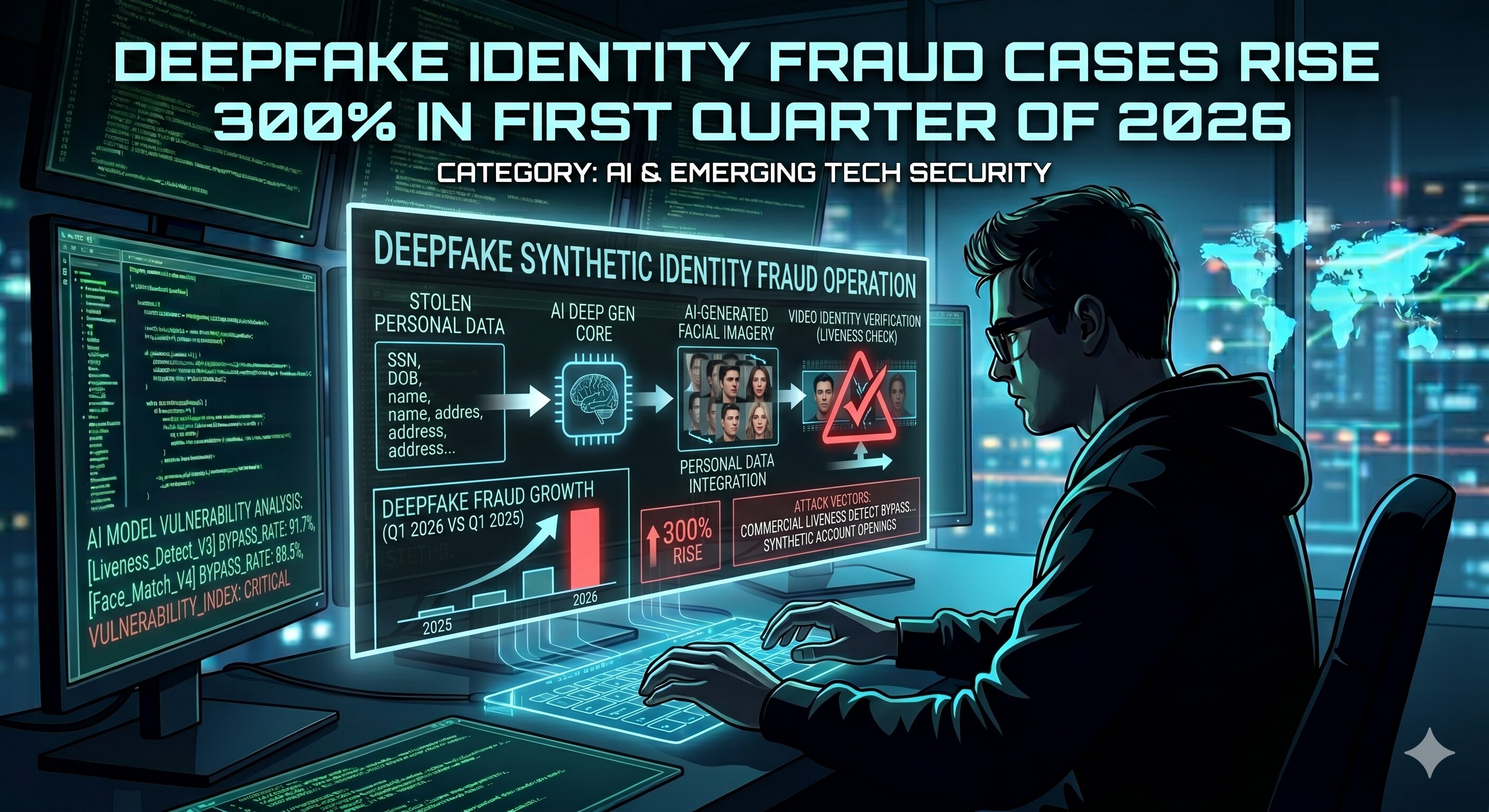
Deepfake Identity
Fraud Cases Rise 300% in First Quarter of 2026
Category:
AI & Emerging Tech Security
A
comprehensive industry report has revealed that identity fraud cases involving
deepfake technology increased by 300% in the first quarter of 2026 compared to
the same period in 2025, marking a dramatic acceleration in the adoption of
AI-generated synthetic identity fraud by criminal organizations. The surge is
being attributed to the rapid improvement in the quality and accessibility of
deepfake generation tools.
Criminals are
using deepfake technology primarily in two ways: to defeat video-based identity
verification systems used by banks, cryptocurrency exchanges, and other
financial institutions, and to create synthetic identities combining real
personal information with AI-generated facial images for fraudulent account
openings.
In documented
cases, fraudsters have used real stolen identity information combined with a
deepfake video to pass liveness checks — verification steps designed to confirm
that the person presenting identification is a live human present in real time.
Researchers have demonstrated that current-generation deepfakes can fool many
commercial liveness detection systems.
"The
identity verification industry is facing an existential challenge from deepfake
technology," said fraud prevention specialist Amina Traoré. "Systems
that were considered state of the art just 18 months ago are now being
routinely defeated by criminals using consumer-grade AI tools."
Identity
verification providers are racing to develop more robust detection techniques,
including methods that analyze subtle physiological signals and inconsistencies
that deepfakes currently struggle to replicate. Regulatory bodies are also
updating know-your-customer requirements to address the deepfake threat.





Comments