
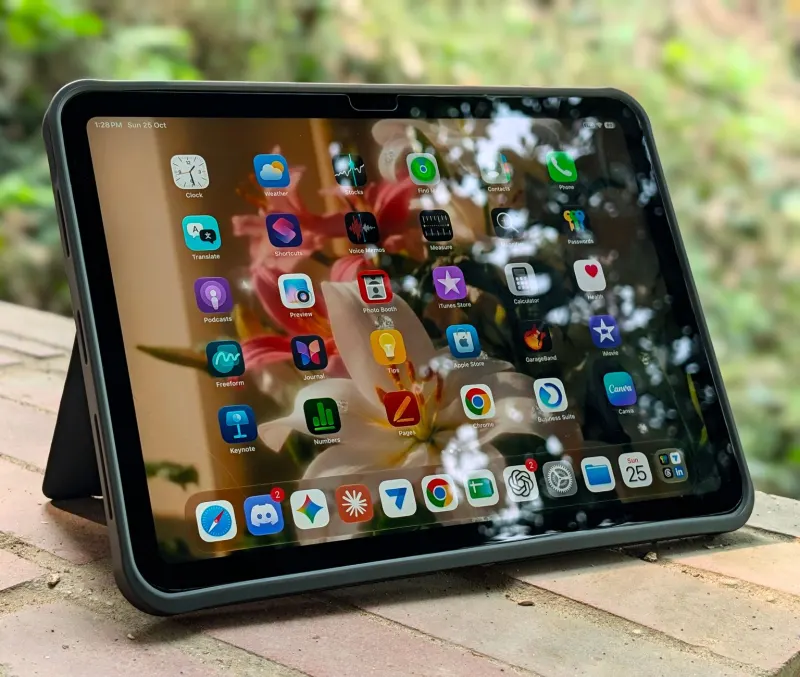
Choosing the right Apple tablet has become significantly more complicated following a sweeping price increase across the company's entire iPad lineup. Apple recently implemented price hikes ranging from $100 to $200 on every current model, attributing the adjustment to memory and storage shortages driven by high demand for artificial intelligence data centers. Navigating the current ecosystem requires balancing updated hardware specifications, upcoming software releases like iPadOS 27, and identifying older models that should be avoided.
Key takeaways
- Apple raised prices across its entire iPad lineup by $100 to $200 due to memory and storage shortages.
- The 2025 base iPad (A16) starts at $449 and remains the best overall choice for most users, though it lacks Apple Intelligence support.
- Older iPad models released before 2020 lack software support and feature outdated, low-resolution displays.
- The upcoming iPadOS 27 brings deep Gemini integration for Siri and natural language automation shortcuts.
Current iPad Lineup and Pricing Structure
Apple currently maintains four distinct tablet lines: the base iPad, iPad Mini, iPad Air, and iPad Pro. Following the June price adjustments, the base 11-inch iPad with the A16 chip starts at $449, while the iPad Mini powered by the A17 Pro begins at $599. Further up the scale, the 11-inch M4 iPad Air now starts at $749, and the 13-inch version starts at $949. At the high end, the M5 iPad Pro starts at $1,199 for the 11-inch model and reaches $1,499 for the 13-inch configuration.
For most users, the 2025 base iPad remains the top recommendation. It features a modern design with uniform bezels around an 11-inch LCD screen, a USB-C port, a power-button-integrated Touch ID sensor, and 12-megapixel cameras. While its A16 processor and 6GB of RAM handle everyday tasks, streaming, and gaming effortlessly, it lacks sufficient RAM to support Apple Intelligence features. Meanwhile, power users requiring tandem OLED displays and advanced graphics look to the M5 iPad Pro, whereas casual users often lean toward the compact form factor of the seventh-generation iPad Mini.
Software Support and Upcoming Operating Systems
Software compatibility plays a critical role when selecting a device. Apple previewed iPadOS 27 at its Worldwide Developers Conference in June, bringing a public beta in July and a fall public release. The upcoming software centers heavily on Siri, introducing a dedicated AI app utilizing Google Gemini's world knowledge and context. iPadOS 27 also introduces natural language Shortcuts for multi-app automation, customizable AirPods EQ settings, and expanded parental controls. These features will arrive alongside refinements to the windowed multitasking introduced in iPadOS 26, which allows users to resize apps and run background tasks much like a MacBook.
Hardware compatibility varies by generation. While the current operating system supports devices like the A16 base iPad and M-series Air and Pro models, older hardware faces strict limitations. Devices released prior to 2020—including the iPad Mini 1 through 6 and standard iPads 1 through 10—suffer from pixelated screens, slow performance, and a lack of modern software updates. Prospective buyers are advised to steer clear of these legacy machines unless acquired for free.
What to Watch Next
Market watchers anticipate further hardware refreshes later in the year. Rumors point to a potential base iPad update featuring the A18 chip for Apple Intelligence support, as well as an upcoming iPad Mini update that may introduce an OLED display. Additionally, potential updates to the iPad Pro line and the M6 chip remain subjects of industry speculation for late 2026 or 2027. Buyers searching for discounts can consider slightly older M1, M2, or M4 iPad Pro models, provided they are heavily discounted well below original retail prices.







Comments