
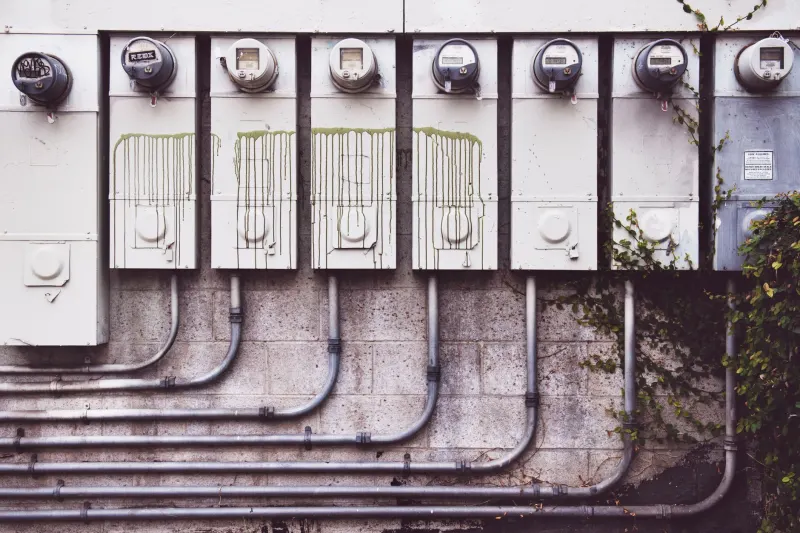
Millions of smart meters installed across households in the United Kingdom could soon require costly replacements because they rely on aging cellular networks. As telecommunications providers prepare to retire older network infrastructure, an estimated 12 to 13 million smart devices risk losing their remote connectivity features entirely. This impending hardware transition carries a projected price tag of approximately £4 billion, raising concerns among consumers who are already grappling with elevated utility expenses across the country.
The large-scale deployment of smart meters took years to scale across the nation, reaching a milestone of 15 million installed units by October 2021. However, many of the early models deployed during this rollout phase were built to rely exclusively on legacy 2G and 3G wireless connections to transmit consumption data back to energy suppliers. While 3G has already been largely phased out by network operators, an official deadline of 2033 has been set to sunset 2G services completely, with major network providers planning to initiate the shutdown process in either 2029 or 2030.
Key takeaways
- Up to 13 million UK smart meters rely on 2G and 3G connectivity.
- Cellular networks plan to begin phasing out 2G between 2029 and 2030, with an official final deadline in 2033.
- The massive hardware replacement initiative is estimated to cost around £4 billion.
- More modern smart meter models already utilize 4G technology and will remain fully operational.
The root cause of the connectivity crisis
Once older telecommunications networks go dark, the affected smart meters will lose their ability to transmit readings remotely to utility companies. Without active network connectivity, the hardware effectively ceases to function as a smart device, turning into a basic meter that requires manual readings. Government planners were already aware of the impending 2G and 3G phase-out plans when initial rollout targets were established, given that plans to phase out these older networks were announced back in 2021. Despite this official schedule, some legacy-dependent smart meters continued to be installed.
This predictable oversight means that millions of homes will experience a loss of smart functionality through no fault of their own. Energy suppliers will be forced to address the hardware shortfall before the network deadlines arrive. The situation highlights a significant coordination gap between telecommunications policy and large-scale utility infrastructure rollouts, leaving energy consumers to navigate the consequences of short-sighted hardware choices.
Financial implications and future outlook
Replacing millions of obsolete units will require substantial capital, with industry reports estimating the total expense to reach roughly £4 billion. Consumer advocates warn that these massive infrastructure costs will likely be added directly onto household energy bills, which are already widely considered out of control. Passing these expenses down to everyday users threatens to increase financial pressure on households already struggling with cost-of-living challenges.
Despite the widespread scope of the problem, not every household will need a hardware upgrade. Energy providers have confirmed that newer generations of smart meters were manufactured with modern 4G connectivity modules. Because 4G networks are not expected to face retirement until sometime in the 2040s, these updated units will remain fully functional and exempt from the upcoming replacement cycle, offering a measure of relief for consumers who received later installations.




Comments