
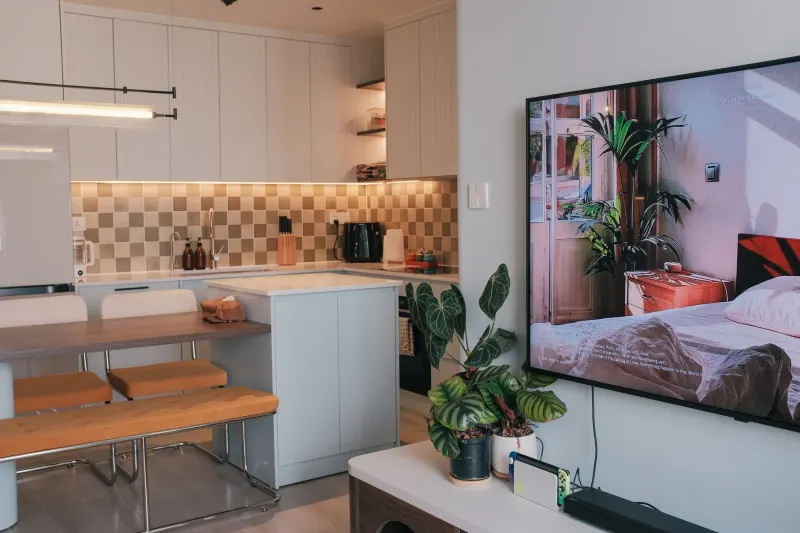
The television landscape has evolved significantly over the past year, with new art televisions and RGB displays entering the market. However, OLED televisions still reign supreme for deep, rich blacks thanks to their ability to control individual pixels or turn them off completely. Intense competition has made many models more affordable than ever, prompting extensive testing to determine the absolute best options currently available on the market.
Choosing the right OLED television depends heavily on room size and viewing distance. While massive screens look spectacular, 65 inches remains the standard for most living rooms and group viewing areas. Unlike LCD displays, organic light-emitting diode panels use a special organic material that lights up when fed electricity, ensuring dark scenes look far more realistic with exceptional shadow detail.
Key takeaways
- The Samsung S95H QD-OLED features a 165 Hz refresh rate, a 4.2.2 channel speaker layout, and a brighter picture.
- The LG B6 offers a budget-friendly OLED option starting at an accessible price point with a 120 Hz refresh rate.
- The Sony Bravia 8 II integrates seamlessly with the PlayStation 5, featuring automated HDR tone mapping and low-latency gaming modes.
- The 2025 LG G5 provides premium performance, a 165 Hz refresh rate, and Dolby Atmos surround sound support.
Top OLED Models for Overall Performance and Gaming
The Samsung S95H QD-OLED stands out as the best overall choice, boasting a 165 Hz refresh rate, Tizen OS, and a 4.2.2 channel speaker layout. It delivers an exceptionally bright and colorful picture, aided by an AI picture optimizer that enhances dark scenes automatically. Furthermore, the S95H eliminates the need for Samsung's external One Connect breakout box, placing its four HDMI 2.1 ports directly on the television set for added convenience.
For gamers, the Sony Bravia 8 II QD-OLED works seamlessly with the PlayStation 5 to automate features like low-latency gaming mode and HDR tone mapping. It features a 120 Hz refresh rate, Google TV integration with Google Gemini voice search, and exceptional off-angle viewing. Meanwhile, the previous-generation LG G5 remains a premium powerhouse featuring a 165 Hz refresh rate, WebOS 25, and built-in Dolby Atmos support.
Budget Options and Alternative Display Technologies
Buyers looking for value can turn to the LG B6 OLED, which brings organic pixel technology down to a more accessible price point. Running on WebOS 26 with a 120 Hz refresh rate and four HDMI 2.1 ports, it handles cinematic content and demanding games like Resident Evil: Requiem with ease. Honorable mentions include the Roku Pro Series OLED for budget-conscious fans of the Roku platform, and the Sony Bravia 6 OLED running Google TV.
Alternative display technologies are also carving out space on store shelves for shoppers who look beyond traditional panels. Samsung’s The Frame Pro offers a matte finish that resembles wall art, while the LG Micro RGB Evo provides customizable color for larger room setups. Shoppers can also consider ultra-short-throw projectors like the AWOL Vision Aetherion Max for massive home theater projection.



Comments