
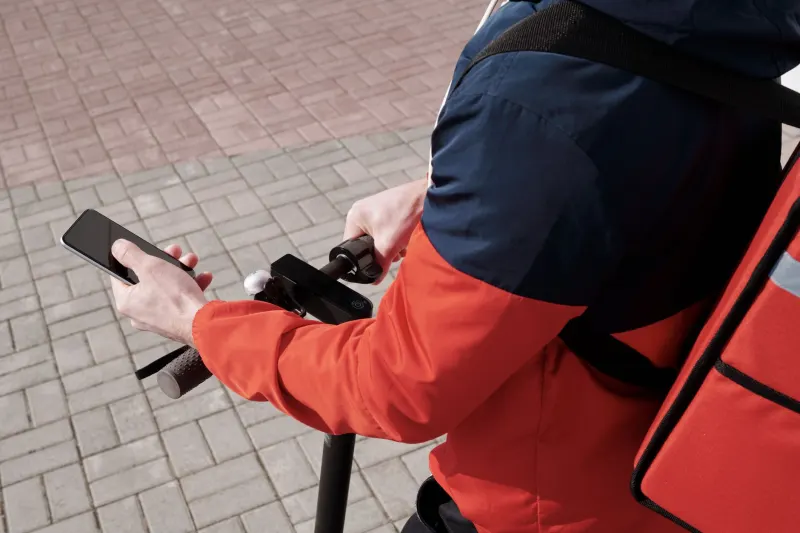
Serve Robotics is opening up its autonomous delivery platform to allow third-party software engineers, small businesses, and autonomous AI agents to utilize its fleet of sidewalk robots. The company is launching a new AV Delivery Developer Portal, which makes its 2,000-robot fleet available to anyone looking to coordinate last-mile deliveries without going through major food delivery apps.
With this new system, developers and merchants can dispatch robots directly by providing pickup and dropoff coordinates, while Serve’s back end manages obstacle avoidance, routing, and remote teleoperation supervision. The robots operate primarily on pedestrian walkways with a top speed of around six miles per hour, functioning in approximately 150 neighborhoods. Originally spun out of Postmates in 2021, Serve previously handled deliveries primarily for Uber Eats in cities like Los Angeles, Miami, and Dallas.
Key takeaways
- Serve Robotics is launching an AV Delivery Developer Portal for third-party developers, small businesses, and AI agents.
- The platform allows users to dispatch a fleet of 2,000 sidewalk robots without relying on major food delivery services.
- Serve operates in about 150 neighborhoods with sidewalk robots that travel at a top speed of roughly 6 mph.
- The company was originally spun out of app-based delivery company Postmates in 2021.
Expanding Beyond Traditional Food Delivery
In an interview with The Verge, Serve CEO Ali Kashani explained that opening the platform prevents the company from depending too heavily on big delivery apps while keeping the robots active between traditional lunch and dinner rushes. Kashani noted that treating API requests the same as enterprise orders creates an open marketplace where the robots have no prior commitments until assigned a delivery task. Food delivery platforms usually dominate markets with rigid peaks, so platform diversification helps maintain steady utilization.
Small merchants can choose between pay-per-delivery or hourly reservation options. According to Kashani, these rates will significantly undercut human-powered delivery services. Potential use cases extend past food orders to intra-office shuttles, repair shops transporting parts, and peer-to-peer exchanges like Facebook Marketplace. This allows local shops like bakeries, florists, and pharmacies to bypass middleman fees ranging from 15 percent to 30 percent that traditional food delivery apps typically charge on every order.
Safety, Regulations, and Future Outlook
Operating a fleet of sidewalk robots still requires careful safety oversight. Serve confirmed that access to the robots will remain subject to manual approval by company employees to prevent hazardous deployments or illicit cargo. Liability for stolen or broken goods will be determined by how individual partnerships are priced and insured.
Despite opening the platform to developers, Kashani stated that Serve will not expand into street-based delivery vehicles, maintaining its focus strictly on sidewalk autonomy. The developer portal follows the company's announcement that it does not plan to renew its partnership with Uber Eats, marking a significant strategic pivot toward independent platform operations and lower per-delivery costs through increased fleet utilization and scale.



Comments