
For decades, the event management industry—encompassing everything from massive music festivals to global corporate conferences—relied on a highly analog playbook. Success was measured by physical headcount, the logistics of paper ticketing, and the sheer volume of printed signage. However, the global disruptions of the early 2020s forced a massive, sudden digitization of the entire sector. Today, the industry has not just returned to physical events; it has evolved into a deeply integrated, "phygital" (physical plus digital) ecosystem.
Event Technology (EventTech) is no longer just about live-streaming a keynote speech. It is about utilizing artificial intelligence, spatial computing, and the Internet of Things to eliminate logistical friction, ensure absolute crowd safety, and create hyper-personalized, immersive experiences that blur the line between the audience and the performance.
Facial Recognition and Frictionless Entry
The most chaotic and frustrating touchpoint of any major event is the entry gate. Long lines, lost paper tickets, and the slow scanning of QR codes create massive bottlenecks.
- Biometric Ticketing: Major festivals and sports stadiums are transitioning to facial recognition entry. Attendees upload a selfie when purchasing their ticket. Upon arriving at the venue, they simply walk through a designated biometric lane. High-speed cameras scan their face, match it against the encrypted ticketing database, and grant access in milliseconds without the attendee ever breaking stride or pulling out a phone.
- VIP Personalization: This biometric integration extends beyond the gate. When a VIP attendee approaches a hospitality suite, the cameras recognize them, instantly pulling up their profile for the staff. The bartender knows their preferred drink, and the concierge knows their dietary restrictions before a single word is exchanged, creating a level of frictionless hospitality previously impossible at scale.
Crowd Analytics and IoT Safety
Managing a crowd of 100,000 people is a massive logistical and safety challenge. Planners are moving away from relying on static security cameras and radio chatter, shifting toward real-time, AI-driven crowd analytics.
- Heatmapping and Flow Analysis: Using a combination of overhead computer vision, Wi-Fi triangulation, and Bluetooth beacons, event command centers generate a live digital heatmap of the entire venue. They can track the exact density and movement vectors of the crowd in real-time.
- Predictive Resource Deployment: If the AI detects that 15,000 people are suddenly migrating toward a specific stage for a surprise performance, it automatically alerts the operations team to reroute security personnel, open additional exit gates, and deploy more mobile restroom units to that specific zone before a dangerous crush or logistical failure occurs.
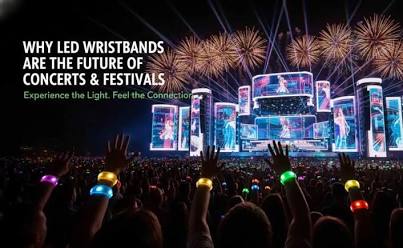
- Smart Wearables: RFID wristbands do more than just act as digital wallets for purchasing food. They allow organizers to track exactly which booths or stages are receiving the highest dwell time, providing invaluable, hard data to sponsors regarding exactly how many people interacted with their brand activation.
Holographic Telepresence and Hybrid Scaling
The binary choice between a physical event and a virtual webinar is dead. The modern event is hybrid by default, but the technology has moved far beyond simple video conferencing.
- The Holographic Keynote: High-profile speakers or performers who cannot physically travel can now be beamed onto the stage using advanced 4K holographic projection (such as the ARHT Media systems). The speaker stands in a capture studio in London, and their life-sized, photorealistic, 3D hologram interacts with a live audience in New York with zero latency, even making direct eye contact and answering live questions.
- Synchronized Global Audiences: Massive esports tournaments and tech summits are leveraging cloud infrastructure to synchronize the physical and digital audiences. A virtual attendee watching from home through a VR headset doesn't just watch a screen; they sit in a virtual representation of the stadium, and their cheers are piped into the physical venue's audio system, creating a unified feedback loop between the in-person and remote crowds.
Augmented Reality (AR) Wayfinding and Gamification
Navigating a massive convention center or a sprawling outdoor music festival can be overwhelming. AR is turning the attendee's smartphone into an interactive, spatial map.
- Spatial Navigation: Instead of trying to read a confusing paper map, an attendee opens the event app and holds up their phone. Using the camera, the app overlays giant, glowing, digital arrows onto the physical walkway, guiding the user exactly to their next breakout session or to the shortest line for a food truck.
- Experiential Gamification: Brands are using AR to turn passive sponsorships into interactive games. An attendee might use their phone to hunt for virtual Easter eggs hidden digitally throughout the festival grounds. Finding them unlocks exclusive VIP access or digital NFT merchandise, driving deep, active engagement rather than just slapping a logo on a banner.
The Outlook
The event management sector has transformed from an exercise in physical logistics into a masterclass in data-driven experience design. By eliminating the friction of crowds and leveraging immersive technology, EventTech ensures that the events of the future are safer, vastly more scalable, and infinitely more engaging.





Comments