
The cultural status of animals has shifted dramatically over the last two decades. Pets are no longer viewed merely as property or working animals; they are deeply integrated, beloved members of the family unit. Because of this "humanization" of pets, owners are now demanding a level of medical care for their animals that mirrors the quality, speed, and sophistication of human healthcare.
In response, Veterinary Technology (VetTech) is experiencing a massive boom. Technologies that were exclusively the domain of elite human hospitals just five years ago—such as artificial intelligence diagnostics, continuous biometric wearables, and genomic sequencing—are now rapidly becoming standard practice in the modern veterinary clinic.
Tele-Triage and Remote Continuous Monitoring
The traditional veterinary model is inherently stressful: loading a sick, anxious animal into a car, sitting in a chaotic waiting room, and placing them on a cold metal table. VetTech is moving the first line of care directly into the home.
- Animal Telehealth Platforms: Video consultation platforms designed specifically for veterinary use have skyrocketed. While a vet cannot perform a physical exam over a webcam, they can perform "tele-triage." By observing the animal's behavior, breathing patterns, and mobility in its own comfortable environment, the vet can determine if a midnight trip to the emergency clinic is actually necessary, or if the issue can wait for a regular morning appointment.
- The "Fitbit for Dogs": Smart collars have evolved far beyond basic GPS tracking. Modern pet wearables utilize advanced accelerometers and biometric sensors to continuously track an animal's resting heart rate, respiratory rate, sleep quality, and scratching frequency.
- Predictive Illness Detection: Dogs and cats are evolutionary masters at hiding pain and illness. Often, by the time an owner notices symptoms, the disease is advanced. Wearables change this. If a smart collar detects a 15% increase in a dog's resting respiratory rate over three days, the companion app immediately flags the owner to schedule a vet visit, catching early-stage heart failure or respiratory infections before clinical signs appear.
AI in Veterinary Radiology and Diagnostics
Veterinarians are the ultimate general practitioners; they must be dentists, surgeons, oncologists, and radiologists, often for multiple different species in a single day. AI is stepping in to act as a highly specialized second opinion.
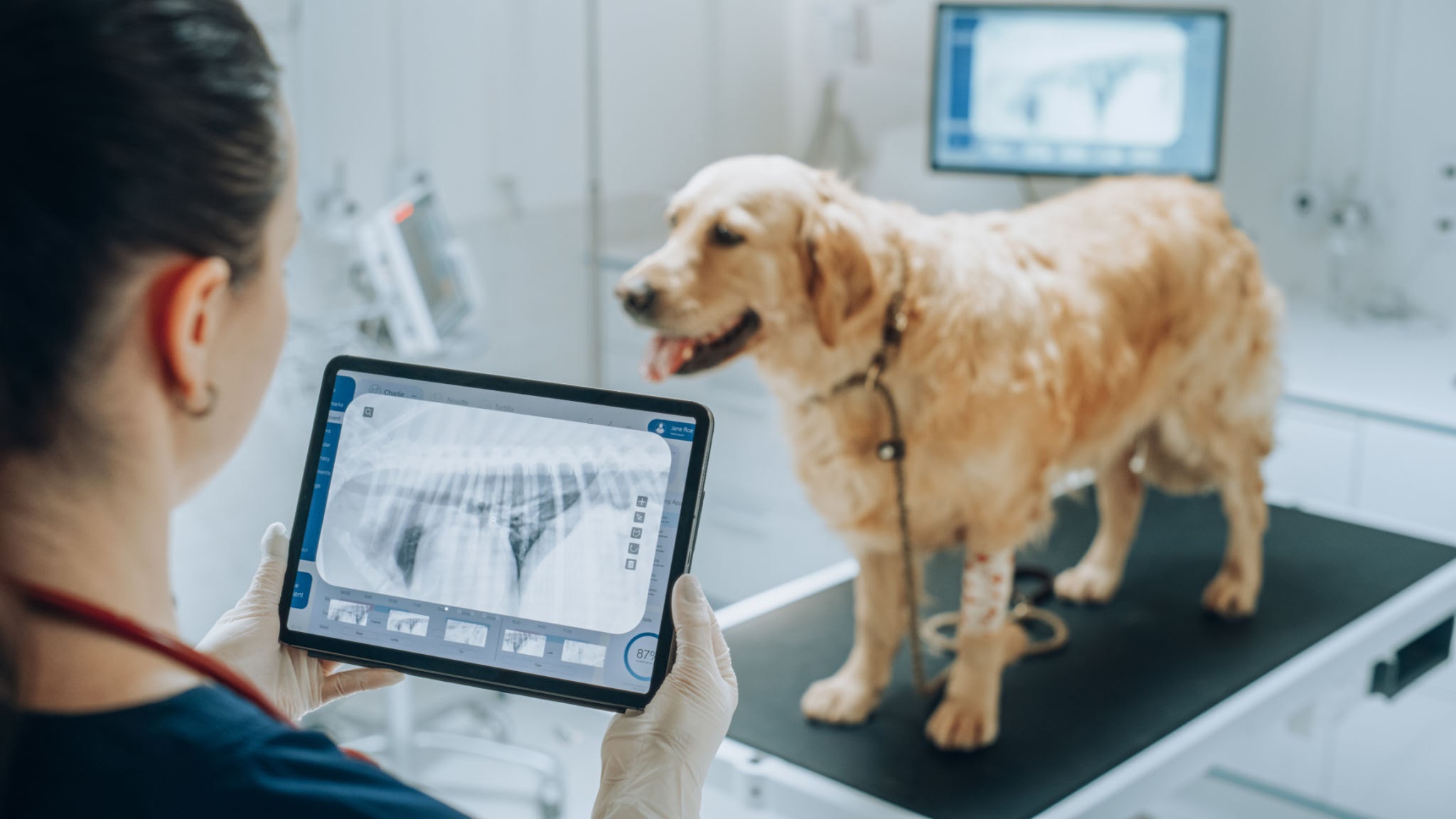
- Automated X-Ray Analysis: Platforms like Vetology use deep learning algorithms trained on millions of animal radiographs. Within seconds of an X-ray being taken, the AI scans the image and highlights abnormalities—such as micro-fractures, lung tumors, or an enlarged heart silhouette.
- Combating Fatigue: In a busy clinic, a fatigued vet might miss a subtle 2-millimeter lesion on a busy Friday afternoon. The AI, however, never gets tired. It acts as a tireless safety net, drastically increasing diagnostic accuracy and allowing the vet to start treatment faster.
- Pathology and Cytology: Similar AI systems are being used under the microscope. When a vet takes a needle aspirate of a lump, they can slide it into an automated scanner. The AI instantly analyzes the cellular structure to determine if the mass is a benign lipoma or a malignant mast cell tumor, eliminating the days of waiting for a sample to be mailed to an external lab.
Genomic Sequencing and Breed-Specific Preventative Care
Just as human medicine is moving toward genetic personalization, veterinary medicine is entering the era of the DNA swab.
- Beyond Breed Identification: Direct-to-consumer pet DNA kits are no longer just a novelty to find out if a rescue dog is part terrier. These tests now screen for hundreds of known genetic mutations tied to specific diseases.
- Proactive Medicine: If a DNA test reveals that a Golden Retriever puppy carries the genetic marker for Progressive Retinal Atrophy (which causes eventual blindness), the veterinarian can intervene early. They can prescribe specific dietary supplements and establish a rigorous monitoring schedule years before the first physical symptoms manifest, fundamentally shifting vet care from reactive to preventative.
3D Printing and Animal Prosthetics
Historically, severe orthopedic injuries or bone cancers in pets resulted in either euthanasia or amputation. Advanced materials and 3D printing are providing a third option.
- Custom Prosthetics: Using a standard smartphone scanner, a vet can take a 3D digital model of a dog's residual limb. Engineers can then use that file to 3D-print a perfectly fitted, lightweight titanium and carbon-fiber prosthetic, restoring full mobility at a fraction of the cost of traditional manufacturing.
- Surgical Planning Models: For complex surgeries, such as correcting a severe spinal deformity in a bulldog, the vet can 3D print an exact replica of the dog's spine based on its CT scan. The surgical team can physically practice the procedure on the plastic model before putting the animal under anesthesia, drastically reducing surgery time and complication rates.
The Outlook
The VetTech revolution is bridging the gap between human and animal medicine. By arming veterinarians with the predictive power of data, the precision of AI, and the customization of 3D printing, technology is ensuring that our closest companions live significantly longer, healthier, and happier lives.





Comments