
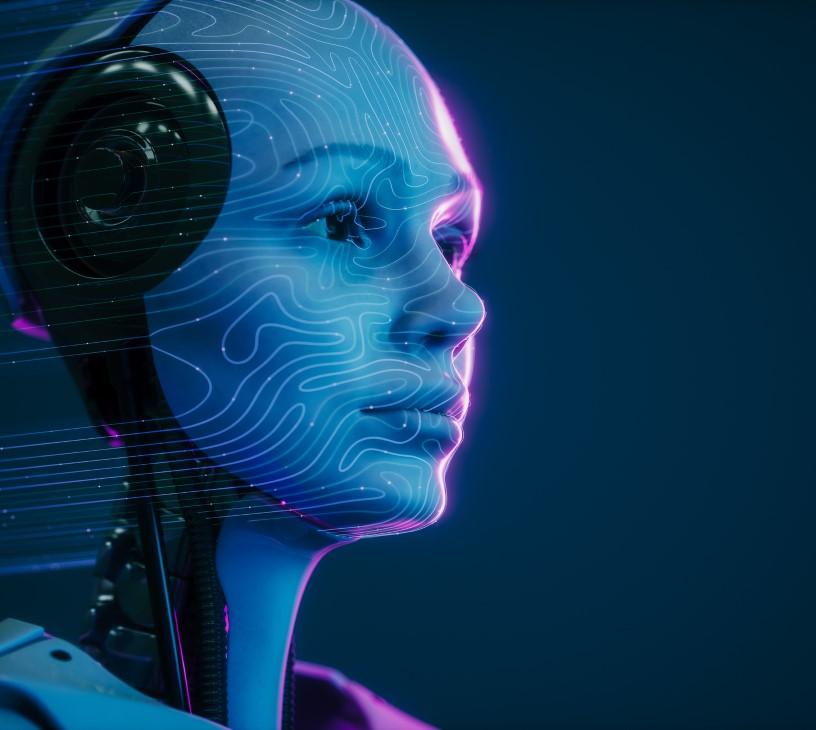
Digital humans and AI avatars are rapidly becoming an important part of enterprise technology strategies as organizations seek innovative ways to improve customer engagement, automate interactions, and enhance digital experiences. Powered by advances in artificial intelligence, natural language processing, computer vision, and generative AI, these virtual personas are transforming how businesses communicate with customers, employees, and partners.
Unlike traditional chatbots, digital humans are designed to simulate realistic human conversations through lifelike facial expressions, voice interactions, and contextual understanding. These AI-powered virtual assistants can engage users in natural, interactive discussions while delivering information, answering questions, and providing personalized support across multiple channels.
Businesses across industries are increasingly adopting AI avatars to improve customer service operations. Digital humans can provide 24/7 support, handle routine inquiries, assist with product recommendations, and guide customers through complex processes. This capability helps organizations reduce response times while improving customer satisfaction and operational efficiency.
The banking and financial services sector is among the leading adopters of digital human technology. AI avatars are being used to assist customers with account management, loan inquiries, financial education, and digital banking services. By delivering personalized assistance at scale, financial institutions can enhance customer experiences while reducing support costs.
Healthcare organizations are also exploring digital human applications. Virtual healthcare assistants can help patients schedule appointments, access medical information, receive wellness guidance, and navigate healthcare services. These solutions improve accessibility while allowing healthcare professionals to focus on more complex patient needs.
In the retail industry, AI avatars are enhancing personalized shopping experiences. Digital sales assistants can recommend products, answer customer questions, provide styling advice, and support purchasing decisions in both online and virtual retail environments. This level of personalization helps increase engagement and conversion rates.
Employee training and workforce development represent another growing use case. Enterprises are deploying AI-powered digital instructors and virtual coaches to deliver onboarding programs, compliance training, and skill development courses. Interactive learning experiences can improve knowledge retention while reducing training costs.
Human resources departments are leveraging AI avatars to streamline recruitment and employee support processes. Virtual assistants can answer candidate questions, guide applicants through hiring workflows, and provide employees with quick access to company information, benefits, and policies.
Advancements in generative AI are making digital humans more intelligent and conversational. Large language models enable AI avatars to understand complex questions, maintain context during interactions, and generate more natural responses. These improvements are helping create experiences that feel increasingly human-like and engaging.
Multilingual capabilities are expanding the global reach of digital human platforms. AI avatars can communicate in multiple languages, allowing enterprises to provide consistent customer experiences across international markets without significantly increasing staffing requirements.
Marketing and brand engagement initiatives are also benefiting from digital human technology. Organizations are creating virtual brand ambassadors, product experts, and customer engagement specialists that can interact with audiences across websites, mobile applications, and social media platforms.
The emergence of immersive technologies such as augmented reality (AR), virtual reality (VR), and mixed reality is further accelerating adoption. Digital humans are expected to play a central role in future virtual workplaces, metaverse environments, and immersive customer experiences where realistic human interaction enhances engagement.
Despite growing adoption, enterprises continue to address challenges related to privacy, ethical AI usage, transparency, and user trust. Organizations are implementing governance frameworks and responsible AI practices to ensure digital humans are deployed securely and appropriately.
Technology providers are investing heavily in improving realism, emotional intelligence, voice synthesis, and personalization capabilities. As these technologies mature, digital humans are expected to become increasingly sophisticated and capable of handling more complex business interactions.
Industry analysts predict strong growth in enterprise adoption over the coming years as organizations seek scalable solutions for customer engagement, employee support, training, and digital transformation initiatives. Digital humans and AI avatars are emerging as a key component of the next generation of intelligent business applications.
As enterprises continue embracing AI-driven innovation, digital humans are helping bridge the gap between automation and human interaction. By delivering personalized, efficient, and engaging experiences, AI avatars are reshaping how organizations connect with people in an increasingly digital world.





Comments