
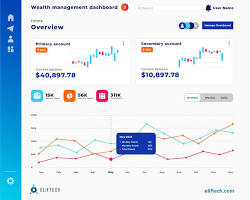
For decades, the world of private wealth management was an exclusive club. Elite financial advisors, charging hefty percentage-based fees, managed diversified portfolios for the ultra-wealthy. The average investor was left with few options: either pay high mutual fund fees, gamble on individual stocks, or settle for generic, low-performing savings accounts.
Today, that barrier to entry has effectively collapsed. Wealth Management Technology (WealthTech) has democratized access to institutional-grade investment strategies. By leveraging algorithmic automation, fractional ownership, and high-frequency tax optimization, FinTech is turning wealth management from a bespoke, high-cost service into a scalable, automated utility.
Robo-Advisors and Automated Portfolio Management
The flagship innovation of WealthTech is the "robo-advisor"—a software platform that performs the job of a human financial advisor at a fraction of the cost.
- Algorithmic Allocation: When a user signs up, the platform builds a custom portfolio based on their risk tolerance, investment horizon, and financial goals. The AI selects a basket of diversified, low-cost Exchange Traded Funds (ETFs) to match that profile.
- Automated Rebalancing: In traditional management, rebalancing a portfolio (selling winners and buying laggards to maintain the target risk profile) was a manual, infrequent task. Robo-advisors monitor the portfolio 24/7. As market fluctuations shift your holdings away from the target allocation, the algorithm automatically executes trades to rebalance the portfolio, ensuring the risk profile remains consistent without human intervention.
- Fractional Shares: WealthTech platforms allow investors to buy fractions of expensive stocks. Instead of needing $500 to buy a single share of a tech giant, a user can invest $10, enabling them to build a highly diversified, institutional-grade portfolio with even the smallest amount of capital.
Automated Tax-Loss Harvesting
Perhaps the most significant value-add of automated wealth management is the algorithmic optimization of taxes.
- The Power of Tax-Loss Harvesting: If an investor owns a stock that has lost value, they can sell it to "realize" a loss, which can be used to offset taxes on capital gains or income. Historically, tracking these losses across hundreds of different stocks and managing the "wash-sale rule" (which prevents selling and buying back the same stock within 30 days) was too complex for a human investor to manage manually.
- Algorithmic Execution: WealthTech algorithms monitor every position for potential losses. The system can sell a declining asset for a tax deduction and simultaneously purchase a highly similar, but not identical, substitute asset to maintain the portfolio's exposure. This creates a powerful tax alpha—often increasing net returns by 1% or more annually—that was previously available only to the wealthiest investors.
Democratizing Alternative Assets
Historically, asset classes like venture capital, private equity, and commercial real estate were completely inaccessible to retail investors, limited to massive pension funds and ultra-high-net-worth individuals.
- Tokenization: By tokenizing alternative assets on the blockchain, WealthTech platforms allow investors to buy fractional stakes in private companies or large-scale commercial real estate projects. This provides retail investors with access to non-correlated asset classes that were historically used by institutional investors to hedge against stock market volatility.
- The Outlook: WealthTech is fundamentally re-engineering the trajectory of middle-class wealth creation. By slashing management fees, automating tax efficiency, and opening up alternative assets, technology is ensuring that sophisticated financial tools are no longer reserved for the elite, but are available to anyone with a smartphone and a plan.





Comments