
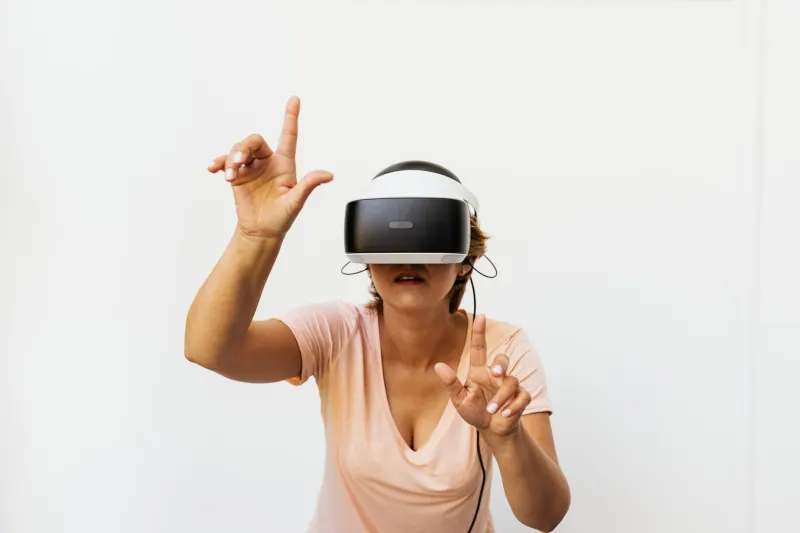
Imagine taking your computer monitor and setting it out by the curb. Instead of sitting at your desk surrounded by physical screens, maybe all you will need one day is a pair of smart glasses. As wearable tech rides a fresh wave of consumer interest, some early adopters are experimenting to see whether these devices are up for the challenge of completely replacing traditional monitors.
There are clear perks to adopting smart glasses for daily productivity. For starters, they offer a high degree of privacy since no one can peer over your shoulder to read sensitive information. They also promise to declutter workspaces and provide unmatched flexibility. Instead of hunching over a laptop while traveling on a flight, users can deploy smart glasses to project multiple virtual monitors adjusted directly to their personal preferences.
Key takeaways
- Smart glasses offer increased workspace privacy and eliminate the need for physical monitors.
- Early testers reported hardware heating issues and potential eye strain from screens inches away.
- Real-world productivity is hindered by awkward video calls and difficulties switching tasks like writing.
- Current models remain better suited for entertainment tasks such as gaming and watching movies.
The physical hurdles of long-term wear
For office workers, comfort is paramount. How someone sits, holds their head, and takes breaks impacts health, but early testers swapping monitors for smart glasses have encountered unexpected physical sticking points. Writing in Lifehacker, Stephen Johnson noted that his Xreal One Pro glasses heated up noticeably during extended use, radiating warmth directly onto his forehead. Different hardware models manage thermal dissipation in varied ways, impacting overall wearability.
Conversely, YouTuber Jasmine Uniza reported that her smart glasses remained comfortable during shorter sessions lasting between an hour and a half to two hours. She observed that her posture actually improved because she adjusted the virtual screen to match her body rather than forcing her body to conform to a fixed desktop display. However, eye strain remains a persistent concern. Testers noted that staring at a display located only half an inch from the eyes can tire vision out quickly, while lower-cost glasses often lack the sharp resolution required for precise office tasks.
Workflow friction and social awkwardness
Beyond ergonomic considerations, users have flagged practical workflow friction. Wearing dark lenses during professional video calls can feel socially awkward, and the isolating nature of wearing opaque hardware in an office environment creates barriers. Furthermore, multitasking becomes cumbersome. Simple everyday actions like writing in a physical notebook require taking the glasses off or peering awkwardly around them.
Because of these operational limitations, many testers suggest that current smart glasses are far better suited for entertainment than rigorous professional work. Kicking back on a couch to watch a movie or play a video game avoids the hurdles of an eight-hour workday, multi-app task switching, or wearing tinted frames on a Zoom call with colleagues. While smart glasses have grown lighter and more streamlined, they still have ground to cover before rendering traditional monitors obsolete.



Comments