
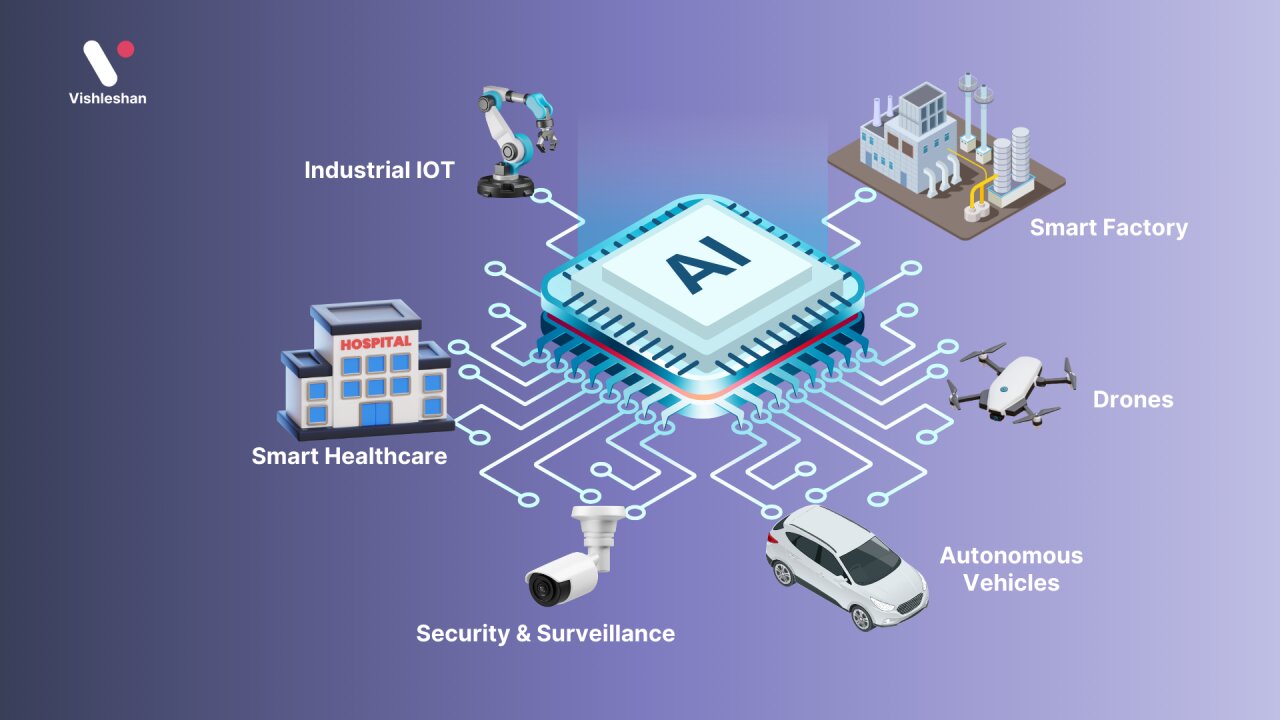
Artificial Intelligence-powered edge computing is emerging as one of the fastest-growing technology segments in 2026, transforming how businesses process and analyze data. By bringing AI capabilities closer to where data is generated, organizations can make faster decisions, reduce network dependency, and improve operational efficiency across a wide range of industries.
Traditional cloud computing relies on transmitting data to centralized servers for processing, which can introduce delays and increase bandwidth costs. Edge computing addresses this challenge by enabling AI models to run directly on devices, sensors, gateways, and local servers. This approach significantly reduces latency and allows real-time analysis of critical information.
The increasing adoption of Internet of Things (IoT) devices is one of the primary drivers behind edge computing growth. Smart factories, connected vehicles, healthcare monitoring systems, retail platforms, and industrial equipment generate massive amounts of data every second. Processing this information at the edge allows organizations to respond instantly to changing conditions and operational requirements.
Manufacturing companies are leveraging AI-powered edge computing to improve production efficiency and predictive maintenance capabilities. Intelligent sensors can monitor equipment performance in real time, detect anomalies, and identify potential failures before they occur. This reduces downtime, lowers maintenance costs, and increases overall productivity.
The automotive industry is also benefiting from advancements in edge AI technologies. Autonomous vehicles and advanced driver-assistance systems require immediate processing of data collected from cameras, radar systems, and sensors. Edge computing enables these systems to make split-second decisions without relying entirely on cloud connectivity, improving safety and reliability.
Healthcare organizations are increasingly adopting edge AI solutions for patient monitoring and medical diagnostics. Wearable devices, smart medical equipment, and remote healthcare platforms can analyze patient data locally, providing faster insights while helping protect sensitive medical information. This capability is particularly valuable in remote areas where internet connectivity may be limited.
Retail businesses are deploying AI-powered edge systems to enhance customer experiences and optimize store operations. Intelligent cameras and sensors can analyze customer behavior, monitor inventory levels, and improve checkout processes in real time. These insights help retailers make data-driven decisions while delivering more personalized shopping experiences.
Cybersecurity has become another major advantage of edge computing. By processing sensitive information closer to its source, organizations can reduce the amount of data transmitted across networks, minimizing exposure to cyber threats. Edge AI systems can also identify unusual activities and security risks in real time, enabling faster threat detection and response.
Telecommunications providers are investing heavily in edge infrastructure to support emerging technologies such as 5G, smart cities, and connected devices. The combination of AI, edge computing, and high-speed connectivity is enabling new applications that require ultra-low latency and real-time intelligence.
Advancements in AI hardware are further accelerating edge computing adoption. Specialized AI chips, neural processing units, and energy-efficient processors allow organizations to deploy sophisticated machine learning models on smaller devices. These innovations make edge AI solutions more practical, scalable, and cost-effective for businesses of all sizes.
Industry experts predict that edge computing will play a critical role in the future of artificial intelligence. As data volumes continue to grow and organizations demand faster insights, the need for distributed intelligence will become increasingly important. Businesses that successfully integrate edge AI technologies are expected to gain competitive advantages through improved efficiency, responsiveness, and innovation.
As enterprises continue their digital transformation journeys, AI-powered edge computing is becoming a foundational technology for next-generation applications. From smart manufacturing and healthcare to transportation and retail, edge AI is reshaping how organizations leverage data and deliver intelligent services in an increasingly connected world.





Comments