
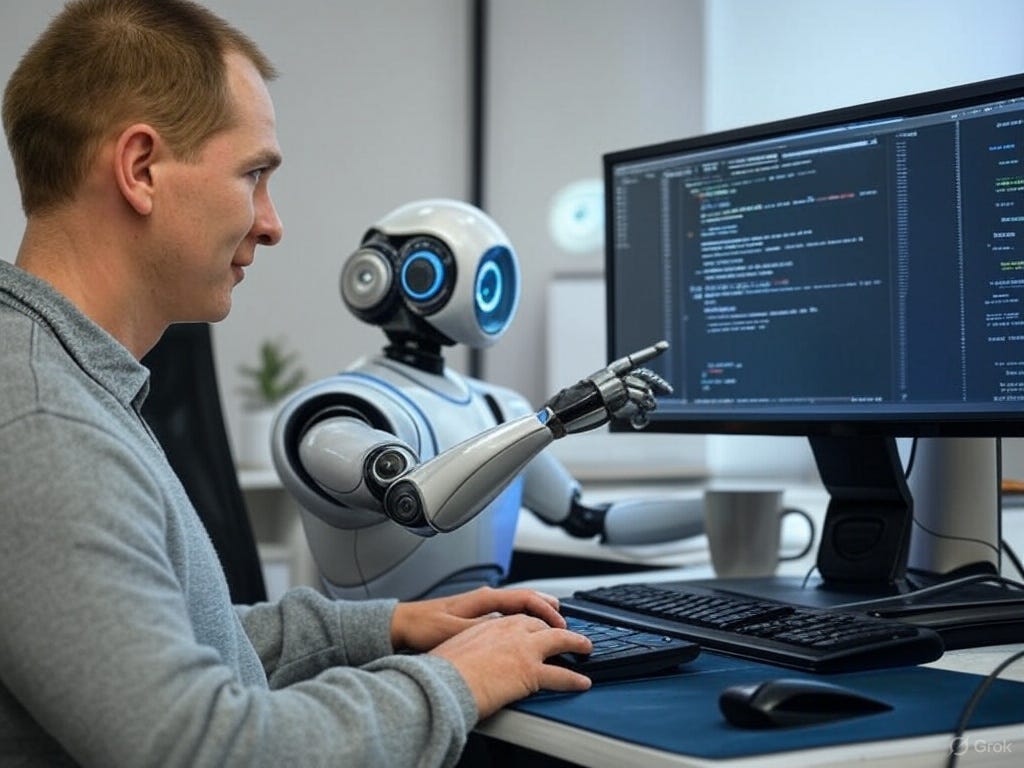
Artificial Intelligence is rapidly transforming software development, with AI-assisted coding tools becoming an essential part of modern development workflows. From code generation and debugging to testing and documentation, AI-powered assistants are helping developers build applications faster and more efficiently than ever before.
As organizations continue investing in digital transformation initiatives, the demand for software development has increased significantly. AI-assisted coding solutions are helping development teams meet this growing demand by automating repetitive tasks and providing intelligent suggestions throughout the software development lifecycle.
Modern AI coding assistants leverage advanced large language models and machine learning algorithms to understand programming languages, development frameworks, and coding patterns. These tools can generate code snippets, recommend best practices, detect errors, and assist developers in solving complex programming challenges in real time.
One of the primary benefits of AI-assisted coding is increased developer productivity. Instead of spending hours writing routine code, developers can focus on architecture, innovation, and problem-solving while AI handles repetitive programming tasks. This enables teams to deliver projects faster without compromising quality.
AI-powered code completion tools have become particularly popular among developers. By analyzing project context and coding patterns, these systems can predict the next lines of code and provide relevant suggestions. This reduces manual effort and helps developers maintain coding consistency across large projects.
Debugging and error detection have also improved significantly through artificial intelligence. AI systems can identify syntax errors, security vulnerabilities, performance bottlenecks, and logic issues before software reaches production environments. Early issue detection helps organizations reduce development costs and improve software reliability.
Software testing is another area experiencing substantial benefits from AI adoption. Intelligent testing platforms can automatically generate test cases, identify edge scenarios, perform regression testing, and analyze application performance. These capabilities improve software quality while accelerating release cycles.
Machine learning-powered development tools are also assisting with code reviews. AI can evaluate coding standards, detect inefficient implementations, recommend optimizations, and ensure compliance with organizational best practices. This helps development teams maintain high-quality codebases as projects scale.
Documentation generation has traditionally been a time-consuming process for developers. AI-assisted platforms can automatically create technical documentation, API references, code explanations, and project summaries. This improves collaboration while ensuring knowledge is accessible across teams.
The rise of low-code and no-code platforms is further expanding the influence of AI in software development. Business users and citizen developers can leverage AI-powered tools to build applications with minimal programming knowledge, enabling organizations to accelerate innovation and reduce development bottlenecks.
Cybersecurity remains a critical focus within software engineering, and AI-assisted coding tools are helping developers create more secure applications. Advanced models can identify security risks, recommend secure coding practices, and detect vulnerabilities that might otherwise go unnoticed during development.
Cloud-native development environments are increasingly integrating AI capabilities directly into coding workflows. Developers can access intelligent assistance, automated deployment recommendations, infrastructure optimization suggestions, and performance monitoring insights from within their development platforms.
Open-source communities are also benefiting from AI-assisted development. Contributors can use intelligent coding tools to understand large codebases, generate documentation, resolve issues faster, and improve collaboration across distributed development teams.
Educational institutions and coding bootcamps are incorporating AI-powered development tools into their training programs. Students can receive personalized coding guidance, instant feedback, and interactive learning support that helps accelerate skill development and improve learning outcomes.
While AI is automating many aspects of coding, industry experts emphasize that human developers remain essential. Critical thinking, creativity, system design, business understanding, and strategic decision-making continue to require human expertise. AI is increasingly viewed as a productivity partner rather than a replacement for software engineers.
Organizations adopting AI-assisted coding report improvements in development speed, code quality, team productivity, and innovation capacity. As AI models continue advancing, their role in software engineering is expected to expand further across development, testing, deployment, and maintenance processes.
Industry analysts predict that AI-assisted coding will become a standard component of software development environments over the coming years. The combination of artificial intelligence and human expertise is expected to drive the next generation of software innovation and digital transformation initiatives worldwide.
As businesses continue embracing intelligent development practices, AI-assisted coding is reshaping how software is created, maintained, and optimized. This technological shift is enabling developers to focus on higher-value work while delivering more powerful, secure, and scalable applications.





Comments