
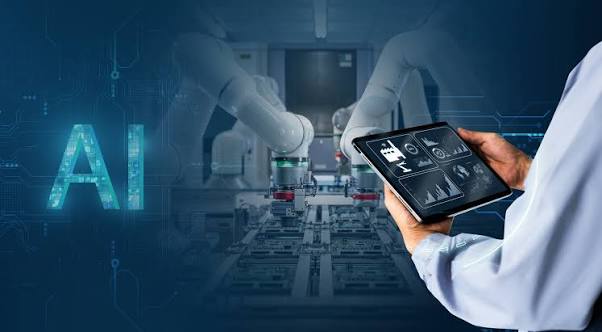
Industrial AI solutions are driving a new wave of automation growth as manufacturers and industrial enterprises increasingly adopt Artificial Intelligence (AI) and Machine Learning (ML) technologies to optimize operations, improve productivity, and enhance decision-making. By combining advanced analytics, intelligent automation, predictive maintenance, and real-time monitoring, industrial AI is transforming traditional production environments into highly efficient and data-driven smart factories.
Organizations across manufacturing, energy, logistics, automotive, and industrial sectors are leveraging AI-powered systems to automate complex processes and improve operational performance. These intelligent solutions can analyze massive volumes of industrial data generated by machines, sensors, production lines, and connected devices, enabling faster and more accurate decision-making.
Predictive maintenance has become one of the most impactful applications of industrial AI. Machine learning algorithms continuously monitor equipment performance, identify anomalies, and predict potential failures before they occur. This proactive approach helps organizations reduce downtime, minimize maintenance costs, and extend the lifespan of critical assets.
AI-powered quality control systems are also improving manufacturing outcomes. Computer vision and machine learning technologies can inspect products in real time, detect defects with high accuracy, and ensure consistent quality standards throughout production processes. These capabilities reduce waste, increase efficiency, and improve customer satisfaction.
The integration of Industrial Internet of Things (IIoT) devices with AI platforms is enabling real-time visibility across industrial operations. Connected sensors collect valuable operational data that AI systems analyze to optimize workflows, improve resource utilization, and enhance overall production efficiency.
Supply chain optimization is another area benefiting from industrial AI adoption. Intelligent forecasting models help businesses predict demand, manage inventory levels, optimize logistics networks, and reduce operational disruptions. These data-driven insights support more resilient and agile supply chain operations.
Robotics and autonomous systems powered by AI are becoming increasingly common in industrial environments. Smart robots can perform repetitive, hazardous, and precision-based tasks with greater speed and consistency, helping companies improve workplace safety while increasing productivity.
Industrial AI solutions are also supporting sustainability initiatives by optimizing energy consumption, reducing material waste, and improving resource management. Organizations can leverage AI-driven analytics to identify efficiency opportunities and achieve environmental goals while lowering operational expenses.
As industries continue their digital transformation journeys, demand for intelligent automation platforms is expected to grow significantly throughout 2026 and beyond. Industry experts believe that AI-driven manufacturing, predictive analytics, autonomous operations, and smart factory technologies will play a central role in shaping the future of industrial innovation.
The convergence of artificial intelligence, machine learning, robotics, IIoT, and advanced analytics is creating a new generation of intelligent industrial ecosystems that deliver greater efficiency, flexibility, scalability, and long-term business value across global industries.





Comments