
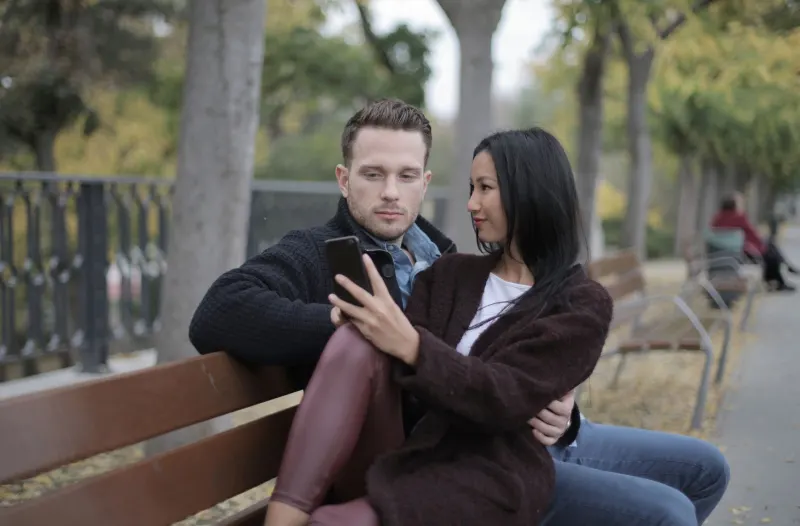
In San Francisco, the epicenter of the tech industry, the rapid rise of artificial intelligence has permeated the local dating scene. For single residents navigating platforms like Hinge, views on artificial intelligence have increasingly turned into explicit dealbreakers, with profiles featuring warnings such as “You should not go out with me if you use AI.” These value statements frequently appear alongside traditional political affiliations or other personal signifiers.
The sentiment varies wildly depending on who you ask. While some singles view working in frontier AI as a moral red line, others see immense financial upside. According to a CBRE report released in August, more than 20,000 AI jobs were added to the San Francisco Bay Area workforce even as overall tech talent contracted by 6 percent since 2022. With upcoming IPOs from companies like Anthropic and OpenAI, matchmakers note that clients are actively specifying “AI engineer” on their preferred dating profile qualifications, with AI researchers commanding average salaries around $300,000.
Key takeaways
- Hinge profiles in San Francisco increasingly feature direct warnings against dating individuals who use or build artificial intelligence.
- A CBRE report notes that over 20,000 AI jobs were added to the Bay Area workforce, driving demand for high-earning tech talent.
- Some founders and software engineers have turned to automated AI agents to handle dating app swiping and initial outreach.
- A 2025 survey by Match and the Kinsey Institute found that 26 percent of US singles use AI tools to enhance dating experiences.
Existential dread and family planning
For those working in AI safety initiatives, dating conversations often intersect with apocalyptic anxieties about the future. Researchers in the field sometimes weigh a 10 percent chance of human extinction resulting from advanced AI takeover. These existential concerns directly shape personal choices, such as whether to buy property or have children. Within alternative dating directories known as Date-Me Docs, singles frequently debate family planning around “the singularity,” which refers to the point when technology overtakes human control. Some prospective suitors explicitly write that they do not want children in a pre-singularity world, but might reconsider if a post-singularity future emerges.
At the same time, the integration of AI into everyday habits has led to unique psychological concerns. According to a study by Elon University, 27 percent of Americans turn to AI chatbots for personal, emotional, or social queries, with 38 percent admitting they share things with bots that they would not tell a romantic partner. Some daters worry about potential partners using chatbots for emotional regulation, noting that how someone treats an AI model can reflect broader behavioral patterns.
Outsourcing romance and the analog backlash
On the more extreme end of convenience, some busy technology founders have completely automated their search for romance. Working long hours to launch startups, individuals like 21-year-old software engineer Joseph have deployed AI agents—managed by human virtual assistants from the Philippines—to handle swiping, messaging, and calendar scheduling on Hinge. According to industry surveys, 26 percent of singles in the United States now use AI tools to enhance their dating experiences, while mainstream platforms introduce features like Hinge's suggested response generator and Bumble's Bee assistant.
This heavy reliance on automation has triggered a noticeable counter-movement toward analog, in-person events. Pop-up community gatherings such as the “Date My Friend” pitch events at local bars have drawn crowds of over a hundred participants. Co-founder Annalise Wulf notes that busy tech workers with demanding schedules are increasingly seeking out screen-free, offline environments to meet partners and reject the fatigue of algorithmic dating apps.




Comments