
The chief executive of T-Mobile's parent company is casting serious doubt on SpaceX's ambitions to establish Starlink Mobile as a major US telecommunications carrier. Speaking during an earnings call on Thursday, Deutsche Telekom CEO Tim Höttges addressed the Elon Musk-owned company's plans to compete directly against entrenched network operators like T-Mobile, AT&T, and Verizon. While Höttges emphasized that he takes the new market entrant completely seriously, he calculated that the financial hurdles alone will require an investment of at least $200 billion to successfully challenge the existing telecom giants.
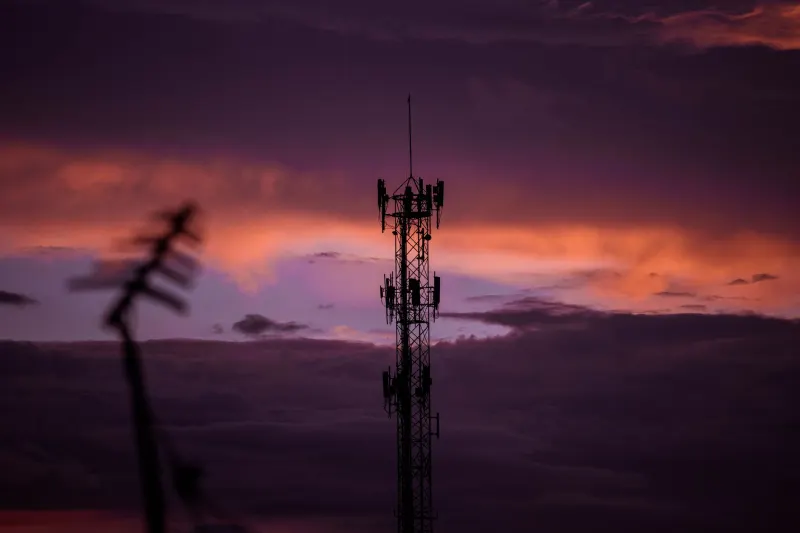
SpaceX outlined its strategy last month to build out Starlink Mobile by combining direct-to-cell satellite capabilities with a terrestrial network infrastructure. Industry reports suggest the enterprise could potentially tap into as many as 80,000 cell towers across the United States, and separate reports previously indicated that Musk was in talks to acquire Boost Mobile. Furthermore, recent developments highlight that Qualcomm announced plans to provide its cellular infrastructure technology to support the burgeoning Starlink Mobile network buildout, signaling active technical partnerships taking shape behind the scenes.
Key takeaways
- Deutsche Telekom CEO Tim Höttges estimates SpaceX needs at least $200 billion to build Starlink Mobile.
- Höttges noted that SpaceX currently holds 76 megahertz of spectrum compared to Deutsche Telekom's 400 megahertz.
- Renting and outfitting network towers with antennas would require an additional $20 to $30 billion.
- Qualcomm recently announced it will supply cellular infrastructure technology to support the new network.
Breaking down the telecom economics
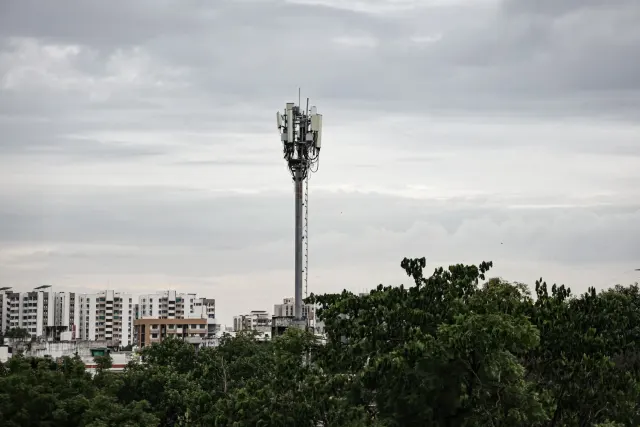
During the earnings discussion, Höttges broke down the staggering capital expenditures required to enter the modern telecommunications landscape. He noted that Musk's enterprise has currently secured 76 megahertz of spectrum, contrasting it directly with Deutsche Telekom's 400 megahertz holding. Acquiring the necessary additional spectrum position would demand triple-digit billions in capital to achieve a competitive footing. Even though SpaceX could potentially rent existing network towers rather than building all 85,000 towers from scratch, renting and outfitting them with the necessary antennas would still demand an extra $20 billion to $30 billion in infrastructure expenses.
Höttges pointedly welcomed the new challenger to the sector, noting that the industry has been professionalized over the last 20 years. Acquiring spectrum, leasing physical real estate, and deploying hardware are just the baseline requirements for entering a heavily regulated and optimized market. However, the traditional telecom executive acknowledged that Musk brings a uniquely integrated technology stack to the table, encompassing proprietary chipsets, advanced data centers, artificial intelligence capabilities, and low-Earth orbit satellites.
Anticipating a new category of communication services
By potentially integrating social media features or agent models directly into the service, Starlink Mobile could pioneer an entirely new category of communication services that goes beyond traditional voice and data. Höttges warned his peers against underestimating the potential threat, drawing a parallel to how legacy automakers initially ignored disruptive forces in the automotive sector before facing severe market consequences. Pointing to the struggles faced by Tesla in the car industry as proof that heavy capital requirements and scaling pains apply to everyone, Höttges concluded with a direct assessment of the monumental task ahead for SpaceX: "It's not a free lunch."



Comments