
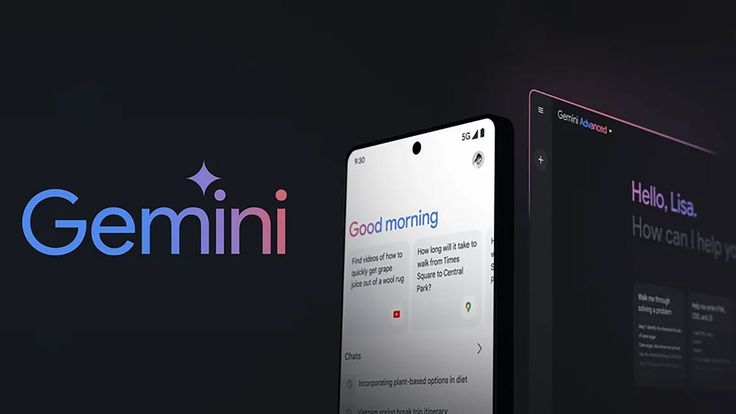
Google has officially begun rolling out one of the biggest improvements to the Play Store in recent years by integrating Gemini AI-powered conversational search directly into its app marketplace. Instead of relying on simple keyword searches, Android users can now discover apps using natural language, making the process of finding the right application faster, smarter, and far more personalized. The feature was first showcased during Google I/O 2026 and is now gradually becoming available to users worldwide.
The traditional Play Store search experience required users to know exactly what they were looking for. Searching with generic keywords such as "photo editor" or "fitness app" often returned hundreds of results, forcing users to manually compare ratings, downloads, and reviews before making a decision. With Gemini AI integrated into the Play Store, users can now describe exactly what they need in everyday language.
For example, instead of typing "budget app," users can ask questions such as, "Recommend a budgeting app for students that works offline," or "Suggest a meditation app with guided breathing exercises." Gemini understands the request, analyzes available applications, and returns personalized recommendations displayed as Play Store cards containing ratings, download counts, descriptions, and relevant information.
One of the biggest improvements introduced by this update is contextual understanding. Rather than matching only specific keywords, Gemini analyzes the intent behind a user's request. This allows it to recommend applications based on functionality, preferences, and use cases instead of simple text matching.
The AI can differentiate between users looking for professional productivity tools, beginner-friendly educational apps, entertainment applications, or specialized utilities. This contextual intelligence helps users discover software they may not have found through traditional search methods.
Google's latest enhancement also benefits developers. Smaller application developers often struggle to compete against well-established apps that dominate keyword searches. Since Gemini evaluates user intent instead of only search rankings, newer applications that better match a user's needs may receive increased visibility.
This creates a more competitive marketplace where application quality, functionality, and user satisfaction become increasingly important factors in app discovery.
Another notable improvement is the integration of intelligent recommendations for in-app purchases and premium features. Instead of simply recommending applications, Gemini can also highlight additional features that may enhance the user experience.
For instance, if someone searches for a language-learning app, Gemini may recommend an application while also informing users about premium offline lessons or AI-powered tutoring features available within the app.
The conversational interface significantly improves accessibility for users who are unfamiliar with technical terminology. Instead of remembering specific application names or categories, users can simply describe what they want to accomplish.
Someone looking to organize household expenses can simply ask for an app that helps track monthly bills and spending rather than searching through dozens of finance-related keywords.
Artificial intelligence also reduces the time required to discover useful applications. Rather than opening multiple app pages, reading descriptions, comparing ratings, and reviewing screenshots, users receive curated recommendations based on their specific needs.
This creates a smoother browsing experience while helping users find relevant software much more efficiently.
Privacy continues to remain an important consideration. Google states that Gemini follows the company's existing privacy standards while providing personalized recommendations. The conversational search focuses on improving app discovery without fundamentally changing how applications are installed or managed through the Play Store.
The update reflects Google's broader strategy of integrating Gemini AI across its ecosystem. During Google I/O 2026, the company announced numerous Gemini-powered enhancements across Android, Workspace, Search, and other Google services. The Play Store integration demonstrates how AI is becoming a core component of everyday software experiences rather than a standalone feature.
Developers may also benefit from increased engagement. Since users can describe very specific requirements, applications with unique features have greater opportunities to appear in recommendation results even if they are less well known than larger competitors.
Industry experts believe conversational app discovery could significantly change how mobile software is distributed. Traditional search optimization techniques may gradually become less important as AI increasingly prioritizes user intent, application quality, and relevance over simple keyword matching.
For Android users, the update represents a more natural way of interacting with the Play Store. Instead of browsing endless categories or trying multiple search phrases, users can simply communicate with Gemini as they would with another person.
Google is rolling out the feature gradually, meaning availability may vary depending on region and account settings. More users are expected to receive access over the coming weeks as the company expands deployment globally.
The launch of Gemini-powered conversational search highlights how artificial intelligence is transforming software marketplaces. By combining natural language understanding with personalized recommendations, Google is making app discovery faster, more intuitive, and more relevant for millions of Android users.
As AI continues to become deeply integrated into mobile ecosystems, conversational interfaces like Gemini are expected to redefine how users search for, evaluate, and install applications. This update marks another important step toward a future where finding the right software feels more like having a conversation than performing a traditional search.





Comments