
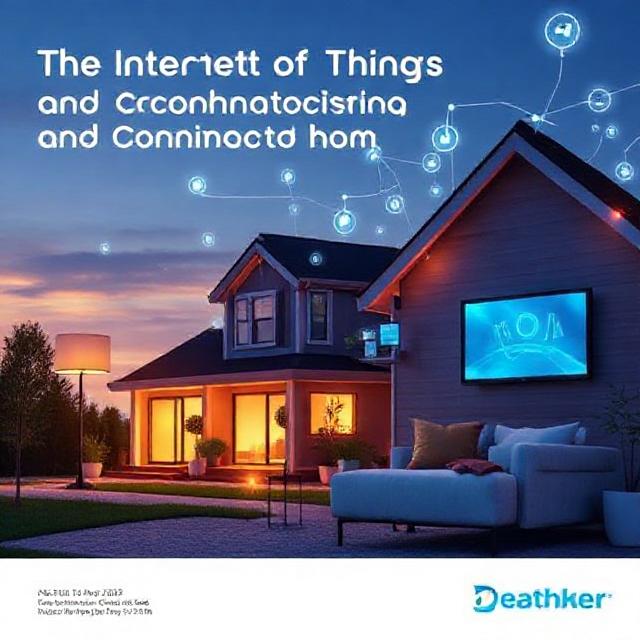
The Internet of Things refers to the vast and growing network of physical devices embedded with sensors, software, and connectivity that allows them to collect and exchange data. Within the home specifically, this has manifested as an expanding ecosystem of smart devices designed to improve convenience, security, and energy efficiency for everyday households.
Smart speakers and voice assistants have become the most widely adopted entry point into connected home technology for many consumers, serving as a central hub for controlling other smart devices through voice commands. What began primarily as a novelty for playing music or checking the weather has expanded into a genuine control interface for lighting, thermostats, security systems, and increasingly, kitchen appliances and other household devices.
Smart thermostats represent one of the more practically valuable and widely adopted smart home categories, learning household temperature preferences and occupancy patterns over time to optimize heating and cooling automatically, often delivering meaningful energy savings without requiring active user management. Some utility companies have partnered with smart thermostat manufacturers to offer rebate programs, recognizing that reduced peak energy demand benefits the broader electrical grid as well as individual households.
Security applications have also driven substantial smart home adoption, with connected doorbell cameras, indoor and outdoor security cameras, and smart locks offering homeowners remote monitoring and control capabilities that were previously available only through expensive professional security systems. These devices allow homeowners to check on their property, communicate with visitors, and grant or restrict access remotely through smartphone applications, providing a level of situational awareness and control that has proven genuinely popular with consumers.
Smart lighting systems allow for scheduling, remote control, and increasingly sophisticated automation based on occupancy sensors or integration with other smart home systems, contributing both to convenience and energy efficiency. Some systems can simulate occupancy patterns while residents are away, a security feature that adds a genuine practical benefit beyond simple convenience.
Kitchen and appliance manufacturers have increasingly incorporated connectivity into refrigerators, ovens, and other major appliances, allowing remote monitoring and control, along with features like automatically reordering groceries when supplies run low, or providing cooking guidance through connected displays. Adoption of these more expensive connected appliances has been slower than smaller, less expensive smart home categories, as the practical value proposition relative to added cost remains less immediately obvious to many consumers.
Despite the genuine conveniences these devices offer, the proliferation of connected home devices has raised legitimate concerns around privacy and security. Each connected device represents a potential entry point for malicious actors seeking to access home networks, and the cybersecurity practices of smart home device manufacturers vary considerably, with some devices historically shipping with inadequate security protections that left them vulnerable to hacking. Regulatory efforts in various countries have begun establishing baseline security standards for connected devices, though the pace of regulation has generally lagged behind the pace of smart home device proliferation.
Interoperability between devices from different manufacturers has also historically been a persistent frustration for consumers, with competing smart home platforms often failing to work seamlessly together. Industry efforts to establish common connectivity standards have made meaningful progress toward improving cross-manufacturer compatibility, though achieving truly seamless interoperability across the entire smart home device ecosystem remains an ongoing challenge rather than a fully solved problem.
As smart home technology continues maturing, the emphasis is increasingly shifting from simply connecting individual devices toward creating genuinely intelligent, integrated home environments that anticipate and respond to household needs with minimal active management required from residents themselves.





Comments