
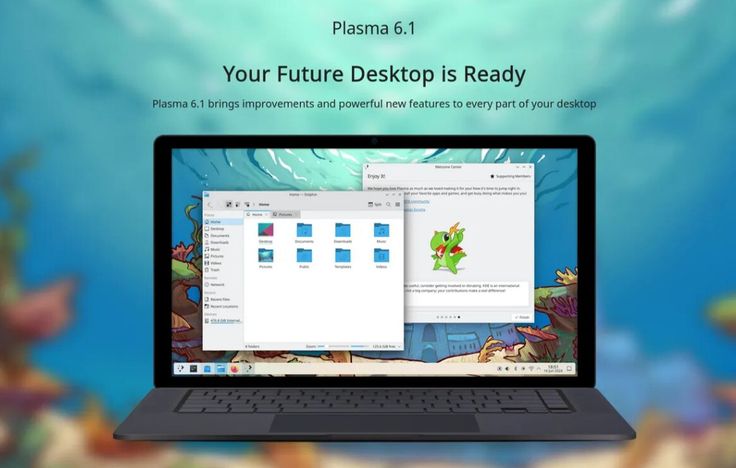
The KDE Project has officially released KDE Plasma 6.5 Beta, giving users an early preview of the next major version of its popular Linux desktop environment. The beta introduces improved Wayland support, enhanced system performance, refined user interface elements, better hardware compatibility, and numerous quality-of-life improvements. Built on the latest KDE Frameworks and Qt technologies, Plasma 6.5 Beta continues KDE's focus on delivering a modern, customizable, and efficient desktop experience for Linux users. (kde.org)
KDE Plasma is one of the most widely used desktop environments in the Linux ecosystem, known for its flexibility, extensive customization options, and rich feature set. It powers desktops across various Linux distributions, including KDE neon, openSUSE, Fedora KDE, and Arch Linux, serving developers, businesses, and everyday users alike.
One of the biggest highlights of KDE Plasma 6.5 Beta is the continued improvement of Wayland support. The latest release delivers smoother window management, better multi-monitor handling, improved touchscreen responsiveness, enhanced graphics performance, and increased compatibility with modern hardware. These updates bring KDE Plasma closer to making Wayland the preferred display server for most Linux users.
Performance optimization has also been a major focus. Developers have reduced memory usage, improved desktop responsiveness, optimized startup times, and enhanced animation smoothness. These changes provide a faster and more fluid user experience, particularly on systems with multiple applications running simultaneously.
The desktop interface receives several refinements, including updated system settings, improved notification management, enhanced widgets, and better taskbar behavior. These usability improvements help users navigate the desktop more efficiently while maintaining Plasma's highly customizable design philosophy.
Hardware compatibility continues to improve with updated support for AMD, Intel, and NVIDIA graphics hardware. Better driver integration and display management ensure more reliable performance across laptops, desktops, and hybrid graphics systems.
Security and stability have also been strengthened through numerous bug fixes, updated system components, and improved session management. These enhancements contribute to a more reliable desktop environment while reducing crashes and graphical glitches during everyday use.
Developer productivity benefits from updated development libraries, improved debugging tools, and stronger integration with the latest Qt framework. Developers building KDE applications gain access to modern APIs and enhanced development capabilities for creating desktop software.
Accessibility remains an important area of improvement. KDE Plasma 6.5 Beta includes refinements to keyboard navigation, screen reader compatibility, visual accessibility settings, and system usability, making the desktop more inclusive for a broader range of users.
Cloud integration and file management have also been enhanced. Improvements to the Dolphin file manager, network file access, and remote storage support provide users with more efficient ways to manage local and cloud-based files.
Educational institutions continue adopting KDE Plasma because of its open-source nature, low licensing costs, and extensive customization capabilities. Students studying Linux administration, software development, and computer science benefit from using a professional desktop environment that supports a wide range of educational and development tools.
The KDE open-source community remains one of the most active in the Linux ecosystem. Thousands of contributors continue improving Plasma through bug fixes, translations, documentation, accessibility enhancements, and new features, ensuring the desktop environment evolves rapidly while remaining stable.
Industry analysts believe Linux desktop adoption will continue growing among developers, technical professionals, and privacy-conscious users. KDE Plasma's combination of performance, customization, and modern design makes it one of the strongest alternatives to proprietary desktop operating systems.
Looking ahead, the KDE Project plans to further enhance Wayland compatibility, optimize system performance, expand hardware support, and improve desktop usability before the final release of Plasma 6.5. Community feedback during the beta phase will play a key role in refining the desktop experience.
With improved Wayland support, faster performance, enhanced hardware compatibility, refined desktop features, stronger security, updated developer tools, better accessibility, and continued open-source innovation, KDE Plasma 6.5 Beta represents one of the most significant Linux desktop previews of the year. As the Linux ecosystem continues to evolve, KDE Plasma remains one of the most feature-rich and customizable desktop environments available.





Comments