
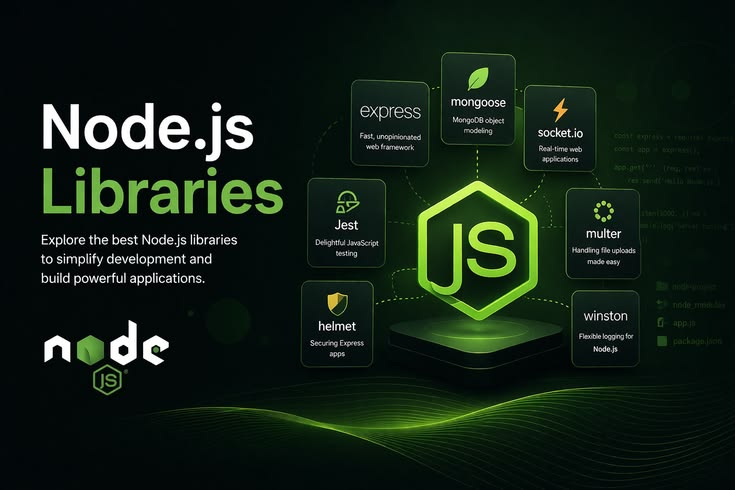
The Node.js project has officially released Node.js 24.5, introducing a series of improvements focused on performance, stability, developer experience, and platform compatibility. The latest release includes updates to core APIs, enhancements to the runtime, bug fixes, security improvements, and better support for modern JavaScript development. As one of the world's most widely used JavaScript runtimes, Node.js 24.5 continues to strengthen its position as a leading platform for building scalable web applications, APIs, microservices, and cloud-native solutions. (nodejs.org)
Node.js powers millions of applications worldwide, enabling developers to build high-performance server-side applications using JavaScript. Its event-driven, non-blocking architecture makes it particularly well suited for web servers, real-time applications, streaming services, serverless computing, and enterprise-scale backend systems.
One of the biggest highlights of Node.js 24.5 is its improved runtime performance. Developers can expect faster execution of common operations, reduced memory usage in several scenarios, and various internal optimizations that improve the responsiveness of applications. These enhancements are particularly beneficial for high-traffic web services and microservice-based architectures.
Core APIs have also received several updates. The release includes refinements to built-in modules, improved API consistency, and better standards compliance, allowing developers to build modern applications with greater reliability while taking advantage of the latest JavaScript capabilities.
Security continues to be a key priority for the Node.js project. Version 24.5 includes dependency updates, bug fixes, and security patches that help improve runtime stability while protecting applications against recently identified vulnerabilities. Maintaining a secure execution environment remains essential as Node.js powers critical enterprise and cloud infrastructure.
Developer productivity has been enhanced through clearer error reporting, improved diagnostics, updated debugging capabilities, and more informative runtime messages. These improvements simplify troubleshooting while helping developers identify issues more quickly during application development.
Performance improvements also extend to asynchronous operations and networking components. Internal optimizations help applications handle concurrent requests more efficiently, making Node.js an even stronger platform for APIs, web servers, and real-time communication services.
Compatibility with modern web standards continues to improve. Node.js 24.5 expands support for the latest ECMAScript features while maintaining broad compatibility with existing JavaScript applications and the extensive npm ecosystem.
Cloud-native development remains one of Node.js's strongest use cases. The latest release works seamlessly with Docker, Kubernetes, serverless platforms, and modern DevOps pipelines, enabling organizations to build scalable cloud applications with consistent performance across deployment environments.
Artificial intelligence applications increasingly rely on Node.js for API gateways, backend services, inference orchestration, and web interfaces. The runtime's improved performance and reliability make it well suited for integrating AI services into production applications.
Educational institutions continue using Node.js to teach JavaScript, backend development, APIs, cloud computing, and full-stack web development. Students gain practical experience using one of the most widely adopted runtime environments in the software industry.
The Node.js open-source community remains one of the largest in software development, with contributors from major technology companies and independent developers continuously improving performance, documentation, security, and platform support. This collaborative development model has helped Node.js remain at the forefront of modern backend development.
Industry analysts expect Node.js to continue playing a central role in web development as organizations increasingly adopt microservices, cloud-native infrastructure, and event-driven architectures. Ongoing investments in runtime performance and developer tooling ensure that Node.js remains competitive in a rapidly evolving technology landscape.
Looking ahead, the Node.js project plans to continue optimizing performance, enhancing web API support, improving diagnostics, and strengthening security in future releases. These ongoing developments aim to provide developers with an even more powerful and reliable JavaScript runtime for modern application development.
With faster runtime performance, updated core APIs, enhanced security, improved diagnostics, better cloud-native compatibility, stronger JavaScript standards support, optimized asynchronous processing, and continued open-source innovation, Node.js 24.5 represents an important milestone for JavaScript developers. As modern applications continue to scale across cloud and edge environments, Node.js remains one of the most trusted platforms for building fast, reliable, and efficient backend services





Comments