
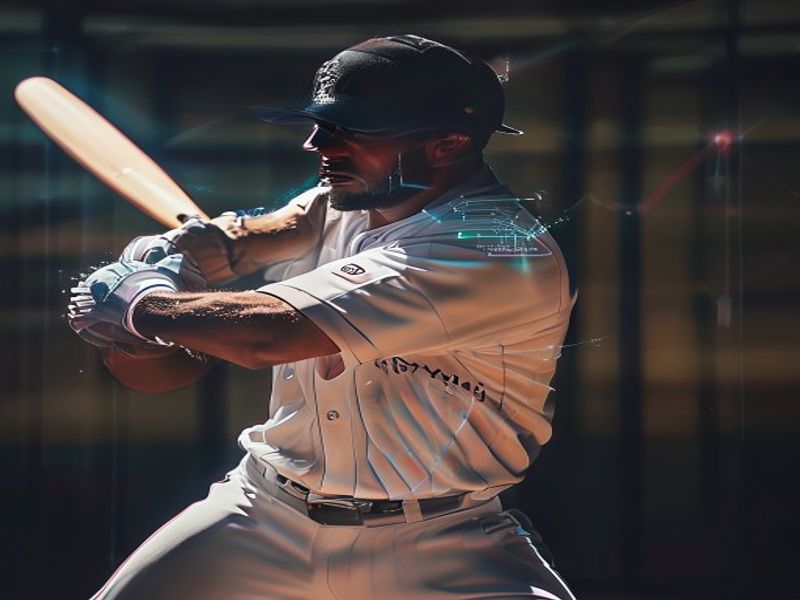
Major League Baseball organizations are rapidly adopting advanced bat tracking technology to dissect and optimize player performance, a strategy vividly illustrated by the recent analysis of New York Yankees prospect Ben Rice's swing. This granular data empowers coaches and players with precise insights into hitting mechanics, moving beyond traditional observation to a science-backed approach for development and refinement.
Bat tracking systems, often integrated with high-speed cameras and wearable sensors, capture an array of critical metrics. These include bat speed, attack angle, time to impact, and exit velocity, painting a comprehensive digital portrait of every swing. For a burgeoning talent like Ben Rice, whose performance is under constant scrutiny, such technology provides an objective baseline and a roadmap for targeted improvement. Rather than relying solely on visual cues or intuition, hitting coaches can now pinpoint exact points of inefficiency or potential, allowing for highly personalized training regimens that accelerate skill progression and consistency.
The integration of machine learning algorithms is crucial in processing the vast datasets generated by these systems. ML models can identify subtle patterns, correlate swing characteristics with ball flight outcomes, and even predict potential areas of breakdown under pressure. This goes beyond mere data collection; it transforms raw numbers into actionable intelligence. For scouts, this means a more comprehensive evaluation of prospects, not just based on game results but on the underlying mechanics that drive those results. For established players, it offers a continuous feedback loop to maintain peak form or adjust to specific pitching strategies, fundamentally reshaping how professional baseball approaches player evaluation and talent cultivation.
This technological embrace is set to expand across all levels of professional baseball, from minor league development to the major leagues. The ability to quantify and visualize complex movements like a baseball swing opens new frontiers for injury prevention, performance enhancement, and strategic game planning. As these systems become more sophisticated and integrated into daily training, they promise to elevate the overall standard of play, offering both players and fans a deeper, data-enriched understanding of America's pastime. The future of hitting, it seems, will be charted in milliseconds and millimeters, meticulously measured and refined by the cutting edge of sports technology.





Comments