
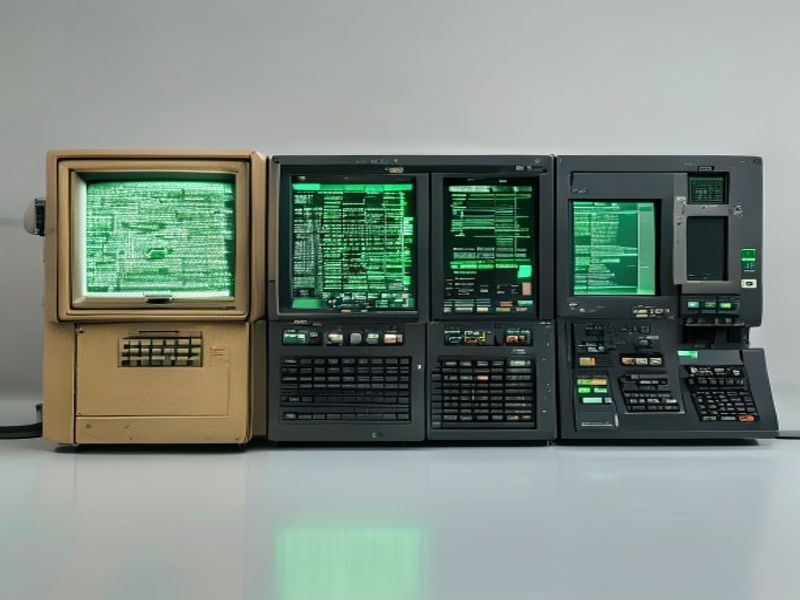
Few forces have exerted as profound an influence on human civilization as technology has over the last sixty years. What began as a nascent, niche field dominated by room-sized mainframes has evolved into an indispensable, ubiquitous presence, fundamentally altering how we live, work, and connect.
The journey began in earnest with the foundational developments of the 1960s and 70s. Early computing, characterized by enormous machines requiring specialized environments and operators, was primarily the domain of governments, universities, and large corporations. These behemoths handled complex calculations, pioneered data storage, and laid the groundwork for automation, albeit without ever touching the everyday lives of the general public. Concepts like time-sharing and early networking emerged, hinting at a future of distributed access that was still decades away.
The 1980s heralded a pivotal shift with the advent of the personal computer. Suddenly, computing power became accessible, albeit costly, to individuals and smaller businesses. Graphical user interfaces transformed cryptic command lines into intuitive desktops, democratizing interaction. This era set the stage for the World Wide Web in the 1990s, an innovation that rapidly transcended academic circles to become a global information superhighway, creating an interconnected world many still struggle to fully comprehend. Email became a standard, and early e-commerce platforms began to redefine consumption.
The turn of the millennium accelerated this trajectory into an era of unprecedented mobile connectivity and computational ubiquity. Smartphones placed immense processing power and constant internet access directly into billions of pockets. Social media platforms redefined human interaction and community, while cloud computing shifted data storage and application delivery from local machines to vast, remote server farms. Today, artificial intelligence and machine learning are rapidly integrating into virtually every sector, promising another wave of transformative change, from autonomous systems to hyper-personalized digital experiences.
This relentless evolution has not been without its complexities, raising critical questions about privacy, digital divides, and the very nature of human connection in an increasingly mediated world. Yet, the undeniable truth is that the technological innovations of the past sixty years have irrevocably shaped the modern human experience, propelling society forward at a pace unimaginable to previous generations and setting a dynamic precedent for the decades to come.





Comments