
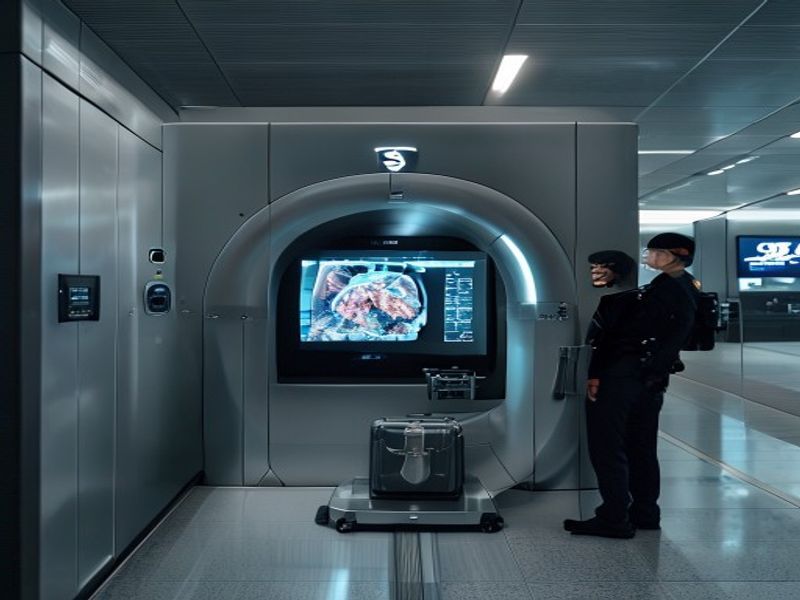
Juneau International Airport has become the latest facility to implement the Transportation Security Administration's advanced Computed Tomography (CT) X-ray scanning systems, marking a significant upgrade in passenger baggage screening capabilities. This deployment signals a continued push by the TSA to modernize security infrastructure across the nation's airports, enhancing both efficiency and detection prowess.
Unlike traditional X-ray machines that provide two-dimensional images, the new CT scanners generate a detailed 3D view of a bag's contents. This volumetric imaging allows security officers to rotate and examine items from multiple angles, dramatically improving their ability to identify potential threats, from explosives to concealed weapons. The sophisticated technology aims to reduce the need for manual bag checks, potentially speeding up the screening process for travelers while maintaining stringent security protocols.
For passengers passing through Juneau, this upgrade means a smoother, potentially quicker security experience, as laptops and other electronics can often remain in carry-on bags. For the TSA, it represents a substantial leap forward in threat detection, aligning Juneau with larger hubs already utilizing this cutting-edge equipment. The rollout is part of a broader, multi-year initiative by the agency to outfit hundreds of airports nationwide with these advanced systems, ensuring a consistent and elevated standard of security.
The continuous integration of technologies like CT scanning reflects the TSA's adaptive strategy against evolving security threats. As air travel steadily recovers and grows, investments in such robust, intelligent screening systems become crucial not only for safety but also for maintaining operational flow. Juneau’s adoption underscores that advanced security measures are no longer exclusive to major international gateways but are becoming a standard for all U.S. airports, regardless of size.





Comments