
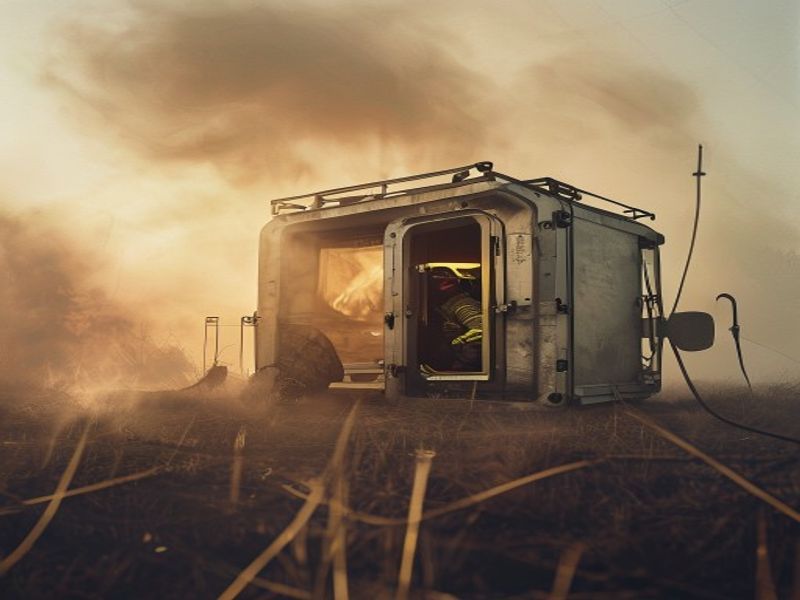
In the perilous world of wildland firefighting, where crews confront unpredictable infernos, the emergency fire shelter stands as a final, life-saving innovation. More than just a piece of gear, this compact, reflective tent is a meticulously engineered system designed to buy precious minutes for firefighters trapped by an advancing blaze.
Developed over decades, modern fire shelters utilize a sophisticated, multi-layered construction. The outer layer typically features an aluminum foil laminated to a woven silica or fiberglass cloth. This reflective surface is crucial for deflecting radiant heat, which accounts for a significant portion of thermal energy during a wildfire. Beneath this reflective exterior, an inner layer of fiberglass or silica cloth provides additional insulation, trapping a small pocket of breathable air and creating a thermal barrier. When deployed, the shelter’s dome-like shape is crucial, minimizing direct contact with the ground and allowing for air circulation, further enhancing its protective capabilities.
Deployment is a high-stakes, rapid process, often performed under immense stress and visibility challenges. Firefighters are rigorously trained to deploy their shelters within seconds, lying flat on the ground inside and securing the edges to prevent hot gases from entering. This act is always a last resort, a testament to the extreme danger faced when all other escape routes have been cut off. The shelter is not designed to be comfortable or to withstand direct, prolonged flame impingement indefinitely, but rather to create a survivable microclimate that allows the firefighter to endure peak heat events until the fire front passes.
While not an invulnerable shield, the emergency fire shelter has demonstrably saved countless lives since its widespread adoption. Its continued evolution reflects ongoing research into advanced heat-resistant materials and ergonomic design, ensuring this vital piece of technology remains the ultimate safeguard for those battling humanity’s most destructive natural fires.





Comments