
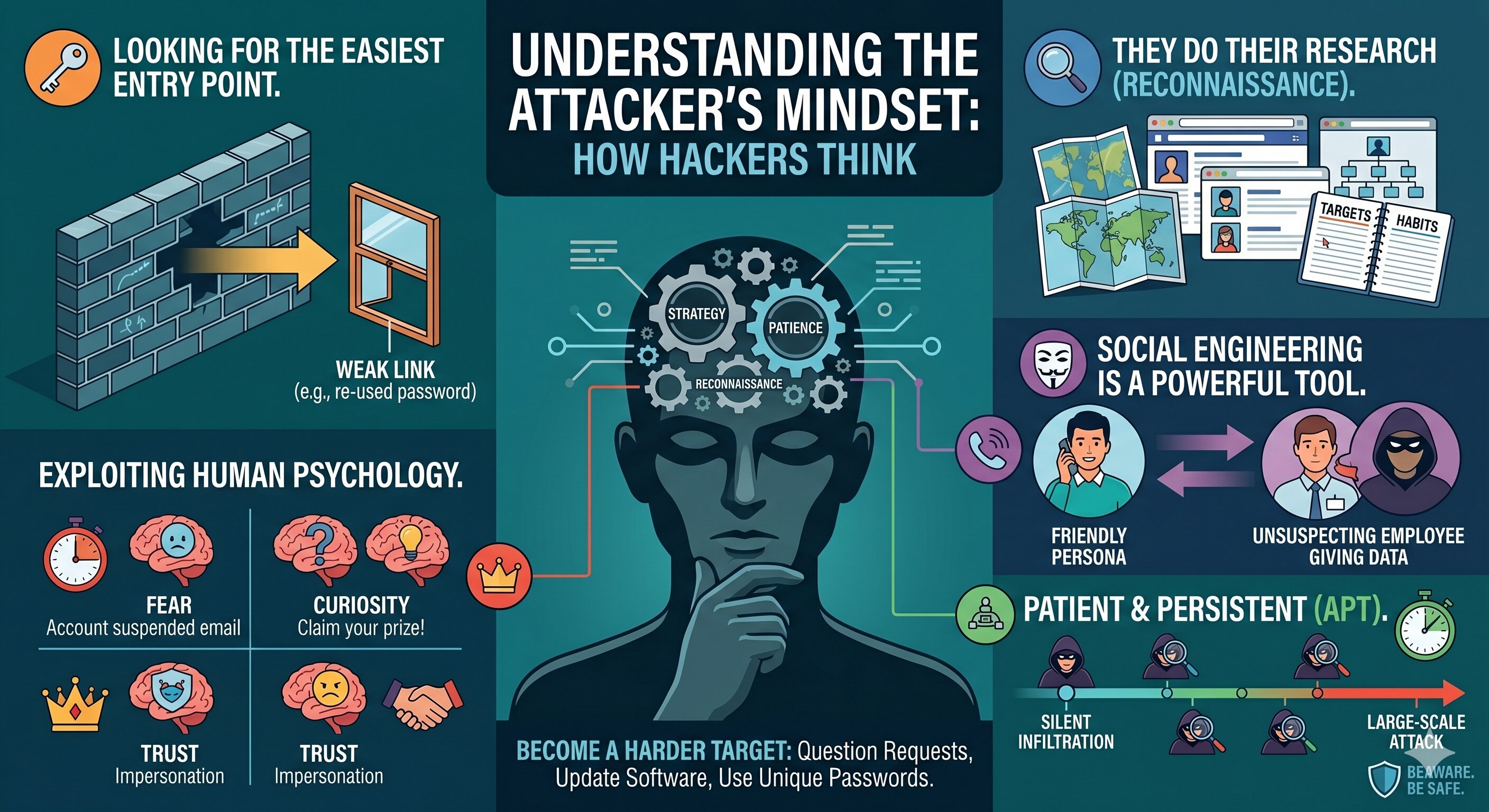
How Hackers Think: Understanding the Attacker's Mindset
To defend against hackers, it
helps to think like one. Cybercriminals are not always the hoodie-wearing
geniuses Hollywood portrays. Many are organized, patient, and methodical — and
understanding how they operate can help you close the gaps they exploit.
Hackers Look for the Easiest Entry Point
Hackers rarely break down the
front door when a window is left open. They look for weak links — outdated
software, reused passwords, unpatched systems, or employees who click on
suspicious emails. The path of least resistance is always their preference.
They Do Their Research
Before attacking, hackers gather
information. They scour social media profiles, company websites, and even job
postings to learn about systems and employees. This phase is called
reconnaissance, and it can last days or weeks.
Social Engineering Is a Powerful Tool
Many hacks don't involve complex
code — they involve manipulation. Social engineering is the art of tricking
people into giving up information or access. A hacker might call an employee
pretending to be IT support and ask for login credentials. Shockingly, it works
more often than you'd think.
They're Patient and Persistent
Sophisticated hackers play the
long game. Once inside a system, they may stay hidden for months — quietly
gathering data and escalating their access before striking. This is called an
Advanced Persistent Threat (APT).
They Exploit Human Psychology
Urgency, fear, curiosity, and
trust are all weapons in a hacker's arsenal. Phishing emails create panic
('Your account will be suspended!') or excitement ('You've won a prize!') to
push people into acting without thinking.
What This Means for You
Knowing how hackers think helps
you become a harder target. Slow down before clicking links. Question
unexpected requests — even from people you know. Regularly update your
software. The attacker counts on you not doing these things.





Comments