
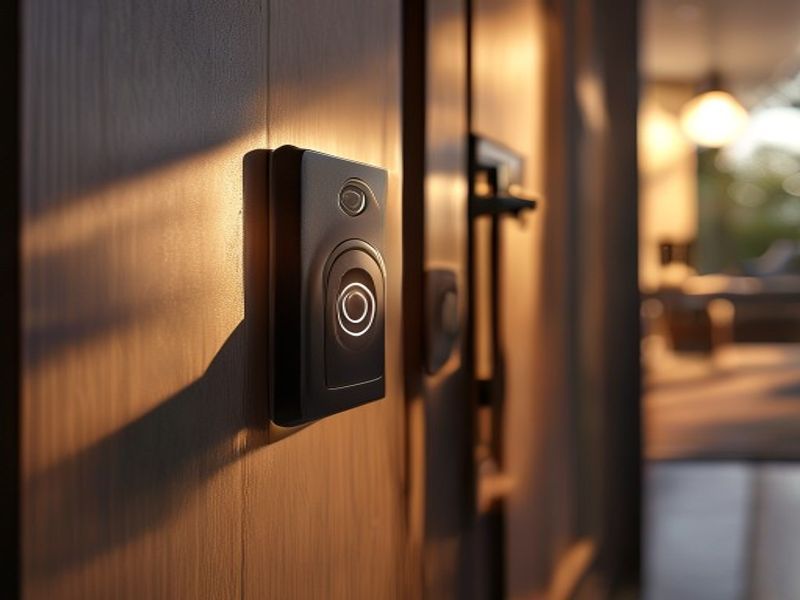
Facial recognition has quietly transformed from a futuristic concept often associated with government surveillance or high-security facilities into a surprisingly effective and user-friendly feature for the modern smart home. The latest generation of smart locks leveraging this biometric technology is now enabling a genuinely frictionless entry experience, where doors unlock automatically as residents approach, eliminating the age-old hassle of fumbling for keys or punching in codes.
For years, the promise of smart locks has been convenience, yet many solutions introduced their own forms of friction—be it finicky smartphone apps, delayed Bluetooth connections, or the still-present need to touch a keypad. Facial recognition technology addresses this directly, requiring no physical input whatsoever. Imagine arriving home with groceries, children, or pets, and your front door simply grants access the moment you step onto the porch. This hands-free operation represents a significant jump in usability, moving beyond simple automation to genuine intuitive interaction.
This maturation comes as underlying artificial intelligence and machine learning algorithms have grown significantly more robust and reliable. Early iterations often struggled with varying light conditions, angles, or even simple changes in appearance, leading to frustrating misreads. Modern systems, however, are engineered to handle a much wider range of real-world scenarios, improving accuracy and speed. Beyond convenience, these systems also offer a strong layer of security. Biometric identification, when implemented correctly, is inherently more difficult to replicate or steal than a physical key or a memorized code, adding another layer of peace of mind for homeowners.
While the immediate appeal is convenience, the broader implications for smart home ecosystems are profound. Integrated seamlessly, these locks could communicate with other devices, triggering lights, adjusting thermostats, or disarming security systems based on who is entering the home. Naturally, concerns around privacy and data security persist, requiring manufacturers to prioritize robust encryption and transparent data handling policies. As this technology becomes more mainstream, consumer trust will hinge on companies demonstrating an unwavering commitment to protecting personal biometric data. The evolution of facial recognition smart locks suggests a future where home access is not just smarter, but genuinely simpler and more secure.





Comments