
Cybersecurity Myths You Need to Stop Believing
Misinformation about
cybersecurity is dangerous. When people believe the wrong things, they take the
wrong precautions — or none at all. Let's bust some of the most common myths
that could be putting you at risk.
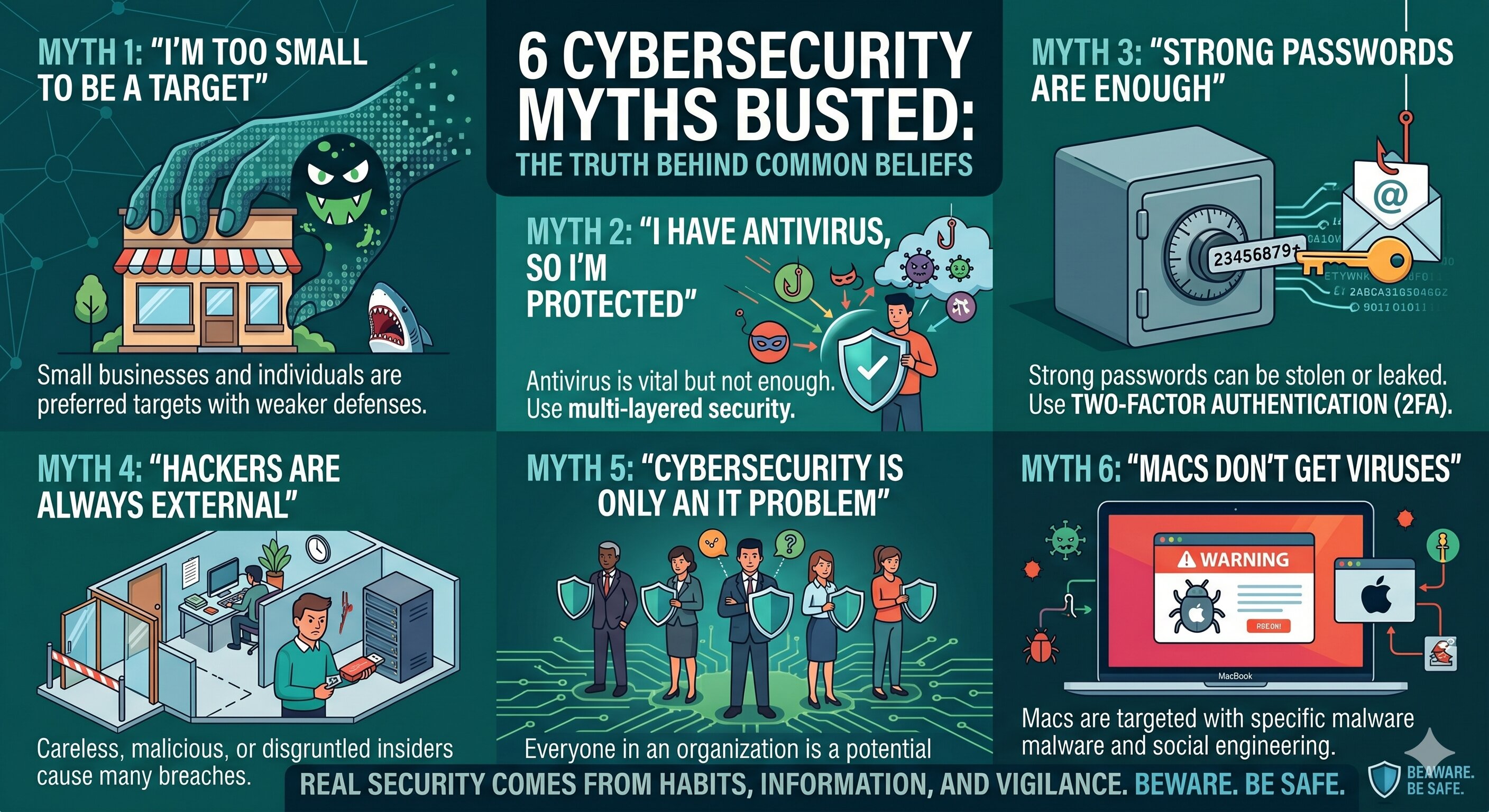
Myth 1: 'I'm Too Small to Be a Target'
Many individuals and small
business owners think hackers only go after big corporations. The truth? Small
targets are often preferred because they have weaker defenses. In fact, small
businesses account for nearly half of all cyber attacks globally.
Myth 2: 'I Have Antivirus, So I'm Protected'
Antivirus software is important,
but it's not a complete solution. Modern threats — especially phishing, social
engineering, and zero-day exploits — can bypass antivirus tools. A layered
security approach is essential.
Myth 3: 'Strong Passwords Are Enough'
Strong passwords help, but
they're not foolproof. Passwords can be stolen through phishing, leaked in data
breaches, or cracked using brute-force tools. That's why two-factor
authentication (2FA) is essential as a second layer of protection.
Myth 4: 'Hackers Are Always External'
Insider threats — whether from
disgruntled employees, careless staff, or contractors — are responsible for a
significant portion of data breaches. The danger isn't always from the outside.
Myth 5: 'Cybersecurity Is Only an IT Problem'
Every person in an organization
— from the CEO to the receptionist — is a potential entry point for attackers.
Cybersecurity is everyone's responsibility, not just the tech team's.
Myth 6: 'Macs Don't Get Viruses'
This is outdated thinking. While
Macs were historically less targeted, the growing popularity of Apple products
has made them increasingly attractive to cybercriminals. Mac-specific malware
and phishing attacks are very real.
The Truth About Cybersecurity
Real security comes from staying
informed, adopting good habits, and not letting complacency be your biggest
vulnerability. Don't let myths leave you exposed.





Comments