
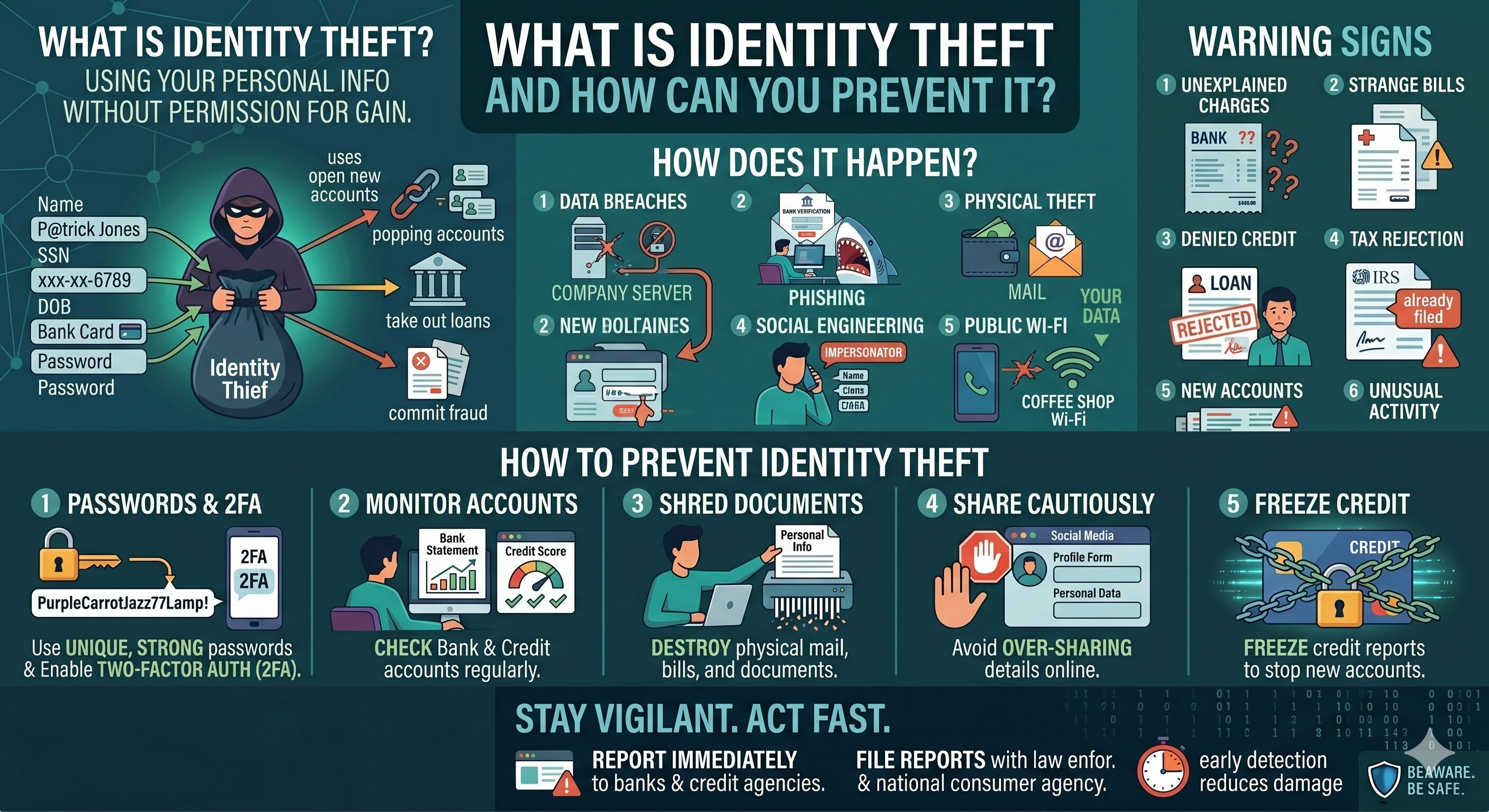
What Is Identity Theft and How Can You Prevent It?
Identity theft is one of the
most personal and damaging forms of cybercrime. When someone steals your
personal information and uses it as their own, the consequences can follow you
for years. Here's what you need to know — and how to protect yourself.
What Is Identity Theft?
Identity theft occurs when
someone uses your personal information — name, Social Security number, date of
birth, bank details, or passwords — without your permission, usually for
financial gain.
Thieves can open new credit
accounts, take out loans, file fraudulent tax returns, receive medical care, or
commit crimes in your name.
How Does It Happen?
Data breaches — Your information
is stolen from companies that store it. Phishing — You're tricked into
revealing your information. Physical theft — Wallets, mail, or documents are
stolen. Social engineering — Fraudsters impersonate banks or government agencies.
Public Wi-Fi — Hackers intercept your data on unsecured networks.
Warning Signs of Identity Theft
Unexplained charges on your bank
or credit card statements. Receiving bills for services you never used. Being
denied credit unexpectedly. Tax return rejection because a return was already
filed in your name. Unfamiliar accounts showing up on your credit report.
How to Prevent Identity Theft
Use strong, unique passwords and
enable 2FA. Monitor your bank and credit accounts regularly. Shred physical
documents containing personal information. Be cautious about sharing
information online. Freeze your credit if you're not planning to apply for new
credit — this prevents anyone from opening new accounts in your name.
What to Do If It Happens to You
Report it to your bank and
credit card companies immediately. Place a fraud alert on your credit report.
File a report with local law enforcement and the relevant national consumer
protection agency. Document everything — the recovery process can take months,
and records are essential.
Stay Vigilant
Identity theft isn't always
immediately obvious. Regular credit monitoring is one of the best habits you
can build — many banks and apps offer this for free. Catching it early
dramatically reduces the damage.





Comments