
AI in Healthcare: Diagnosing Diseases Before Doctors Can
Healthcare is one of the
domains where artificial intelligence shows the most transformative potential —
and where the stakes could not be higher. AI systems are already diagnosing
diseases, discovering drugs, and improving patient outcomes in ways that were
unimaginable just a decade ago.
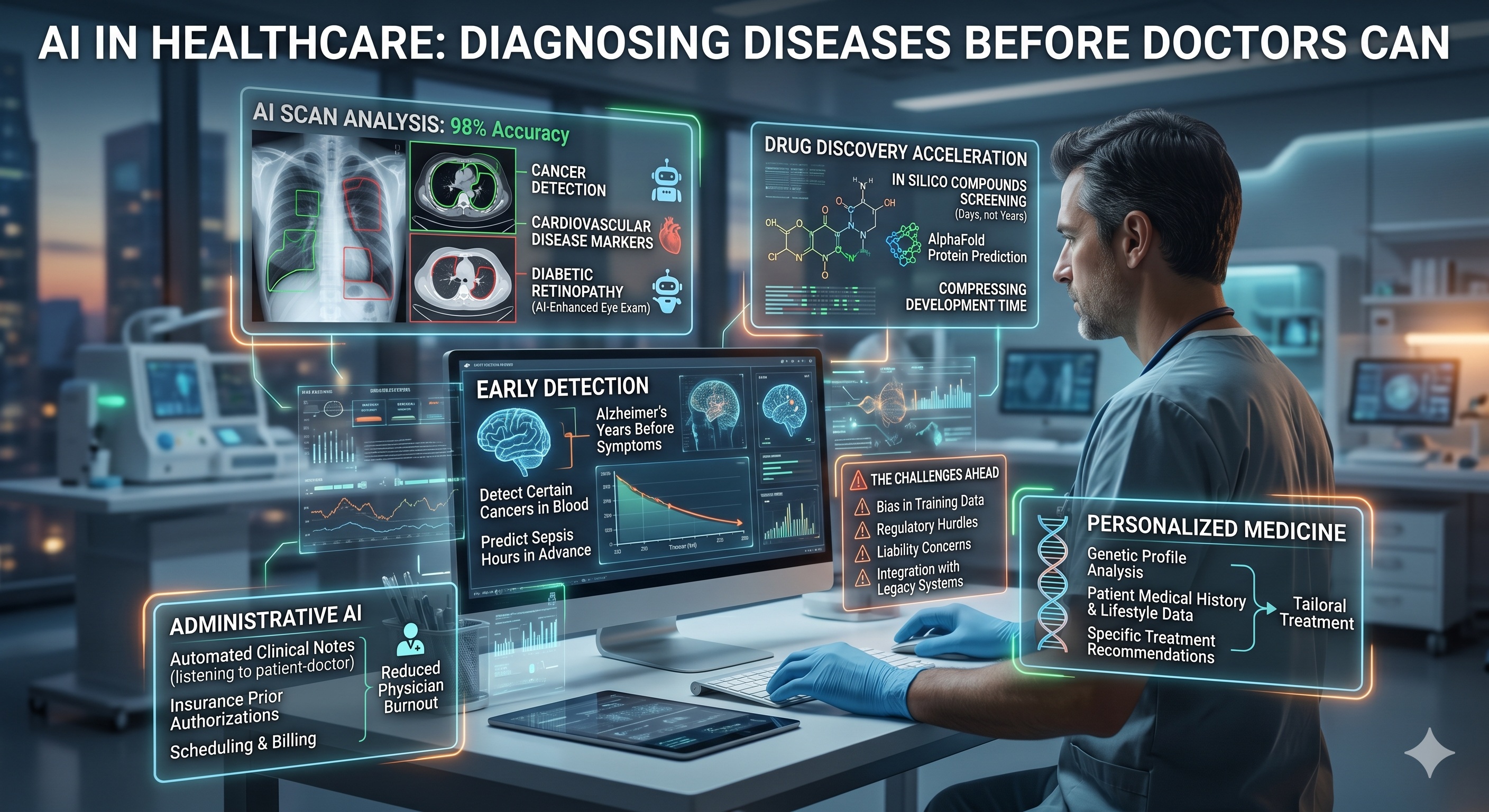
AI in Medical Imaging
One of the most mature AI
healthcare applications is medical image analysis. AI systems trained on
millions of scans can detect cancers, diabetic retinopathy, cardiovascular
disease markers, and neurological conditions in X-rays, MRIs, and CT scans —
often with accuracy equal to or exceeding specialist physicians.
Critically, AI doesn't get
tired. It can screen thousands of images without the fatigue that affects human
radiologists.
Early Disease Detection
AI is enabling detection of
diseases at earlier stages than previously possible. Research has demonstrated
AI systems that can identify Alzheimer's disease years before symptoms appear,
detect certain cancers in blood samples, and predict sepsis in hospital
patients hours before clinical signs emerge.
Drug Discovery Acceleration
Drug development traditionally
takes over a decade and costs billions of dollars. AI is compressing this
dramatically. AlphaFold's protein structure prediction revolutionized molecular
biology. AI systems can now screen millions of potential drug compounds in
silico in days, dramatically reducing the time and cost of early-stage drug
discovery.
Personalized Medicine
AI can analyze a patient's
genetic profile, medical history, lifestyle data, and treatment outcomes to
predict which treatments are most likely to be effective for them specifically.
This moves medicine from a one-size-fits-all model toward genuinely personalized
treatment recommendations.
Administrative AI
A significant portion of
healthcare costs and physician burnout stems from administrative work. AI is
automating appointment scheduling, insurance prior authorizations, clinical
documentation (AI can listen to patient-doctor conversations and automatically
generate clinical notes), and billing — freeing clinicians to focus on
patients.
The Challenges Ahead
AI in healthcare faces serious
challenges: bias in training data that may lead to worse outcomes for
underrepresented populations; regulatory hurdles for clinical deployment;
questions about liability when AI contributes to a misdiagnosis; and integration
with legacy healthcare systems. But the potential to save lives and reduce
suffering makes these challenges worth solving.





Comments