
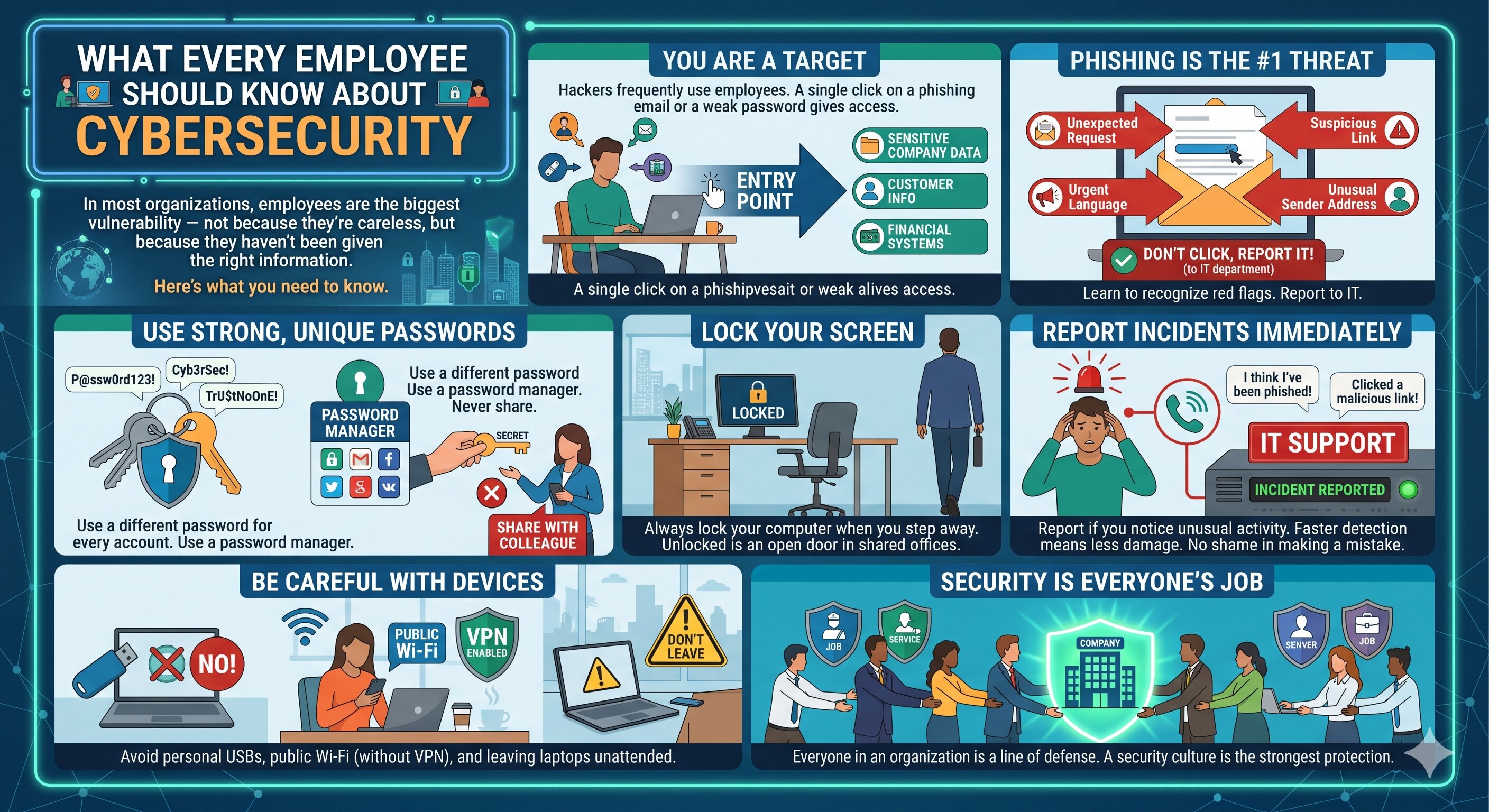
What Every Employee Should Know About Cybersecurity
In most organizations,
employees are the biggest cybersecurity vulnerability — not because they're
careless, but because they haven't been given the right information. Here's
what every employee should understand to keep themselves and their company safe.
You Are a Target
Hackers frequently use employees
as the entry point into a company's systems. A single click on a phishing email
or a weak password can give attackers access to sensitive company data,
customer information, or financial systems.
Phishing Is the #1 Threat
Learn to recognize phishing
emails — unexpected requests, suspicious links, urgent language, and unusual
sender addresses are all red flags. When in doubt, don't click. Report
suspicious emails to your IT department.
Use Strong, Unique Passwords
Use a different password for
every work account. Use a password manager if your company allows it. Never
share your passwords with colleagues, managers, or anyone claiming to be from
IT support.
Lock Your Screen
Always lock your computer when
you step away from your desk — even for a minute. In shared office
environments, an unlocked screen is an open door to your work accounts and
files.
Be Careful with Devices
Don't use personal USB drives on
work computers. Avoid accessing work accounts on public Wi-Fi without a VPN.
Don't leave laptops or phones unattended in public places.
Report Incidents Immediately
If you think you've been
phished, clicked a malicious link, or notice anything unusual on your device,
report it to IT immediately. The faster a breach is detected, the less damage
it causes. There's no shame in making a mistake — the mistake is not reporting
it.
Security Is Everyone's Job
Cybersecurity isn't just the IT
department's problem. Every person in an organization is a line of defense. A
security culture — where everyone is informed and vigilant — is the strongest
protection any company can have.





Comments