
The Real Cost of a Data Breach for Small Companies
When a data breach makes
headlines, it's usually a big brand with millions of customers. But small
businesses suffer the same fate — quietly and often fatally. Understanding the
true cost of a breach might be the wake-up call your business needs.
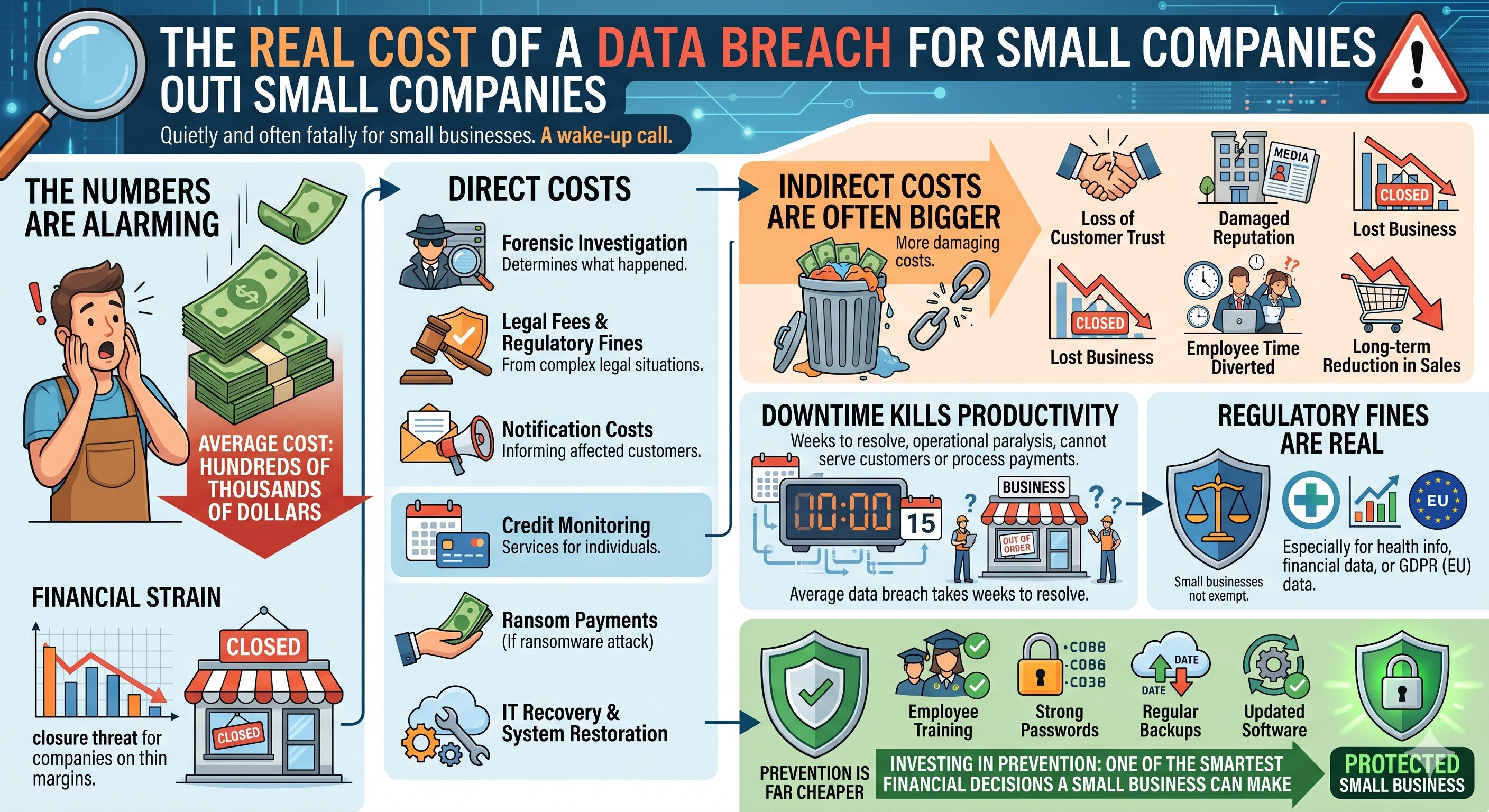
The Numbers Are Alarming
The average cost of a data
breach for small businesses runs into hundreds of thousands of dollars when all
factors are considered. For many small companies operating on thin margins,
that figure alone is enough to force closure.
Direct Costs
Immediate financial impacts
include: forensic investigation to determine what happened; legal fees and
regulatory fines; notification costs (you may be legally required to inform
affected customers); credit monitoring services for affected individuals; ransom
payments (if it's a ransomware attack); IT recovery and system restoration.
Indirect Costs Are Often Bigger
The costs you can't easily
measure are often more damaging: loss of customer trust, damaged reputation,
lost business during downtime, employee time diverted to managing the crisis,
and long-term reduction in customer confidence and sales.
Downtime Kills Productivity
The average data breach takes
weeks to fully resolve. During that time, businesses may be unable to operate
normally, serve customers, or process payments. Every hour of downtime has a
cost.
Regulatory Fines Are Real
Depending on your industry and
location, a breach can trigger significant regulatory penalties — especially if
you handle health information, financial data, or data belonging to EU citizens
(GDPR). Small businesses are not exempt from these fines.
Prevention Is Far Cheaper
Basic cybersecurity measures —
employee training, strong passwords, regular backups, updated software — cost a
fraction of what a breach costs. Investing in prevention is one of the smartest
financial decisions a small business can make.





Comments