
Blockchain Beyond Bitcoin: Real-World Uses You Didn't Know About
When most people hear
'blockchain,' they think Bitcoin or cryptocurrency speculation. But blockchain
technology has applications far beyond digital currencies — some of which are
quietly transforming industries in ways that never make the headlines.
What Is Blockchain?
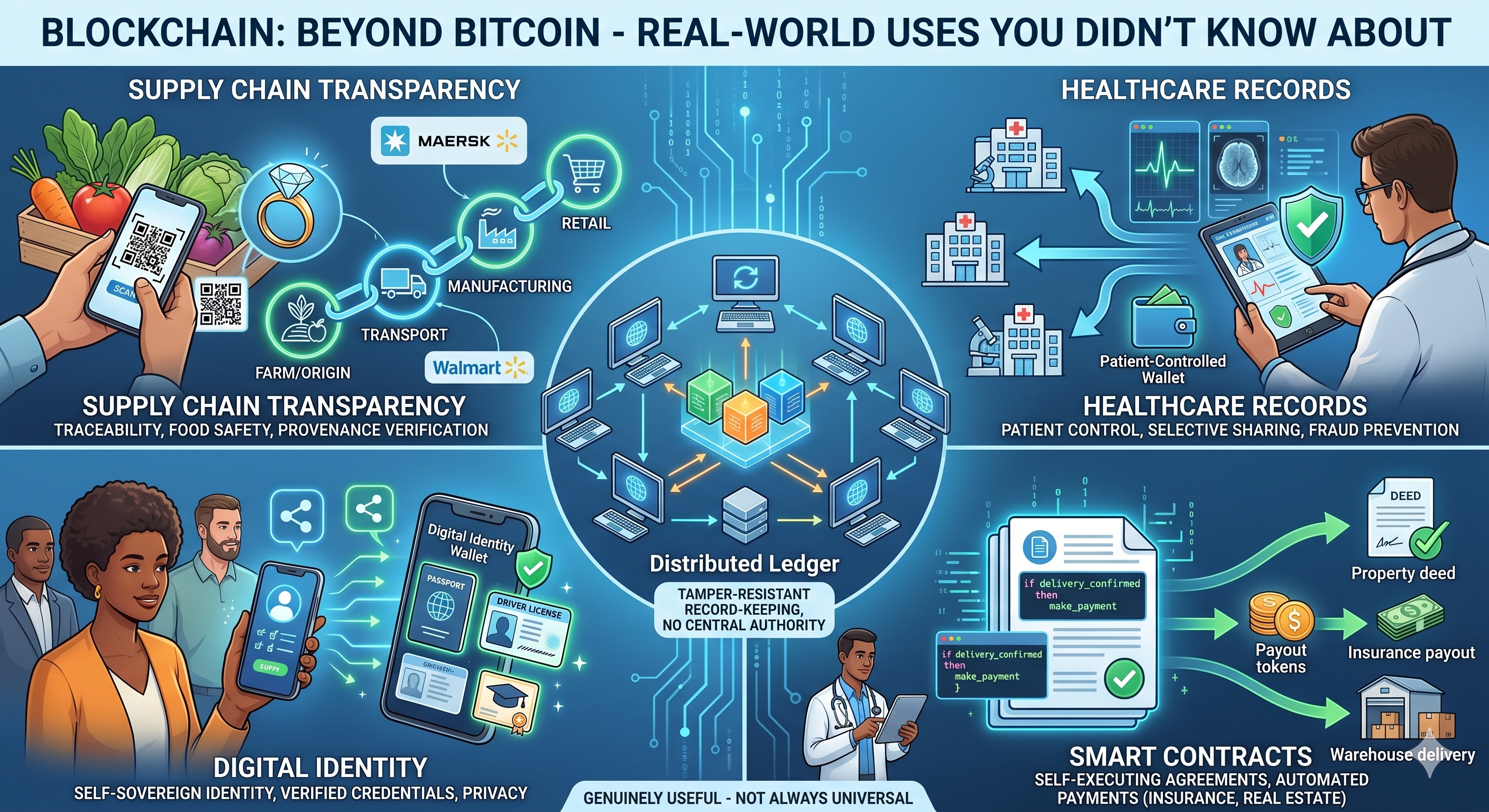
A blockchain is a distributed,
decentralized ledger — a record of transactions or data that is maintained
simultaneously across many computers. Once data is recorded, it's extremely
difficult to alter, giving blockchain its defining characteristic: tamper-resistant
record keeping without a central authority.
Supply Chain Transparency
Companies like Walmart, Maersk,
and De Beers use blockchain to track products through supply chains. When
Walmart traces a food safety issue, blockchain allows them to pinpoint the
source in seconds rather than days. Diamond provenance verification using
blockchain helps combat conflict diamonds and fraud.
Healthcare Records
Medical records are notoriously
fragmented and insecure. Blockchain-based systems allow patients to own their
medical records and selectively share them with providers — improving
coordination while giving individuals control. The tamper-proof nature of blockchain
also helps prevent medical fraud.
Digital Identity
Blockchain enables
self-sovereign identity — where individuals hold verified credentials
(qualifications, identity documents, licenses) in a digital wallet they
control, and can share them selectively without relying on a central authority.
This has significant implications for financial inclusion and privacy.
Smart Contracts
Smart contracts are
self-executing agreements with terms written directly in code on a blockchain.
When predefined conditions are met, the contract executes automatically —
without intermediaries. Applications include automated insurance payouts, real
estate transactions, and supply chain payments triggered by delivery
confirmation.
The Honest Assessment
Blockchain is genuinely useful —
but it's been overhyped as a solution to problems that don't require it. Many
proposed blockchain applications work better with a traditional database. The
technology is most valuable when multiple parties who don't fully trust each
other need to share a tamper-proof record. That's a real and important use case
— just not universal.





Comments