Dark Web 101: What It Is and Why
It's a Security Risk
The 'dark web' sounds ominous —
and parts of it are. But it's also widely misunderstood. Here's a clear
explanation of what it is, what happens there, and why it matters for your
personal security.
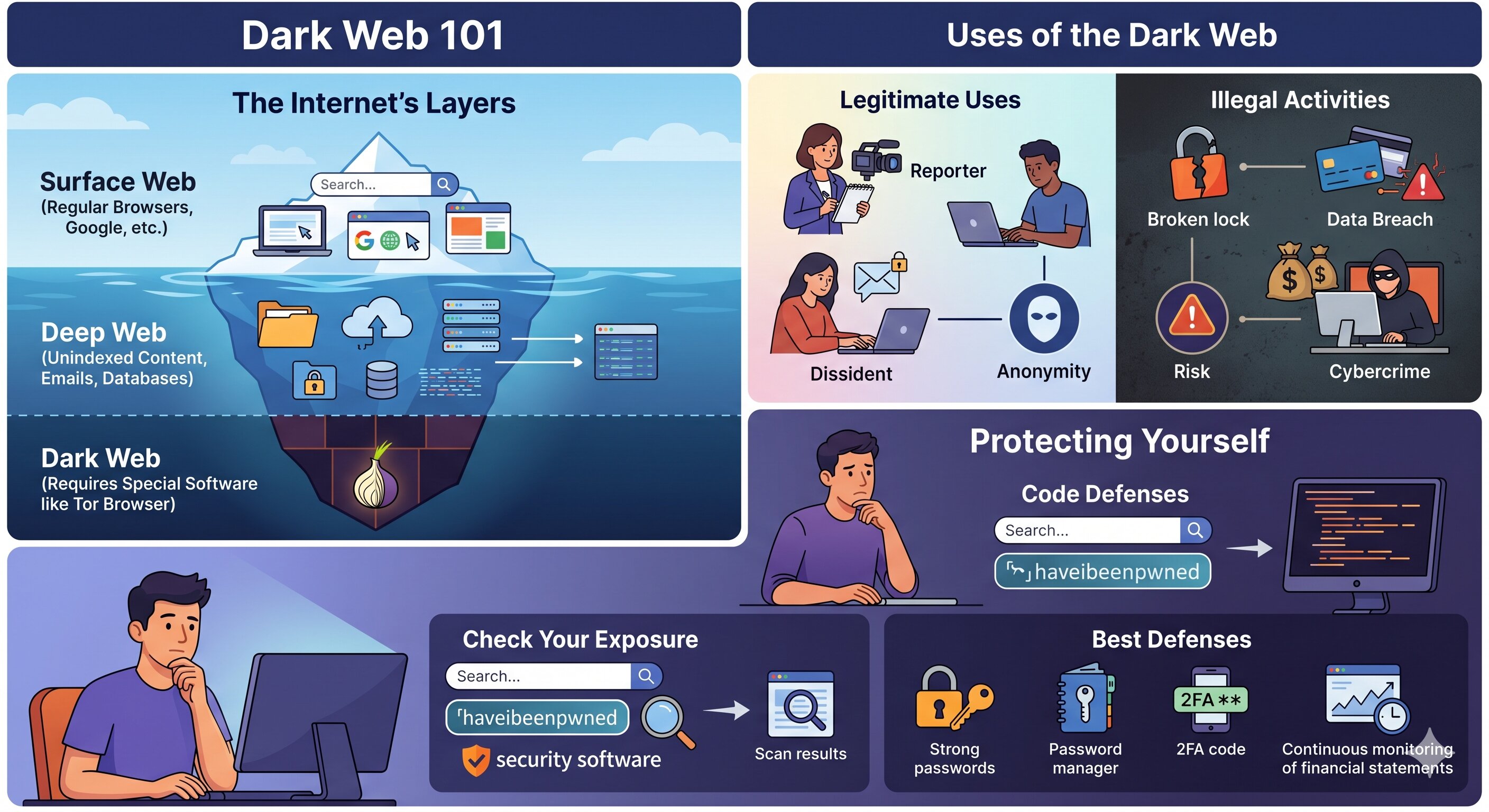
The Internet Has Three Layers
The surface web is what you
access with a regular browser — websites indexed by Google and other search
engines. The deep web is content not indexed by search engines — think email
inboxes, private databases, and subscription content. The dark web is a small
portion of the deep web that requires special software (most commonly the Tor
browser) to access.
Not Everything on the Dark Web Is Illegal
The dark web is used by
journalists, political dissidents, whistleblowers, and privacy advocates —
people who need anonymity for legitimate reasons. In countries with oppressive
governments, the dark web can be a lifeline for free communication.
But There's a Lot That Is Illegal
The anonymity of the dark web
also makes it a marketplace for stolen credentials, credit card numbers,
personal data, drugs, weapons, and hacking tools. Data from breaches —
including your information — is routinely bought and sold there.
Why Does This Matter to You?
Your email, passwords, credit
card numbers, and Social Security number could already be on the dark web
without you knowing it. When companies are breached, stolen data is often
uploaded and sold there within hours.
How to Check If Your Data Is on the Dark Web
Services like HaveIBeenPwned.com
let you check if your email address has appeared in known data breaches. Some
password managers and credit monitoring services also include dark web
monitoring. If your data is found, change the affected passwords immediately
and watch your financial accounts closely.
The Takeaway
You don't need to visit the dark
web — but you should be aware that it exists and that your personal data may
already be circulating there. Regular monitoring and strong security hygiene
are your best defenses.






Comments