
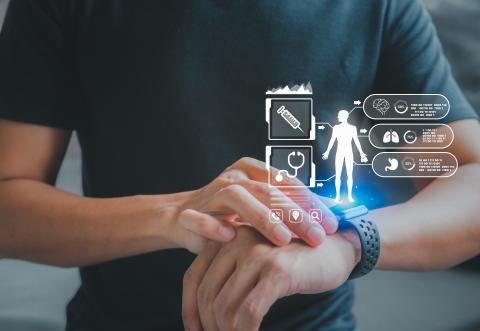
Artificial intelligence is revolutionizing personal healthcare through the rapid advancement of AI-powered wearable devices. From smartwatches and fitness trackers to advanced health-monitoring sensors, wearable technology is becoming increasingly intelligent, enabling individuals to track their health in real time and make more informed lifestyle decisions.
The global wearable technology market has experienced significant growth in recent years as consumers become more focused on preventive healthcare and wellness. Modern wearable devices equipped with AI algorithms can continuously monitor vital health metrics such as heart rate, blood oxygen levels, sleep patterns, physical activity, stress levels, and overall wellness indicators. These capabilities are helping users gain deeper insights into their health while encouraging healthier habits.
One of the most impactful applications of AI-powered wearables is early health risk detection. Machine learning algorithms can analyze large volumes of biometric data collected over time and identify unusual patterns that may indicate potential health concerns. By detecting abnormalities earlier, wearable devices can encourage users to seek medical attention before conditions become more serious.
Cardiovascular health monitoring has become a major focus area for wearable technology manufacturers. AI-powered devices can track heart rate variability, detect irregular heart rhythms, and provide alerts when unusual activity is identified. These capabilities are helping individuals proactively monitor their heart health and improve awareness of potential risks.
Sleep monitoring is another area benefiting from artificial intelligence. Advanced wearable devices can analyze sleep cycles, identify disturbances, and provide personalized recommendations for improving sleep quality. Better sleep insights help users optimize their overall health, productivity, and well-being.
Fitness and wellness applications continue to drive widespread adoption of wearable technology. AI-powered wearables can create customized fitness plans, track workout performance, and provide real-time coaching based on individual goals and physical conditions. These personalized experiences help users stay motivated and achieve better health outcomes.
Healthcare providers are increasingly recognizing the value of wearable-generated data. Continuous monitoring allows medical professionals to gain a more comprehensive understanding of patient health beyond traditional clinic visits. This data can support remote patient monitoring programs and enable more personalized treatment strategies.
The integration of AI into wearable devices is also improving chronic disease management. Patients with conditions such as diabetes, hypertension, and respiratory disorders can benefit from continuous monitoring and automated alerts that help manage symptoms and support ongoing care.
Advancements in sensor technology are making wearable devices more accurate and capable. New generations of wearables can collect a wider range of health data while maintaining comfort, portability, and long battery life. Combined with artificial intelligence, these innovations are expanding the role of wearables in everyday healthcare.
Technology companies are investing heavily in wearable AI research and development. Future devices are expected to include more advanced predictive capabilities, enabling them to anticipate potential health issues, recommend preventive actions, and provide increasingly personalized wellness guidance.
Privacy and data security remain important considerations as wearable devices collect sensitive health information. Manufacturers and healthcare organizations are implementing stronger security measures to protect user data and comply with evolving regulatory requirements.
Industry analysts predict that AI-powered wearables will play an increasingly important role in the future of healthcare. As artificial intelligence becomes more sophisticated, wearable devices are expected to evolve from fitness accessories into comprehensive personal health assistants capable of supporting preventive care, early diagnosis, and long-term wellness management.
The growing adoption of intelligent wearables reflects a broader shift toward proactive and data-driven healthcare. By empowering individuals with real-time insights and personalized recommendations, AI-powered wearable technology is transforming how people monitor, manage, and improve their health.
As innovation continues to accelerate, wearable devices powered by artificial intelligence are expected to become essential tools for personal wellness, preventive healthcare, and the future of connected health ecosystems.





Comments