
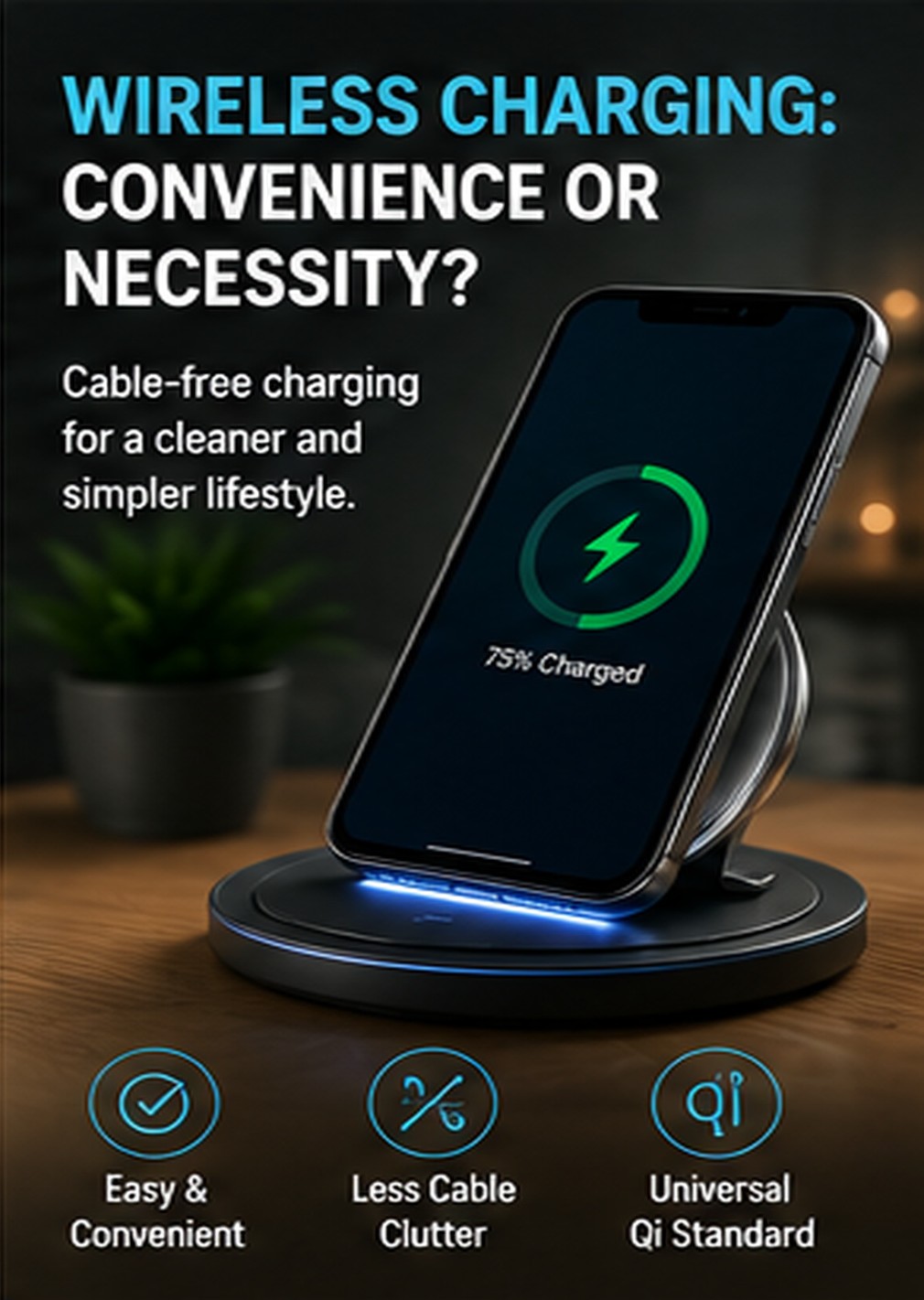
Wireless charging allows users to charge their smartphones without plugging in a charging cable. Instead, the phone is placed on a wireless charging pad or stand. This feature is usually found in premium smartphones, but it is slowly becoming more common.
The biggest advantage of wireless charging is convenience. Users can simply place the phone on the charger while working, sleeping, or watching videos. It also reduces cable wear and keeps the desk setup cleaner. Wireless charging stands are useful because users can see notifications or attend video calls while the phone charges.
However, wireless charging is usually slower than wired fast charging. It may also generate more heat if the phone is not aligned properly on the charging pad. Phone cases can sometimes affect charging efficiency, especially if they are thick or contain metal parts.
Wireless charging is not necessary for every user, but it is useful for people who prefer convenience and a clean setup. It is also helpful for office desks, bedside tables, and cars that support wireless charging.
Before buying a wireless charger, users should check whether their phone supports wireless charging and what charging speed is supported. A certified charger is always better for safety.
Wireless charging may not fully replace wired charging yet, but it adds comfort to everyday smartphone usage.





Comments