
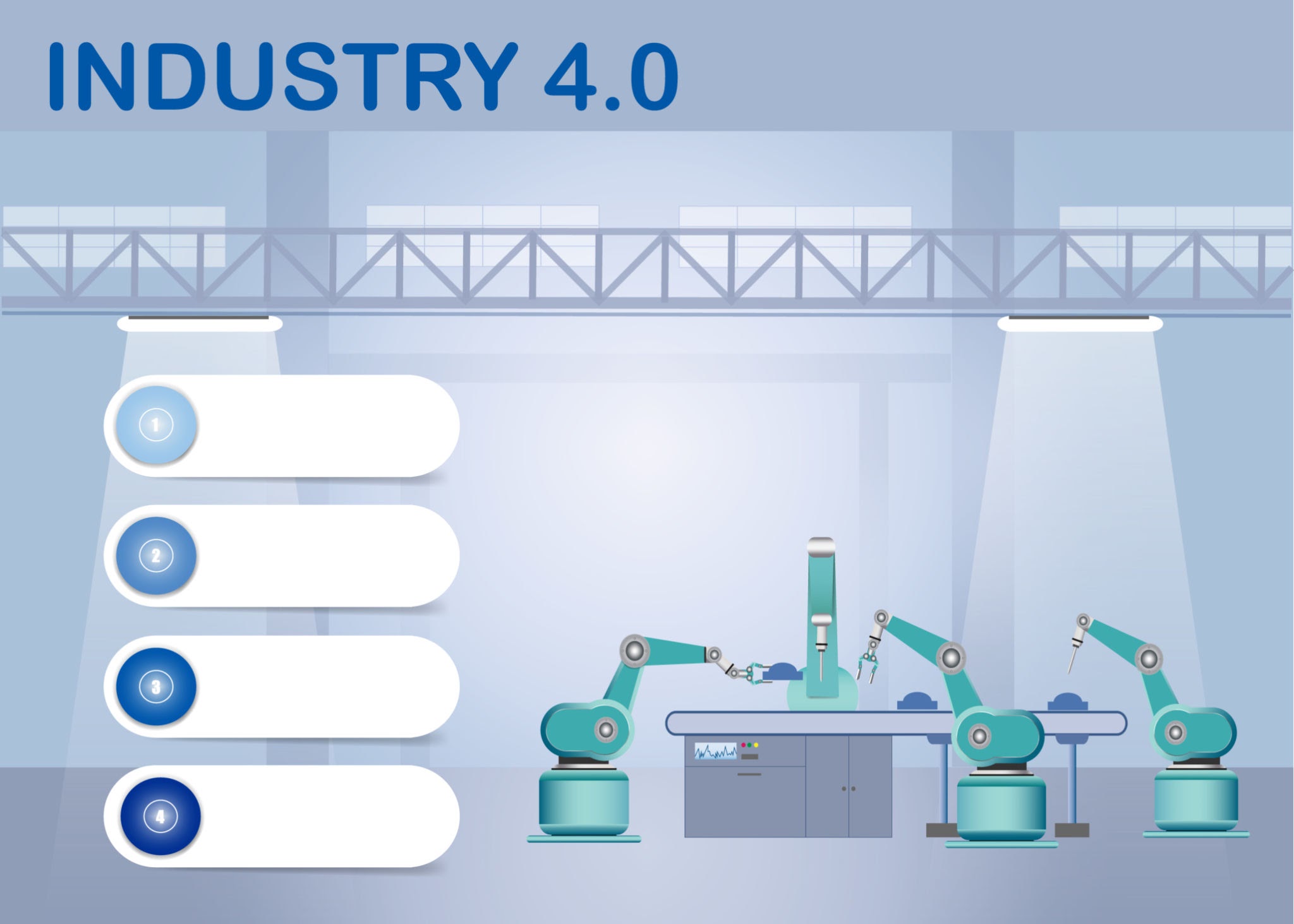
Manufacturing has experienced three distinct revolutions: the advent of steam and water power (Industry 1.0), the introduction of electricity and assembly lines (Industry 2.0), and the adoption of computers and basic automation (Industry 3.0). Today, we are deep into Industry 4.0—a paradigm shift moving away from isolated, mechanized production toward fully integrated cyber-physical systems.
A modern "smart factory" is not just a building where things are made; it is a highly responsive, data-driven organism. By combining the physical acts of creation with advanced digital intelligence, manufacturers are achieving unprecedented levels of efficiency, customization, and resilience.
The Industrial Internet of Things (IIoT)
The foundation of the smart factory is connectivity. In a legacy plant, machines operate in silos. In an Industry 4.0 facility, every asset—from the largest hydraulic press to the smallest conveyor belt motor—is equipped with sensors.
- Machine-to-Machine (M2M) Communication: Equipment on the factory floor constantly communicates without human intervention. If a milling machine detects a slight variation in raw material density, it can instantly signal the downstream assembly robot to adjust its torque settings to compensate for the discrepancy.
- Predictive Maintenance: Traditional manufacturing relies on scheduled maintenance (fixing things before they break based on a calendar) or reactive maintenance (fixing things after they break). IIoT enables predictive maintenance. Sensors monitor the vibration, acoustics, and thermal output of a motor. AI analyzes this data to predict exactly when a bearing is going to fail, allowing technicians to replace the specific part during a planned shift change, completely eliminating catastrophic, unplanned downtime.
- Energy Optimization: Granular tracking of power consumption at the machine level allows AI systems to optimize energy use across the entire facility, powering down idle subsystems and scheduling energy-intensive processes during off-peak grid hours.
Digital Twins and Virtual Simulation
A Digital Twin is a perfect, living, virtual replica of a physical asset, process, or even an entire factory. It is continuously updated with real-time data streaming from its physical counterpart.
- Risk-Free Stress Testing: Before altering a production line to manufacture a new product, engineers can run the entire process through the digital twin. They can simulate material bottlenecks, test different robotic programming, and identify safety hazards in a virtual environment. This means the physical rollout happens flawlessly on day one.
- Lifecycle Management: Digital twins track a product from its inception to its deployment. For high-value assets like jet engines or wind turbines, the manufacturer maintains a digital twin of the specific unit sold to a customer, using real-world operational data to push software updates or recommend specific maintenance protocols remotely.
Advanced Robotics and "Cobots"
Industrial robots of the past were massive, dangerous machines caged off from human workers, programmed to do exactly one task repeatedly. The new generation of manufacturing robotics is flexible, intelligent, and highly collaborative.
- Collaborative Robots (Cobots): Cobots are designed to work shoulder-to-shoulder with humans. Equipped with force-feedback sensors and computer vision, they instantly freeze if a human steps into their path. They take over the ergonomically stressful, repetitive tasks (like heavy lifting or precise gluing), leaving the complex, cognitive tasks to human workers.
- Computer Vision Quality Control: High-speed cameras paired with deep learning algorithms inspect products as they move down the line. These systems can detect a microscopic fracture in a microchip or a millimeter-deep paint scratch on a car door in milliseconds—tasks that cause immense eye strain and error in human inspectors.
Additive Manufacturing at Scale (3D Printing)
3D printing has evolved from a slow prototyping tool into a robust, industrial-scale production method, fundamentally changing how parts are designed and sourced.
- Complex Geometries: Traditional subtractive manufacturing (milling, turning) cannot create certain complex internal structures. Additive manufacturing can print parts with intricate, lattice-like internal geometries that are significantly lighter yet structurally stronger than solid metal, a massive advantage in aerospace and automotive sectors.
- Localized Production and Digital Inventory: Instead of manufacturing thousands of spare parts in a central hub and shipping them globally to sit in a warehouse, a company can simply send a digital CAD file to a 3D printer located at a regional facility. This shifts inventory from physical shelves to digital servers, eliminating warehousing costs and supply chain delays.
The Outlook
Industry 4.0 transforms manufacturing from a rigid, capital-intensive necessity into a highly agile competitive advantage. As these technologies mature, we are moving closer to "lot size one" manufacturing—where producing a single, entirely custom product costs the same per unit as producing a million identical ones.





Comments