
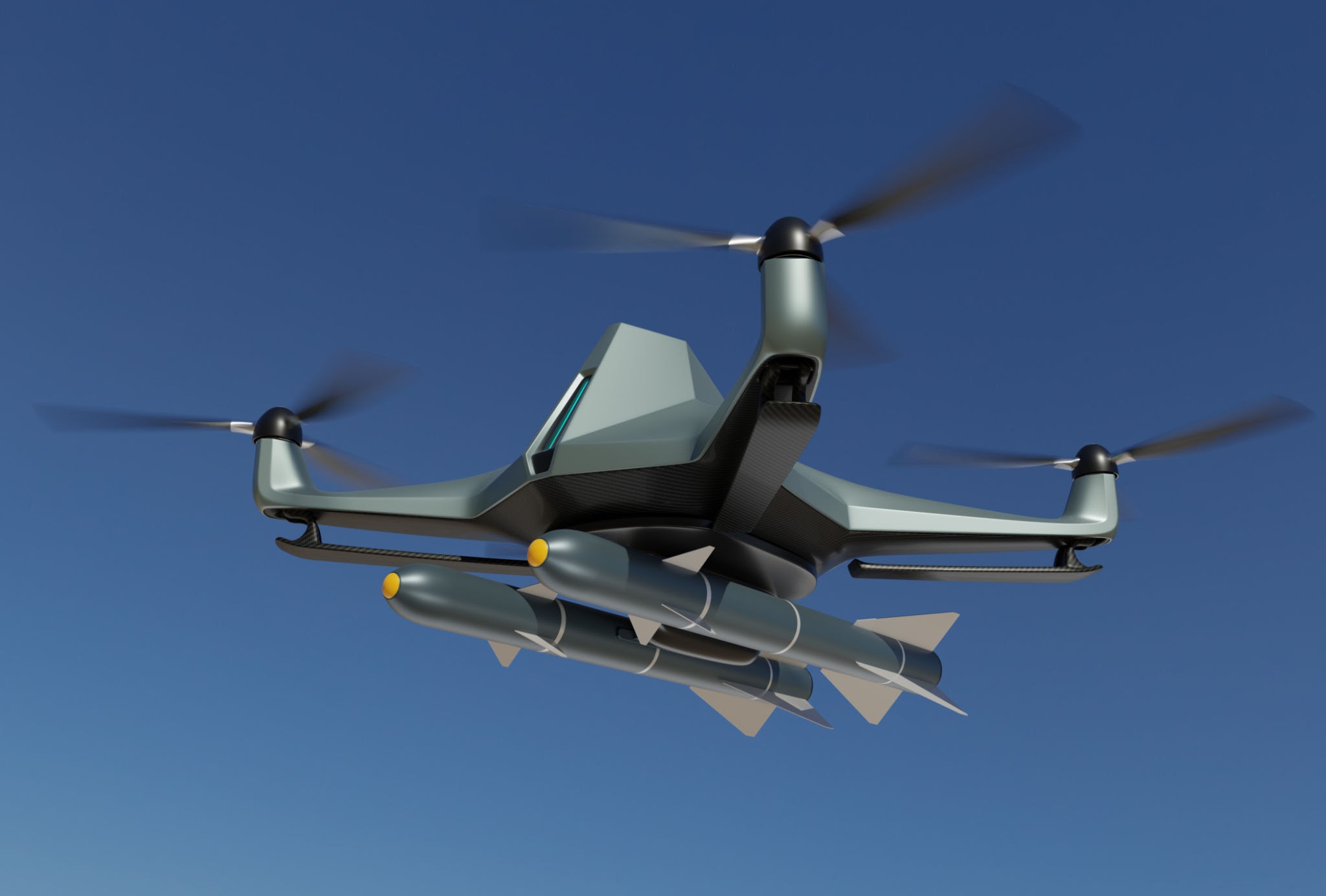
For the latter half of the 20th century, aerospace and defense technology progressed through predictable, state-funded cycles. The goal was simply to fly higher, faster, and stealthier than the adversary, relying on multi-decade development programs like the F-22 or the Space Shuttle. Today, that slow, monolithic approach has been shattered. The democratization of space launch capabilities and the rapid integration of commercial AI into military hardware have fundamentally rewritten the physics and economics of the sky.
We are currently witnessing a massive convergence of commercial innovation and military necessity. The modern theater of operations is no longer just the land, sea, and air; it extends into low-earth orbit and deep into the electromagnetic spectrum.
Hypersonic Flight and Maneuverability
The sound barrier was broken decades ago, but the new frontier is the thermal barrier. Hypersonic vehicles do not just fly fast; they operate in a completely different aerodynamic reality.
- Mach 5 and Beyond: Hypersonic missiles and glide vehicles travel at least five times the speed of sound (over 3,800 mph). At these speeds, the friction of the atmosphere generates temperatures hot enough to melt standard metals and creates a plasma sheath around the vehicle that blocks traditional radio communications.
- Unpredictable Trajectories: Traditional intercontinental ballistic missiles (ICBMs) fly in a predictable, parabolic arc—meaning defense systems can calculate exactly where they will be and intercept them. Hypersonic glide vehicles, however, skip along the upper atmosphere and can perform evasive maneuvers at Mach 10. This makes them entirely immune to current legacy missile defense systems, forcing a complete redesign of global deterrence strategies.
Autonomous Systems and the "Loyal Wingman"
The era of putting a human pilot inside a $100 million piece of metal and sending them into highly contested airspace is ending. The future of air superiority belongs to collaborative autonomy.
- AI-Piloted Drones: The defense industry is moving heavily toward unmanned combat aerial vehicles (UCAVs). These are not remote-controlled drones piloted by a human with a joystick in a trailer; they are highly autonomous systems capable of executing complex dogfight maneuvers, identifying targets, and navigating contested electronic warfare environments without continuous human input.
- Manned-Unmanned Teaming (MUM-T): The tactical doctrine of the next decade relies on the "Loyal Wingman" concept. A single human pilot in a next-generation fighter jet will act as a quarterback, commanding a swarm of half a dozen autonomous, cheaper drones. These drones can fly ahead to act as sensor nodes, absorb enemy anti-aircraft fire, or execute strike missions, massively multiplying the force of a single human operator.
Space as a Contested Domain
Space is no longer a peaceful sanctuary for scientific exploration; it has officially been recognized as a warfighting domain. Modern militaries rely entirely on satellites for GPS, secure communications, and missile warning systems.
- Anti-Satellite (ASAT) Weapons: Nations are actively developing and testing kinetic and non-kinetic weapons designed to blind or destroy orbital assets. This includes ground-based lasers that can dazzle spy satellites, and maneuverable "inspector" satellites that can physically grapple or jam adversary satellites in orbit.
- Responsive Launch Capabilities: Because orbital assets are so vulnerable, the defense sector is leveraging commercial space companies (like SpaceX and Rocket Lab) to develop "responsive space" capabilities. If a communication satellite is shot down, the military needs the capability to roll a replacement satellite onto a commercial launchpad and put it into orbit within 24 hours to restore critical command and control networks.
Directed Energy Weapons (DEWs)
The concept of laser weapons has existed in science fiction for a century, but the power generation and thermal cooling requirements kept them grounded. That engineering bottleneck has finally been broken.
- High-Energy Lasers (HEL): Naval ships and ground vehicles are now being equipped with 100-kilowatt class laser weapon systems. Unlike traditional missiles, which cost millions of dollars each and run out of ammunition, a laser costs roughly a dollar per shot and has an infinite magazine as long as the generator has fuel. They are currently used to silently and instantly melt the wings off incoming attack drones or detonate small boat swarms.
- High-Power Microwaves (HPM): While lasers focus on burning physical holes through targets, microwave weapons are designed to fry electronics. An HPM system emits a massive, invisible cone of electromagnetic energy that can instantly disable the navigation chips and motors of an entire swarm of hundreds of incoming drones simultaneously, without harming human personnel.
The Outlook
The aerospace and defense sector is shifting from a hardware-centric model to a software-defined reality. The nations that will secure the ultimate high ground are not necessarily those that build the heaviest bombers, but those that can write the best autonomous algorithms, secure their satellite data links, and manufacture hypersonic materials faster than their adversaries.





Comments